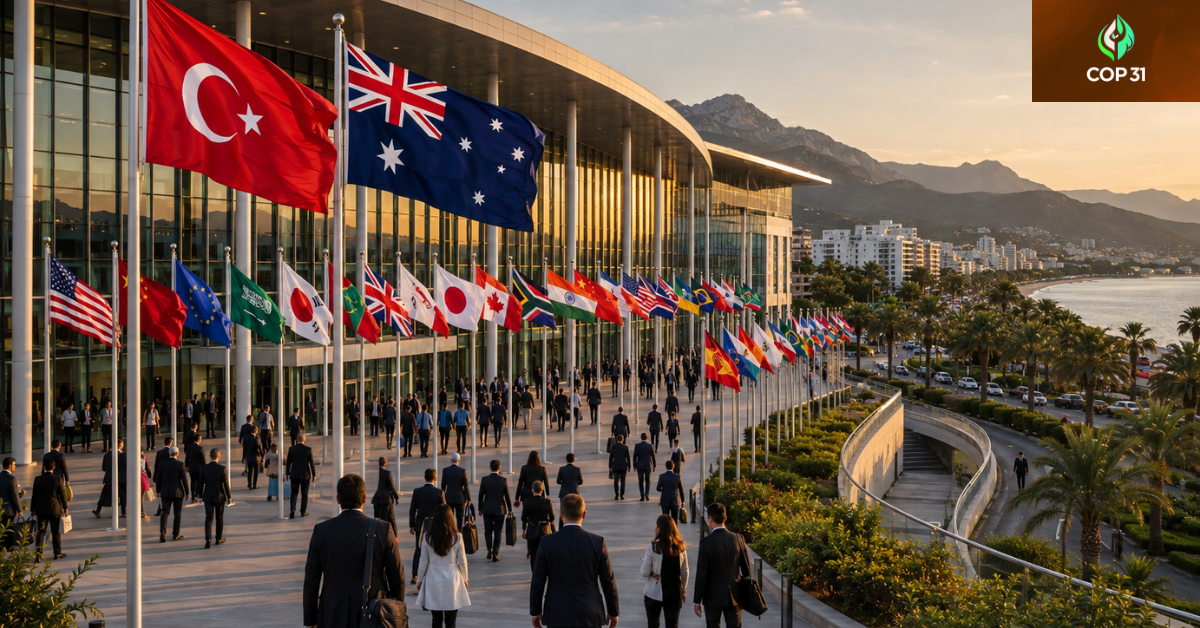
| Quick answer: COP31 is the United Nations’ 31st climate summit, running from 9 to 20 November 2026 in Antalya, Turkiye. Turkiye holds the formal presidency, while Australia leads the negotiations under a first-of-its-kind shared arrangement. Delegates will focus on climate finance, the energy transition, and support for Pacific island nations facing rising seas. |
Governments, businesses, and climate researchers worldwide are asking the same questions: when does COP31 start, who leads it, and what will it decide? It takes place in Antalya, Türkiye, from 9 to 20 November 2026, with an unusual leadership structure. Türkiye holds the formal presidency, while Australia leads the negotiations.
Delegates from nearly 200 countries will discuss climate finance, energy transition, and support for climate-vulnerable nations, including Pacific island states.
Climate summits are no longer a niche concern for diplomats and scientists. Rising insurance costs, disrupted harvests and record heatwaves now reach ordinary households in nearly every country, which is why COP31 draws attention well beyond government circles. Businesses track regulatory signals, investors watch green finance shifts, and vulnerable communities await decisions on adaptation funding made in Antalya.
COP31 2026 Key Facts: Dates, Host, Location & Leadership
| Detail | Information |
| Conference | COP31, the 31st UN Climate Change Conference |
| Dates | 9 to 20 November 2026 |
| Location | Antalya, Türkiye |
| Venue | Antalya Expo Center |
| Host and COP President | Türkiye, represented by Murat Kurum, Minister of Environment and Urban Planning |
| President of Negotiations | Australia, represented by Climate Change and Energy Minister Chris Bowen |
| World Leaders’ Summit | 11 to 12 November 2026 |
| Pre-COP | Fiji, 5 to 8 October 2026, with a related leaders’ event in Tuvalu |
| Partnerships and Türkiye Pavilion Side Event deadline | 14 August 2026 (separate from the UNFCCC’s own SEORS side-event process) |
| COP32 | Addis Ababa, Ethiopia, 8 to 19 November 2027 |
What Is COP31 and Why Does It Matter?
COP31 is the 31st UN Climate Change Conference, where countries will negotiate climate finance, emissions reductions, adaptation, and implementation of the Paris Agreement. It will take place in Antalya, Türkiye, from 9–20 November 2026. It is the 31st Conference of the Parties to the United Nations Framework Convention on Climate Change (UNFCCC), the annual meeting where nearly 200 countries negotiate the world’s shared response to climate change. Each session also reviews how much money wealthier nations commit to helping poorer nations adapt to and recover from climate damage.
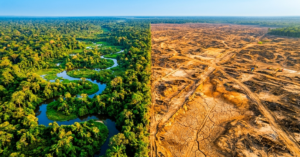
COP31 carries forward unfinished business from COP30 in Belém, Brazil. This includes the gap between current national pledges and the 1.5°C target set under the Paris Agreement. It falls at the midpoint of the critical 2020–2030 decade. It serves as a checkpoint for whether national climate pledges, known as NDCs, are keeping pace with climate science.
A Short History of the COP Process
The first COP took place in Berlin in 1995, a year after the UNFCCC entered into force. Since then, the summit has produced defining milestones, including the Kyoto Protocol in 1997 and the Paris Agreement in 2015. COP29 in Baku set a new climate finance goal of at least $300 billion annually for developing nations by 2035.COP30 in Belém advanced the Global Stocktake and renewed pressure to address deforestation. COP31 now has to show whether those commitments translate into disbursed funding and measurable emissions cuts.
When and Where Is COP31 2026 Being Held?
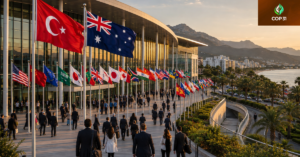
COP31 runs from 9 to 20 November 2026 at the Antalya Expo Center in Antalya, Türkiye, with the World Leaders’ Summit held on 11 and 12 November. The venue sits close to Antalya’s international airport, and organizers have arranged dedicated shuttle services for delegates, journalists and observers.
Antalya is an established tourism hub with extensive hotel capacity and is expected to host COP31 comfortably. Organizers are still coordinating transport arrangements for the event. Accommodation and transfer details are available on the official COP31 website. Hotel rooms in Antalya typically fill quickly during these dates.
How COP31 Compares to COP29 and COP30
| Summit | Year | Host | Key Context |
| COP29 | 2024 | Azerbaijan (Baku) | New climate finance goal (NCQG) |
| COP30 | 2025 | Brazil (Belém) | Implementation, adaptation, and Global Stocktake follow-up |
| COP31 | 2026 | Türkiye (Antalya), with Australia leading negotiations | Clean energy, resilience, and implementation |
Who Is Hosting COP31, and Why Are Türkiye and Australia Sharing the Role?
Türkiye is hosting COP31 in Antalya, while Australia is responsible for leading the negotiations under a dedicated partnership arrangement. Türkiye is the formal COP President and physical host, and Australia holds a separate role created specifically for this summit: President of Negotiations. The arrangement followed a prolonged contest between the two countries for hosting rights, resolved through a deal reached during COP30 in Belém in November 2025.
Türkiye’s Role as Formal Host and COP President
As the elected COP31 President-Designate, Türkiye’s Minister of Environment and Urban Planning, Murat Kurum, manages the summit’s logistics, the Türkiye Pavilion and the presidency’s Action Agenda. Türkiye has framed its presidency around what it calls the COP of the Future, built around zero waste, clean energy and resilient cities.
Australia’s Role as President of Negotiations
Australia has a dedicated President of Negotiations role, held by Climate Change and Energy Minister Chris Bowen, responsible for leading the negotiation process, consultations and draft texts, while Türkiye serves as the formal COP presidency and host. In practice, this means Bowen convenes consultations throughout the year, selects ministerial and other co-facilitators, and oversees the drafting of negotiation texts, while Türkiye handles logistics, diplomacy with the host country, and side event programming.
Australia originally proposed Adelaide as the host city in partnership with Pacific island nations. After a deadlock with Türkiye that ran through COP30, Australia withdrew its bid to host and accepted the negotiations leadership role instead. A pre-COP meeting will be held in Fiji from 5 to 8 October 2026, with a related leaders’ event in Tuvalu, so that Pacific priorities remain visible ahead of the formal talks.
This division of labour is formalized under what the two governments call the Türkiye-Australia Partnership Modalities, referenced on the official UNFCCC “Road to Antalya” page. The two governments have said the arrangement was designed to avoid a hosting standoff after COP30, though coordinating two separate presidencies throughout a two-week summit is untested at this scale.
COP31’s Negotiating Agenda vs. the Presidency’s Action Agenda
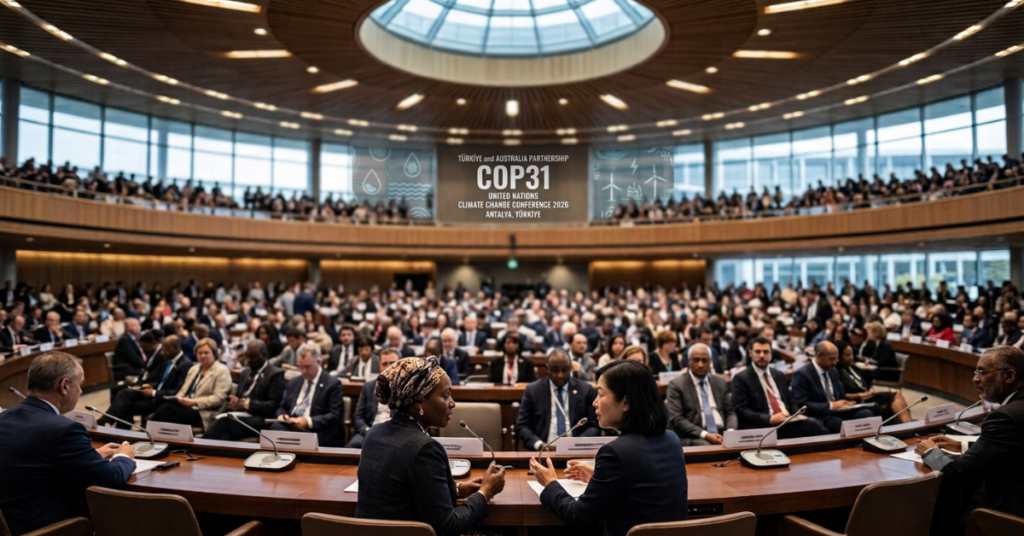
It helps to separate two different things that often get blended in COP31 coverage. The formal negotiating agenda covers items carried over from COP30, including the fossil fuel transition, the Global Goal on Adaptation, deforestation and climate finance delivery. These are the items that party delegations negotiate to a consensus.
Alongside that, the Turkish presidency has set its own non-negotiated Action Agenda. It includes ten priority themes designed to mobilize voluntary commitments, partnerships, and finance outside the formal text. Finance, technology, and capacity building run across all ten themes as shared enablers rather than standalone topics.
The Ten Priority Themes of the COP31 Action Agenda
Full theme descriptions are published on the official COP31 Action Agenda page.
1. Zero waste and circular economy, including methane reduction from waste
2. Oceans and seas, including marine ecosystem protection and blue carbon
3. Food security and sustainable agriculture
4. Climate-resilient cities
5. Powering climate action, moving commitments to implementation and investment
6. Youth and education
7. Green industrialization
8. Clean energy transition
9. Rio Synergy, linking the climate, biodiversity, and desertification conventions
10. Dynamic and resilient health systems
What to Expect From COP31
At the June 2026 UN climate meetings in Bonn, the Türkiye-Australia presidency previewed three flagship targets it wants agreed in Antalya:
• Raising the share of final energy demand met by electricity to 35 percent by 2035, a target the presidency calls “35 by 35”
• Halving the growth in global waste generation by 2035
• Cutting the energy intensity of buildings and construction by at least 25 percent
Notably, these headline targets steer clear of the fossil fuel phase-out language and the climate finance disputes that stalled the previous two summits, both of which remain part of the formal negotiating agenda rather than the presidency’s voluntary Action Agenda. Watch for the World Leaders’ Summit on 11 and 12 November to set the political tone before technical negotiations continue through 20 November.
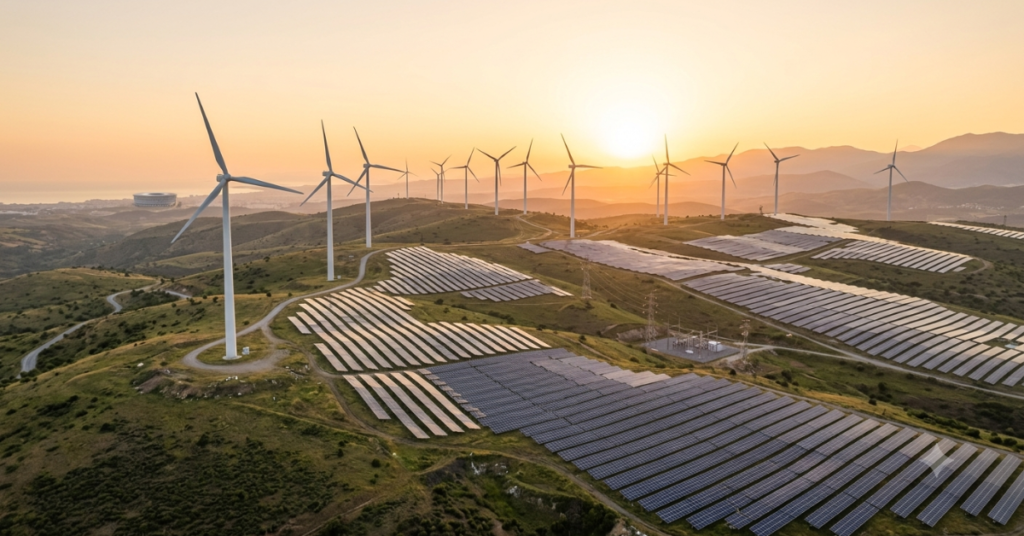
COP31 and Climate Finance: What Is at Stake
Climate finance remains one of the most contentious items on the summit’s negotiating agenda. COP29 in Baku set a goal of at least $300 billion per year in climate finance for developing nations by 2035, but developing countries argue this falls well short of the trillions needed for a full clean energy transition, while several wealthier nations face domestic budget pressures that limit new pledges.
Negotiators must show whether that 2035 goal is being translated into disbursed, accessible funding rather than remaining a headline figure. Progress here will shape how much adaptation and mitigation finance reaches the countries least responsible for, and most exposed to, climate change.
What challenges do negotiators actually face?
1. The ambition gap: current national pledges still leave the world on a warming trajectory well above the 1.5°C target, so negotiators must find ways to raise ambition without reopening politically sensitive agreements.
2. Climate finance delivery: translating the 300 billion-dollar annual goal from COP29 into money that developing nations can actually access, amid resistance from budget-constrained wealthy nations.
3. Fossil fuel transition language: the phase-out roadmap that COP30 failed to agree on remains unfinished business, as oil- and gas-producing nations continue to resist binding timelines.
4. Adaptation finance: closing the gap in funding for communities already adapting to climate impacts is a priority for Pacific and other vulnerable nations.
5. Coordination between two presidencies: Türkiye and Australia must stay aligned on logistics and negotiating strategy throughout the two-week summit, an arrangement with no direct precedent at a COP.
COP31, Developing Countries and Pacific Climate Justice
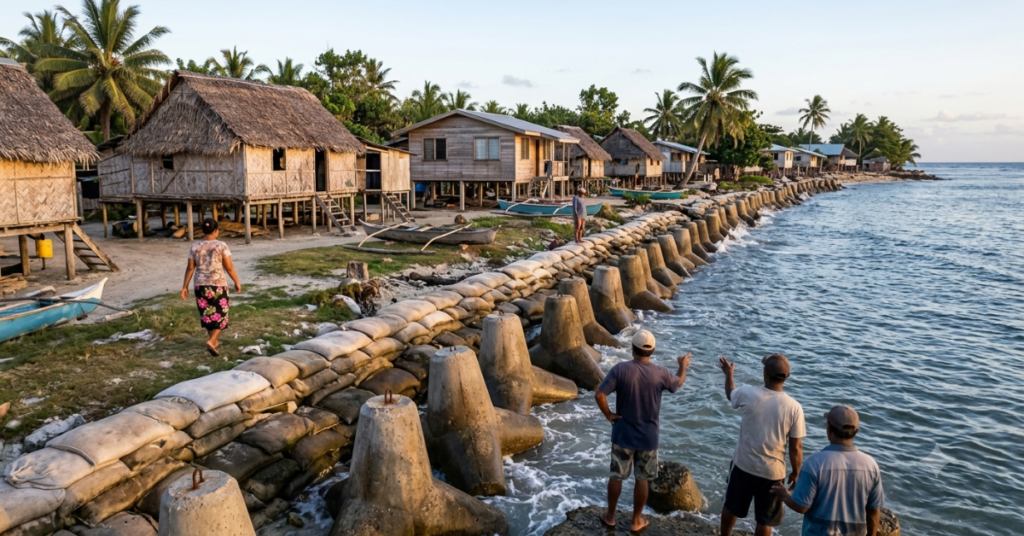
Pacific island nations, among the most exposed to sea level rise, pushed hardest for Australia’s original bid to host COP31 in Adelaide. That bid did not succeed, but the pre-COP process in Fiji and Tuvalu keeps Pacific priorities active in the lead-up to Antalya, with Australia’s negotiating role intended to help keep those priorities visible during the formal talks.
Loss and damage funding, agreed in principle at COP27, remains a closely watched topic at COP31, since the pace at which the Loss and Damage Fund can disburse money directly affects how quickly vulnerable communities recover from climate-driven disasters.
What COP31 Could Mean for Pakistan
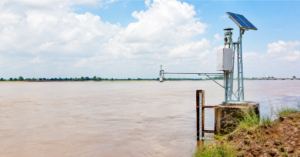
COP31 could have important implications for Pakistan through climate finance, adaptation funding, flood resilience, water security, and extreme-heat planning. Better access to climate finance could support more resilient infrastructure and climate-risk management, while GIS and GeoAI can help identify vulnerable areas and guide data-driven adaptation decisions.
Why COP31 Matters for Businesses and Investors
For businesses, the summit is less about diplomacy and more about signals. Outcomes on the clean energy transition, the “35 by 35” electrification target, and green industrialization will shape regulatory expectations and investment flows well beyond the two-week summit. Companies operating in energy, construction, agriculture, and coastal infrastructure have the most direct exposure to whatever emerges from the Antalya talks.
Investors, in particular, track COP outcomes for shifts in climate finance rules and disclosure expectations, since these summits increasingly influence how development banks and private capital allocate funding toward adaptation and resilience projects.
COP31 and the Role of GIS in Climate-Resilient Cities
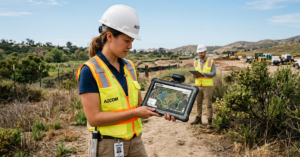
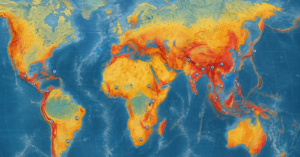
Climate-resilient cities, one of the ten Action Agenda themes, depend on accurate, location-based data long before any policy is signed. Governments negotiating adaptation finance increasingly rely on geospatial intelligence to identify at-risk neighborhoods, map exposure, and prioritize where limited funding will do the most good.
How GIS Can Help Cities Act on COP31 Climate Goals

In practice, this looks like several concrete, satellite-driven applications:
• Flood-risk mapping to model where rising water will reach during extreme rainfall
• Urban heat mapping to identify neighborhoods most exposed to heat islands
• Coastal inundation modelling for cities exposed to sea level rise
• Drought and soil-moisture monitoring to guide agricultural adaptation planning
• Land-use planning that accounts for future climate exposure
• Infrastructure vulnerability mapping to prioritize where climate-resilience investment goes first
These are exactly the kinds of decision-support tools that turn raw satellite data into choices local governments can act on, and they connect directly to the climate risk assessment work that underpins adaptation finance decisions at COP31.
How Can You Register or Apply to Attend COP31?
COP31 is not a general-public, ticketed conference. Access is accreditation-based: Party delegates, observer organization representatives, media, and approved stakeholders each follow separate processes, and organizations with existing UNFCCC observer status must register their delegates through the UNFCCC Online Registration System by the deadlines the secretariat communicates for COP31. This is different from the Partnerships and Türkiye Pavilion Side Event process below, which is run by the Türkiye Presidency rather than the UNFCCC secretariat.
Step 1: If your organization does not yet hold UNFCCC observer status, review the UNFCCC’s process for obtaining observer status first, since this is a one-off admission process separate from yearly registration.
Step 2: If your organization already holds observer status, register your delegates through the UNFCCC Online Registration System by the deadline your national focal point or constituency communicates for COP31.
Step 3: If you want to host an exhibit or session rather than attend as a delegate, apply separately through the Partnerships portal or the Türkiye Pavilion Side Event portal. This is a distinct process run by the host country, not the UNFCCC secretariat.
Step 4: Arrange accommodation and transfers through the official COP31 website well in advance, since Antalya hotels fill up quickly during conference week.
What Is the COP31 Green Zone?
COP31 will include public-facing climate action and engagement activities alongside the formal negotiations. Access arrangements and registration requirements for these public-facing spaces are still being finalized, so check the COP31 official website closer to the event for confirmed details.
The Blue Zone holds the official negotiation rooms and is restricted to accredited party delegations, UN staff, observer organizations, and registered media. Since Blue Zone access requires UNFCCC accreditation, applicants should expect several weeks of processing time as the November dates approach.
What Comes After COP31? A Brief Look Ahead to COP32
COP30’s formal decision text confirms that COP32 moves to Addis Ababa, Ethiopia, from 8 to 19 November 2027, marking the first African-led presidency since Egypt hosted COP27 in 2022. The African Group of Negotiators endorsed Ethiopia’s bid over a competing bid from Nigeria at COP30’s closing plenary in Belém. Ethiopia’s Foreign Minister, Dr. Gedion Timothewos, has been appointed COP32 President-Designate, and the presidency is expected to spotlight large-scale renewable energy projects and adaptation financing across the continent.
Key Climate Terms You Will Hear Throughout COP31
| Term | What It Means |
| UNFCCC | The 1992 treaty that created the COP process; nearly every country has ratified it. |
| Paris Agreement | Adopted at COP21 in 2015, sets the goal of keeping warming well below 2°C, with 1.5°C preferred. |
| NDCs | Nationally Determined Contributions, each country’s self-set climate pledge under the Paris Agreement. |
| Global Stocktake | A periodic, formal review of collective progress toward the Paris Agreement’s goals. |
| Climate finance | Money is flowing from wealthier nations, development banks, and investors to help developing countries cut emissions and adapt. |
| Loss and damage | Funding for unavoidable costs, such as floods or crop failures, that communities face once climate impacts have already occurred. |
August 22, 2026, Confirmed COP31 accreditation and Partnerships/Side Event deadlines; verified World Leaders’ Summit dates (11–12 November).
Key Takeaways
• COP31 runs from 9 to 20 November 2026 in Antalya, Türkiye, with the World Leaders’ Summit on 11 and 12 November.
• Türkiye is the formal COP President and host; Australia’s Chris Bowen serves as President of Negotiations, a role created specifically for COP31.
• Ten Action Agenda themes, including zero waste, clean energy and climate-resilient cities, sit alongside a separate, formal negotiating agenda on finance and the fossil fuel transition.
• General registration runs through the UNFCCC accreditation portal; Partnerships and Türkiye Pavilion side event applications are a separate process, currently closing on 14 August 2026.
• COP32 moves to Addis Ababa, Ethiopia, from 8 to 19 November 2027, the first African-led COP presidency since 2022.
Conclusion
COP31 arrives at a decisive point in global climate diplomacy. With Türkiye hosting and Australia leading the negotiations, the summit blends an unusual leadership structure with familiar, urgent stakes: closing the finance gap, protecting vulnerable nations and turning a decade of pledges into measurable results. Whether you plan to attend in Antalya or simply follow the outcomes from home, understanding how COP31 works helps you make sense of the climate decisions that will shape the next decade.
Need Help Turning Climate Data Into Resilience Decisions?
If your organization is planning for climate resilience, whether around COP31 commitments or a broader adaptation strategy, our team at AI Geo Navigators uses GIS, satellite data, and remote sensing to help organizations understand climate risks and plan for resilience. Get in touch to explore how AI-powered GIS solutions can support your climate planning.
FAQs
What does COP31 stand for?
COP31 stands for the 31st Conference of the Parties to the UNFCCC, the United Nations’ annual climate summit. Nearly 200 countries attend to negotiate climate policy, review progress on the Paris Agreement, and agree on new commitments for finance, emissions reductions, and adaptation support.
When is COP31 being held?
It runs from Monday, 9 November, to Friday, 20 November 2026, at the Antalya Expo Center in Antalya, Türkiye.
Who is in charge of COP31, Türkiye or Australia?
Both, in different roles. Türkiye is the formal host and COP President, managing logistics, the Action Agenda, and side events. Australia holds a separate, dedicated role, President of Negotiations, responsible for leading the negotiation process, consultations, and draft texts, an unusual arrangement that gives each country distinct responsibilities.
Which country will host COP32?
Ethiopia will host COP32 in Addis Ababa in 2027. The African Group of Negotiators endorsed Ethiopia’s bid over a competing proposal from Nigeria during COP30’s closing plenary, the first African-led COP presidency since Egypt hosted COP27 in 2022.
How is COP31 different from COP30?
COP30 in Belém, Brazil, centered on implementation, adaptation, and Global Stocktake follow-up. COP31 shifts attention toward the clean energy transition, climate-resilient cities and Pacific climate justice, while still carrying forward unfinished finance and fossil fuel discussions that COP30 did not fully resolve.
What is the theme of COP31?
Türkiye has framed its COP31 presidency around the ‘COP of the Future’ concept, with priorities including zero waste and circular economy, clean energy transition, and climate-resilient cities. These priorities form part of the presidency’s broader ten-theme Action Agenda.
Where can I find the official COP31 logo and branding?
The official COP31 logo, brand guidelines, and visual assets are published on the Türkiye Presidency’s official website at cop31.tr. AI Geo Navigators does not host or distribute official COP31 branding.
Sources and References
• COP31 Türkiye Presidency, Partnerships and Side Event Applications open until 14 August 2026 — https://cop31.tr/news/side-event-partnership-applications-2026
• UNFCCC, COP31 Information for Participants (A-Z) — https://unfccc.int/cop31/ifp
• UNFCCC, The Road to Antalya — https://unfccc.int/cop31/the-road-to-antalya
• UNFCCC, How to Obtain Observer Status — https://unfccc.int/process-and-meetings/parties-non-party-stakeholders/non-party-stakeholders/overview/how-to-obtain-observer-status
• UNFCCC Online Registration System — https://onlinereg.unfccc.int/applications/onlinereg/index_media.html
• Official COP31 Türkiye website, Action Agenda and registration portals — https://cop31.tr/
• Australian Government (DCCEEW), COP31 and the Australia-Pacific Pre-COP — https://www.dcceew.gov.au/climate-change/international-climate-action/unfccc-cop/cop31
• Australian Government, President of Negotiations for COP31 Statement — https://unfccc-cop.dcceew.gov.au/cop31-president-of-negotiations-statement
• Joint Türkiye-Australia media release on the COP31 hosting arrangement — https://minister.dcceew.gov.au/bowen/media-releases/joint-media-release-cop-be-hosted-turkiye-australia-leading-negotiations
• UNFCCC, COP31 Presidency Bonn press conference transcript — https://unfccc.int/news/cop31-presidency-announces-new-targets-on-global-electrification-cutting-waste-resilient-cities
• UNFCCC, COP30 formal decision text confirming Ethiopia as COP32 host — https://unfccc.int/sites/default/files/resource/cp2025_L13_adv.pdf
• Legal Response International, COP31 Presidency Arrangements briefing — https://legalresponse.org/cop-31-presidency-arrangements/
Editor’s note: COP31 registration side-event deadlines and participant information may change as the conference approaches. See the Last Updated date at the top of this guide and confirm time-sensitive details on the official UNFCCC and COP31 websites.