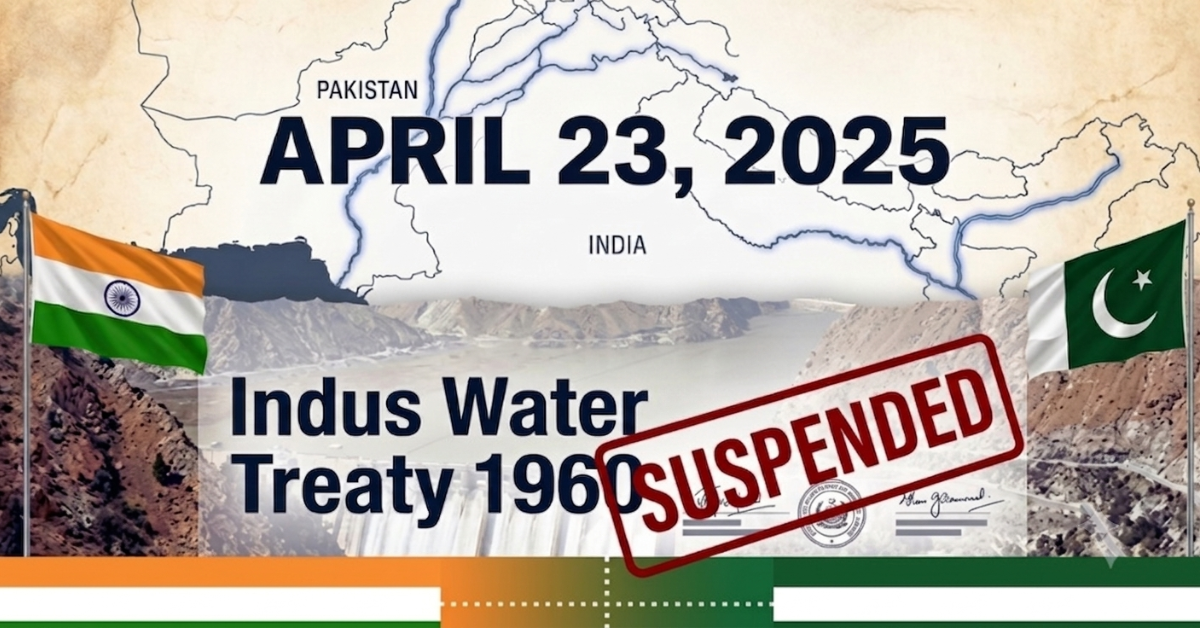
| Indus Water Treaty Suspended on April 23, 2025, by India, placing it in abeyance following the Pahalgam terror attack that killed 26 civilians. The treaty text has no suspension clause, making the action legally unprecedented. India then cut water flow through the Baglihar Dam, flushed two dam reservoirs without advance notice, and stopped sharing hydrological data with Pakistan. In June 2025, the Permanent Court of Arbitration ruled that the treaty does not permit unilateral abeyance and reaffirmed its jurisdiction. India rejected the ruling. As of mid-2026, the treaty remains suspended with no restoration date. |
When India announced that the Indus Water Treaty suspended on April 23, 2025, most early reporting asked whether India could physically cut off Pakistan’s water, missing the more important story behind the complete history and river allocations the treaty actually governs. That question missed the more important story. Within days, India had taken four concrete actions: halting hydrological data exchange, cutting flow through Baglihar Dam, and flushing two reservoirs without advance notice. The beginning of new infrastructure is freed from treaty design constraints. Each action had a different legal status and a different practical impact on Pakistan.
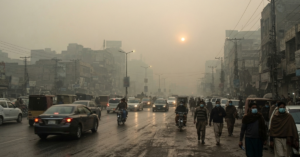
The Indus Water Treaty Suspended decision not only created diplomatic shock but also triggered immediate water management actions. Pakistan was already navigating one of the most severe water crises of any country in the world. How water scarcity is reshaping livelihoods and forcing communities to adapt across climate-vulnerable regions. It provides the baseline context for understanding why every disruption to the Indus River flows carries consequences that extend far beyond diplomatic considerations.
What triggered the Indus Water Treaty Suspended announcement?
| Timeline of Key Developments 22 Apr 2025 — Pahalgam attack kills 26 tourists in Kashmir 23 Apr 2025 — India announces suspension of Indus Waters Treaty 24 Apr 2025 — Pakistan declares suspension unlawful under international law May 2025 — India begins review of western river usage rights May 2025 — Pakistan raises the issue at international diplomatic forums Jun 2025 — World Bank declines to intervene directly 2025 ongoing — Treaty remains suspended; dispute continues |
The Pahalgam terror attack on April 22, 2025, killed 26 civilians in Jammu and Kashmir. India attributed the attack to the Resistance Front, described as an offshoot of Lashkar-e-Taiba, and held Pakistan responsible.
On April 23, India’s Cabinet Committee on Security announced the treaty would be held in abeyance until Pakistan credibly and irrevocably abjures its support for cross-border terrorism. The word abeyance means temporary suspension, not termination. However, India’s Home Minister Amit Shah said the treaty would never be restored, a stance repeated by India’s UN representative in March 2026.
Remarkably, the treaty had survived the 1965 and 1971 wars, the 1999 Kargil conflict, and the 2016 Uri and 2019 Pulwama attacks without formal suspension. A durability that traces directly back to how the Indus Water Treaty 1960 was originally structured. The Clingendael Institute’s July 2025 analysis noted India’s frustration with the treaty had been building since at least 2023, and the Pahalgam attack provided the political moment to act.
Is the Indus Water Treaty Suspended legal?
The treaty contains no suspension clause. The word abeyance does not appear anywhere in the treaty text. Article XII establishes the only mechanisms for changing obligations, one of twelve articles governing the treaty, that the treaty shall remain in force until terminated by a duly ratified treaty concluded between both governments. Neither provision permits one party to unilaterally stop complying. The Indus Water Treaty Suspended move is considered unprecedented under international water law
In June 2025, the Permanent Court of Arbitration issued a supplemental award holding that the treaty does not provide for unilateral abeyance and reaffirming its jurisdiction. India rejected the ruling, disputed the tribunal’s jurisdiction, and boycotted subsequent proceedings. In May 2026, the PCA issued a further award on the Kishanganga and Ratle disputes that India again rejected.
Legal scholars at the American Society of International Law noted in 2025 that India’s implicit material breach argument fails because the treaty contains no counter-terrorism obligations. Applying the material breach doctrine requires showing a violation of a provision essential to the treaty’s object and purpose, which is water sharing. Pakistan’s security conduct falls outside that scope.
The CSIS analysis: Can India cut Pakistan’s Indus lifeline provides the most detailed.
What four concrete steps did India take?
Following the Indus Water Treaty Suspended announcement, India implemented four major operational steps affecting river flows.
Action 1: Cut the Baglihar Dam water flow.
Around May 4 to 5, 2025, India regulated releases through the Baglihar Dam on the Chenab River. Pakistan Observer reported in May 2026 that downstream flow levels at Pakistani gauging stations fell by approximately 90% during flushing operations. Regulating release timing is within India’s existing technical capability without new construction.
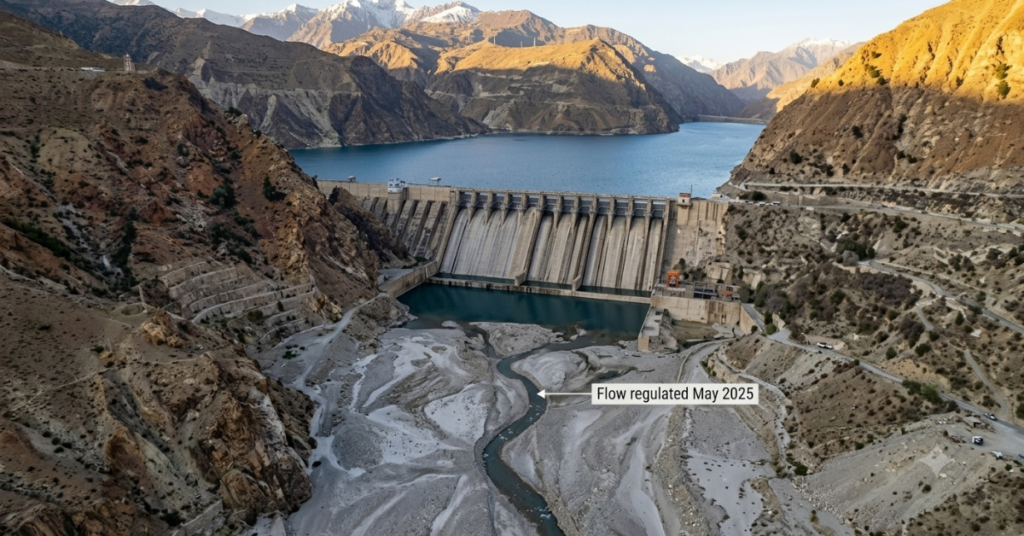
Action 2: Reservoir flushing without advance notice.
India flushed two dam reservoirs in May 2025 without providing Pakistan the advance notice required under Article VII. Think Global Health’s July 2025 analysis documented that flushing without notice causes a sudden surge of turbid water followed by a sharp flow reduction, damaging Pakistani canal infrastructure, irrigation schedules, and drinking water systems.
Action 3: Halting hydrological data exchange.
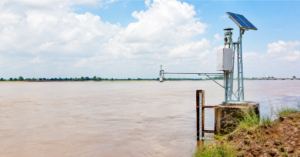
India suspended the data exchange required under Article VII immediately after the announcement. This data includes river flow measurements, flood forecasts, glacier melt rates, and dam release schedules. According to CSIS’s May 2025 analysis, this may be India’s most powerful immediate lever because it hampers Pakistan’s water management and can endanger lives without physically stopping water. Pakistan entered the 2025 monsoon without upstream flow data from India for the first time since 1960, breaking one of the treaty’s original cooperative provisions under Article VII.
The scale of what this data loss means in practice becomes clear when you understand how devastating floods become when upstream hydrological intelligence is absent. Pakistan’s flood management system was built around continuous data exchange with India, and withdrawing it removes the early warning window that saves lives.
Action 4: Accelerating new infrastructure.
The suspension removed constraints requiring India to share dam designs with Pakistan before construction. India began work on two hydroelectric projects in Kashmir and announced plans to accelerate the proposed Sawalkot Dam on the Chenab, which would hold 1.8 million acre-feet of water.
Can India actually stop Pakistan’s water?
| Key Institutions and Infrastructure Permanent Indus Commission: a joint body managing day-to-day treaty coordination between India and Pakistan World Bank: original mediator and guarantor of the 1960 treaty Baglihar Dam: Indian hydropower project on the Chenab River, disputed under treaty provisions Kishanganga Project: Indian hydropower project on the Jhelum tributary, subject to arbitration Permanent Court of Arbitration: an international body handling formal treaty disputes Neutral Expert mechanism: second-tier dispute resolution body under the treaty framework |
India cannot stop the bulk of Pakistan’s water in the short term. The three western rivers carry approximately 135 million acre-feet annually. India’s current storage capacity on western rivers is approximately 1 million acre-feet, against the treaty maximum of 3.6 million acre-feet set during the original 1960 negotiations. Blocking meaningful volumes would take years and require massive capital investment.
However, India can cause significant disruption immediately by regulating dam release timing, flushing reservoirs unpredictably, withholding flood forecast data, and accelerating dam construction without treaty constraints. The impact falls hardest during the low-flow season from December to February. The role of geospatial intelligence and remote sensing in monitoring river basin flows and detecting upstream changes in real time is increasingly relevant here, as Pakistan now relies on satellite-based flow estimation to partially compensate for the loss of Indian data.
| India can do now | Requires years of infrastructure |
| Regulate Baglihar and Kishanganga release timing | Build a large storage to hold 135 MAF of Western river flows |
| Flush reservoirs without notice | Construct inter-basin diversion canals |
| Halt the hydrological data and flood forecast sharing | Divert significant Chenab or Jhelum volumes permanently |
| Accelerate hydropower projects freed from design review | Complete Sawalkot Dam (1.8 MAF storage) and similar projects |
What has been Pakistan’s response?
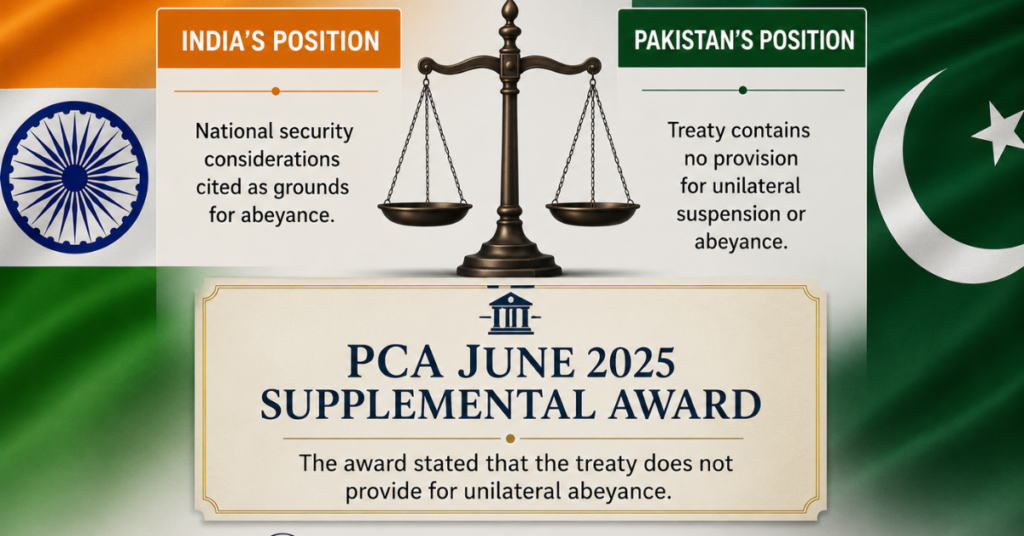
Pakistan’s response to the Indus Water Treaty Suspended development, was both legal and diplomatic in nature.
Legally, Pakistan filed submissions with the PCA in May 2025, and the PCA’s June 2025 ruling upheld Pakistan’s position. Pakistan’s Water Commissioner documented three specific flow alteration incidents since April 2025 as evidence of treaty violations.
Politically, Pakistan characterised any attempt to stop or divert treaty water as an act of war to be responded to with full force. Agriculture contributes approximately 23% of Pakistan’s GDP and employs nearly 40% of its workforce. Approximately one-third of Pakistan’s electricity comes from hydropower, dependent on western river flows.
A military ceasefire was announced in May 2025 following air strikes and missile exchanges. Despite the ceasefire, India made clear the treaty would remain in abeyance. Prime Minister Modi stated that water and blood cannot flow together.
What does Indus Water Treaty Suspended mean for Pakistan?
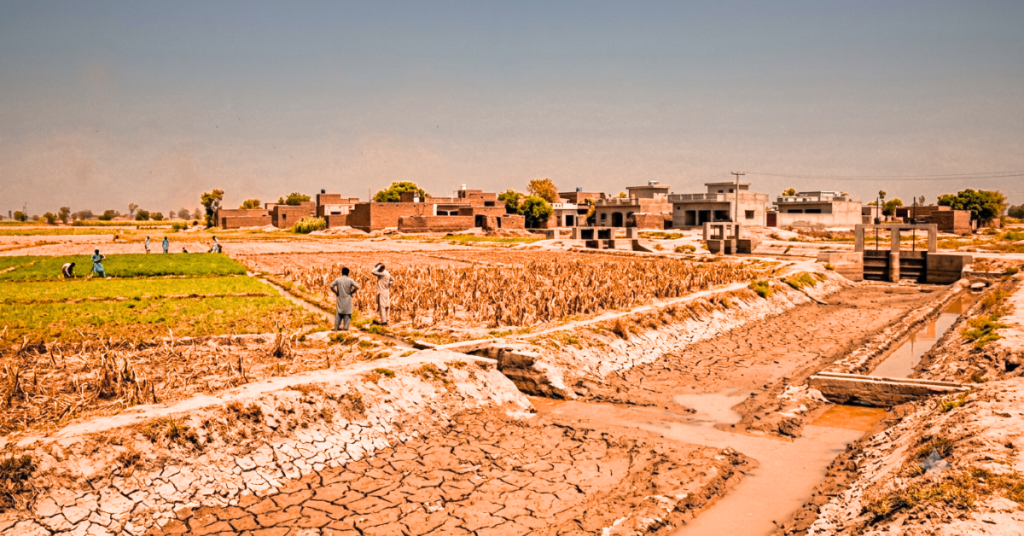
The Indus Water Treaty Suspended decision has raised serious concerns about agriculture and water security in Pakistan. The agricultural impact is immediate. Canal officers allocate water weeks in advance based on expected inflows. Unpredictable releases break those schedules across Pakistan’s entire irrigation system. How climate change is compounding Pakistan’s water and food security crisis across the Indus Basin documents the pre-existing vulnerability that makes treaty disruption so much more destructive than it would be for a more water-secure country.
The flood data loss is potentially more dangerous. During Pakistan’s 2022 floods, which submerged one-third of the country and killed over 1,700 people, upstream Indian flow data was essential for forecasting. Without it in future events, the human cost could be substantially higher. How Pakistan’s climate-driven disasters are generating displacement at a scale the international community has not fully reckoned with shows why adding water treaty uncertainty to an already acute climate crisis creates compounding humanitarian risk.
Reservoir flushing also releases sediment-laden water that raises turbidity in drinking water systems, creating waterborne disease risk in communities dependent on river water.
What would restoration require?
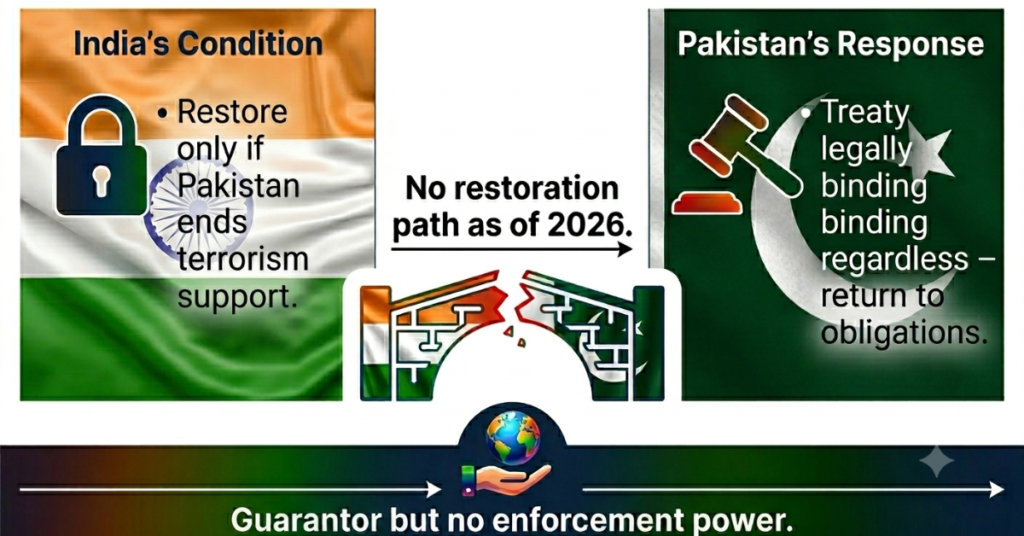
Restoring cooperation after the Indus Water Treaty Suspended announcement would require significant political progress. India has set one explicit condition: Pakistan must credibly and irrevocably end support for cross-border terrorism. Pakistan disputes both the factual claim and the legal validity of linking a water treaty to security policy.
The World Bank, as a treaty guarantor, has called for dialogue but has no enforcement power. Legally, since the PCA confirmed the treaty was never validly suspended, restoration simply requires India returning to compliance without preconditions.
The Clingendael Institute’s July 2025 analysis concluded the suspension appears to be a strategic signal rather than a step toward permanent unilateral water action. There is no long-term alternative to the Indus water cooperation. Chatham House’s April 2026 analysis concludes that re-engagement could help bring lasting peace. Hydrological conditions of the Indus Basin are already shifting rapidly from climate pressures, making eventual cooperation a strategic necessity regardless of bilateral political tensions.
Geospatial tools are increasingly central to any eventual restoration framework. AI-powered GIS risk assessment and decision support for water resource management in South Asia provides the kind of neutral, satellite-grounded evidence base that both countries would need to verify compliance and monitor flows in any future arrangement.
For expert analysis updated as events develop, follow AI Geo Navigators.
Conclusion
India placed the Indus Water Treaty in abeyance on April 23, 2025, the first formal suspension in 65 years. The text of the Indus Water Treaty Suspended contains no clause. India took four concrete steps: cutting Baglihar Dam flow, flushing two reservoirs without notice, halting hydrological data sharing, and accelerating new infrastructure freed from treaty design review. The PCA ruled in June 2025 that unilateral abeyance is not permitted. India rejected the ruling and boycotted all subsequent proceedings. India cannot stop the bulk of Pakistan’s water in the short term, but can alter timing, withhold flood data, and flush reservoirs. India’s restoration condition requires Pakistan to credibly end support for terrorism. Pakistan rejects this as legally invalid. No restoration timeline exists as of mid-2026. Overall, the Indus Water Treaty Suspended continues to shape India-Pakistan water relations.
Frequently asked questions
Q1. Is the Indus Water Treaty permanently cancelled or just suspended?
The treaty is suspended, not permanently cancelled. It remains legally binding under international law because it has no cancellation clause and can only be ended by a duly ratified bilateral treaty under Article XII. The PCA confirmed in June 2025 that unilateral abeyance is not permitted, though India rejected that ruling.
Q2. What concrete steps did India take after the suspension?
India cut water flow through the Baglihar Dam, flushed two reservoirs without the advance notice required. Article VII stopped sharing hydrological data, including flood forecasts, and began accelerating new hydropower projects freed from treaty design review. Pakistan documented three specific flow alteration incidents since April 2025.
Q3. What would it take to restore the treaty?
India requires Pakistan to credibly and irrevocably renounce support for cross-border terrorism. Pakistan disputes both the accusation and the legal validity of conditioning a water treaty on security policy. The World Bank has no enforcement power. No restoration timeline exists as of mid-2026.