| Rainwater harvesting is the collection and reuse of rain, which in many areas runs off and disappears. Harvesting rainwater is the most cost-effective and simple of all the tools to help address water scarcity, and it fully supports the needs of people, whether at home, on the farm, or at the city level. It only requires basic tools and no elaborate large-scale systems. |
What Is Rainwater Harvesting?
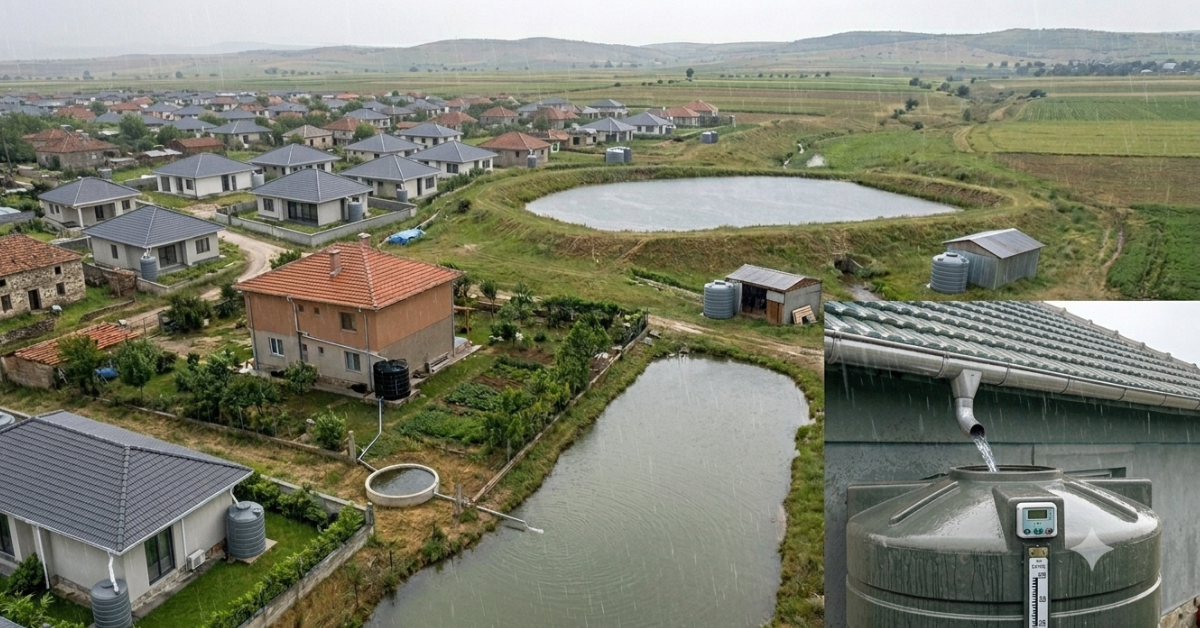
Rainwater harvesting is the collection and storage of rain from a building roof or open area for future use. If not collected, rain either flows into a drain and is wasted, or it evaporates. The simplest rainwater harvesting system is just one barrel placed under a downspout. More sophisticated rainwater collection systems can be designed for an entire apartment block, school campus, or commercial farm.
The aim is the same anywhere. Convert a normally free and naturally occurring resource into a reliable system. In most parts of the world, there is little difference between rainwater harvesting and water harvesting systems.
Rainwater harvesting can be designed for any scale. A rural family can start the system with just one barrel and a simple filter system at a very low cost. A city government can decide to incorporate rainwater harvesting systems into the building codes for all new developments. The approach to designing and implementing systems does not need to be modified for the scale of the system.
Rooftop Rainwater Harvesting Explained Simply
The most popular method of rainwater harvesting the world over is rooftop rainwater harvesting. Rain falling on a roof is collected and directed by gutters to a downpipe. A filter is used to remove the dust and debris. The clean water is then directed into a storage tank.
It is important to note that this system does not require any additional land. This makes it perfect for highly populated urban areas as well as more open rural areas. Many communities in South Asia have been using rooftop collections for many decades. The technology has been around for years, but the speed of the demand for the technology has not been seen until now.
What Does Rainwater Harvesting Mean Across Different Regions?
Rainwater harvesting’s significance relies on context. From a rainwater harvesting lens, arid zones place more value on storage. In these areas, every possible drop is collected and stored for long dry spells.
In temperate and tropical zones, harvesting rainwater is more about recharging groundwater storage. Rather than filling storage tanks, rainwater is directed underground to recharge depleted aquifers.
In much of Pakistan, India, and Sub-Saharan Africa, the harvesting of rainwater is primarily to increase drought resilience, but is also increasingly used to reduce flood risk. Collection systems used to capture rainwater help to limit peak flood flow. This reduces the stress on drainage systems.
Why Does the World Need Rainwater Harvesting Right Now?
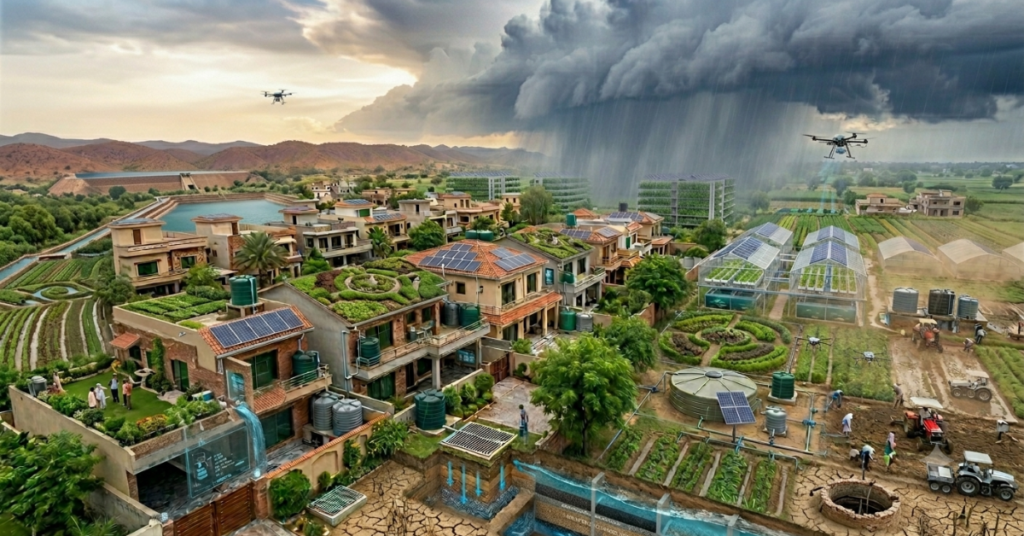
The time of waiting to address water scarcity (an obvious and present demand) is over. UNICEF has reported that nearly 4 billion people suffer from extreme water scarcity for a month or more during the year. More than 2 billion people reside in countries that cannot meet their own demand for water.
The World Resources Institute indicates that 25 countries have extreme levels of water scarcity, and those countries contain about 25% of the world’s population. These countries are depleting nearly their entire supply of freshwater, while some of them are very rainy during certain seasons. The issue is not with rainfall. It is with the infrastructure to capture and store rainfall, which has not kept pace with population and climate changes.
Recent years show monsoon seasons straying from historical cycles. Currently, dry spells between rainy seasons are getting longer. Groundwater that has been drawn down over decades must be managed carefully, as the freshwater sources once considered unlimited by older generations are no longer sufficient.
Water Management is a Bigger Problem for Cities and Farms
An example of this can be seen in urban areas that are experiencing a stressed distribution system. Water leaves leaking pipes and is wasted before ever reaching the tap. Urban areas are also managing increased demand on static, and often, outdated systems. Despite many cities receiving substantial annual precipitation, they are not able to supply their residents.
While the urban system is stressed due to demand and distribution, the rural system, especially farms, lacks timely rainfall. Many farms receive rainfall, but for a long dry spell. When that rainfall does occur is the time crops need it the least. Harvesting systems can collect and store rainfall for when it is most needed. Rainwater Harvesting systems manage the lag.
What the Research Shows About Harvesting Rainwater
According to a study published in Nature Communications, harvesting rainwater has the potential to provide safe drinking water for between 0.45 and 2.08 billion people who have no consistent access to it. Water management, especially harnessing rainwater, is important to meeting the basic needs of the global population. Water management, harvesting rainwater, and the systems needed to capture and store this resource require capital investment and education.
What’s clear from that research is that rainfall is not the primary limiting factor. Water-stressed regions frequently have sufficient rainfall for their common needs, given that the rainfall is captured and stored. Investment, awareness, and changing the regulations so that all new creations have to include rainwater harvesting systems, and technical ability to appropriately size and place systems using actual local data, and not rule-of-thumb data, are the real limiting factors.
Rainwater Harvesting in Pakistan: Why It Matters More Than Ever
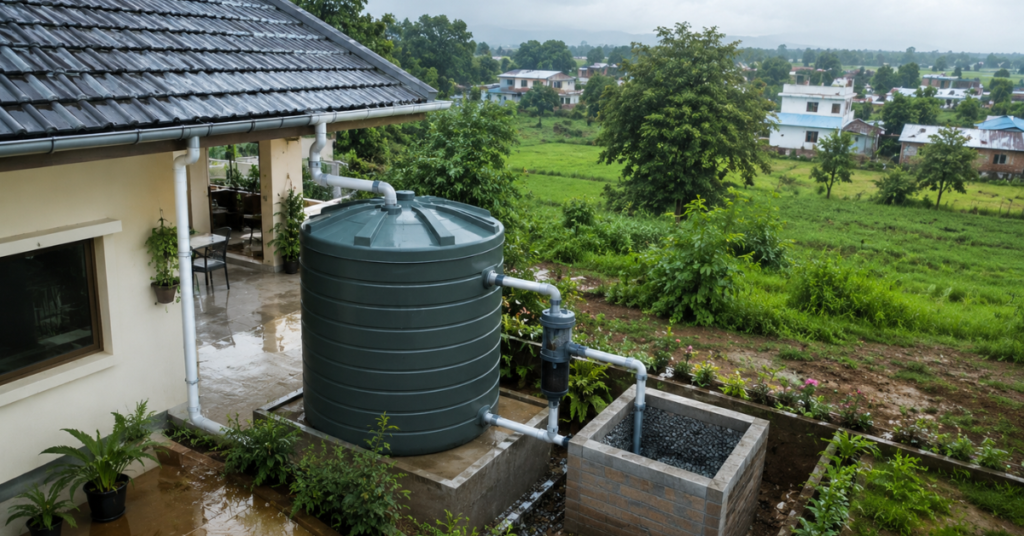
Out of all countries, Pakistan is one of the countries that are the most water-stressed. Here, rainwater harvesting is no longer a sustainable practice, but a necessary one. It is clear that the combination of rapid population growth, climate change, and the increasing urbanization of the environment, compounded by the perpetual over-reliance on the single river system, is creating an unprecedented challenge to freshwater in Pakistan.
Growing Pressure on the Indus Basin
Almost all of Pakistan’s water supply comes from the Indus River system. Agriculture, industry, and domestic water needs all depend heavily on this river. As a result, ensuring a secure long-term water supply has become a major challenge.
Changing rainfall patterns and overburdened water systems have made water security even more difficult. Rainfall is seasonal and often arrives in heavy downpours over a short period, causing urban flooding, while large amounts of potentially usable water flow away instead of being captured.
Declining Groundwater Levels
Many households and farms rely on groundwater, which is now their main backup source. Unfortunately, overpumping has caused declining groundwater levels in many areas of Punjab and Sindh. Some areas have seen groundwater levels drop to the point where people have had to drill new wells with greater depth every few years. There are ways to change this, such as rainwater harvesting. Water harvesting systems can be designed to channel collected rainwater into pits to recharge the local aquifer, or made into recharge wells and percolation systems.
Urban Opportunities
Cities such as Karachi, Lahore, Islamabad, and Rawalpindi face a dual challenge. Water shortages occur during dry periods. Flooding hits during heavy rainfall. Rooftop rainwater harvesting addresses both at once. Capturing runoff from homes, schools, offices, and commercial buildings reduces pressure on municipal supply. It also decreases stormwater runoff that causes urban flooding.
Government and Policy Initiatives
In Pakistan, knowledge of rainwater harvesting is steadily increasing. Many public sector entities, development agencies, and local bodies have implemented rainwater harvesting, groundwater recharge, and other water conservation projects. Although the adoption of such projects is low against the magnitude of the problem, experts consider rainwater harvesting to be critical in the future sustainable water management approach for Pakistan.
A Practical Solution for Pakistan’s Water Future
Pakistan has a lot of rainwater from the monsoon, a large amount of which goes to waste. Increasing the capture of rainwater at the household, community, agricultural, and institutional levels can contribute to the improvement of water security, reduce the overexploitation of groundwater, and increase the ability to cope with the impacts of drought and flooding. Where it falls, capturing rainwater may, in fact, be the most useful approach and the most cost-effective. For a detailed breakdown of the agricultural techniques used across Pakistan’s rainfed barani areas, see our rainwater harvesting for agriculture in Pakistan guide
How Does a Rainwater Harvesting System Work?
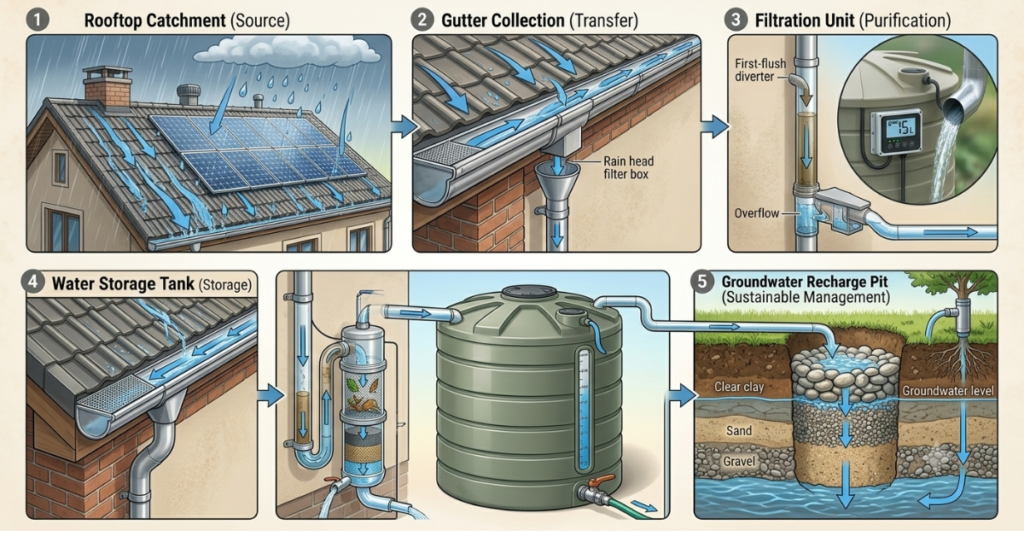
Every functioning system follows the same basic sequence. Understanding each stage allows planners, homeowners, and engineers to design a system that performs reliably.
The Five Core Stages
1. Catchment: the surface where rain first lands. Typically, a rooftop, courtyard, or prepared open field. The size, material, and slope of the catchment surface determine how much water is collected per millimetre of rainfall.
2. Conveyance: the gutters, pipes, and channels that carry water from the catchment toward storage or recharge. Properly sized conveyance prevents overflow during heavy rain and reduces debris entering the system.
3. Filtration: a mesh screen, first-flush diverter, or multi-stage filter. Removes leaves, dust, bird droppings, and other contaminants before water enters storage. The first flow off a roof after a dry period carries the highest pollutant load and needs diversion.
4. Storage: a tank, cistern, underground sump, or open reservoir. Tank sizing is one of the most critical design decisions. Choosing the right storage tank is just as important as selecting the harvesting system itself. Explore our complete guide on Rainwater Harvesting Water Tanks to compare tank materials, capacities, installation options, and maintenance requirements
5. Distribution or recharge: water goes out through a pump or gravity feed for use, or is directed into the ground through a recharge pit, percolation trench, or recharge well to restore the local water table.
In short, explain rainwater harvesting to anyone in one sentence, and it comes down to this: capture it, clean it, store it, then use it before it is wasted. For a full step-by-step breakdown of how to put this into practice, see our how to install a rainwater harvesting system guide. In one sentence: capture it cleanly, store it correctly, then use it before it evaporates.
How Tank Sizing Works
Most systems fail because the tank is the wrong size. The correct approach cross-references three variables: catchment area in square metres, average monthly rainfall in millimetres, and expected daily water demand.
Multiply the catchment area by the rainfall depth and by a runoff coefficient. This accounts for losses to evaporation and surface absorption. The result gives the available volume per rainfall event. Divide by the dry period duration to get the minimum tank size needed.
Professional designers use GIS-based rainfall data to refine this calculation. AI Geo Navigators’ geospatial intelligence services process satellite-derived monthly precipitation records at the site level. This replaces regional averages with actual historical data for the specific location. A system sized on an average year runs dry during a below-average year. Site-specific data eliminates that risk.
What Are the Main Rainwater Harvesting Methods?
Methods are divided into two broad categories. Storage methods hold collected water for direct use in households, farms, or commercial facilities. Recharge methods return captured water to underground aquifers. Both serve water security goals. The right choice depends on local geology, land availability, and the primary purpose of the system.
| Method | Best For | Goal | Typical Cost |
| Rooftop storage tank | Homes, schools | Daily use | Low |
| Recharge pit | Urban plots | Groundwater recharge | Low |
| Check dam | Farmland clusters | Irrigation and recharge | Moderate to high |
| Underground cistern | Dense buildings | Space-saving storage | Moderate |
| Percolation pond | Large open land | Aquifer recharge | Moderate |
| Rain garden | Suburban homes | Runoff absorption | Low to moderate |
We cover every one of these methods in far more depth in our dedicated rainwater harvesting methods guide. For complete step-by-step installation guidance, see our how to install a rainwater harvesting system guide.
Rooftop Storage Systems
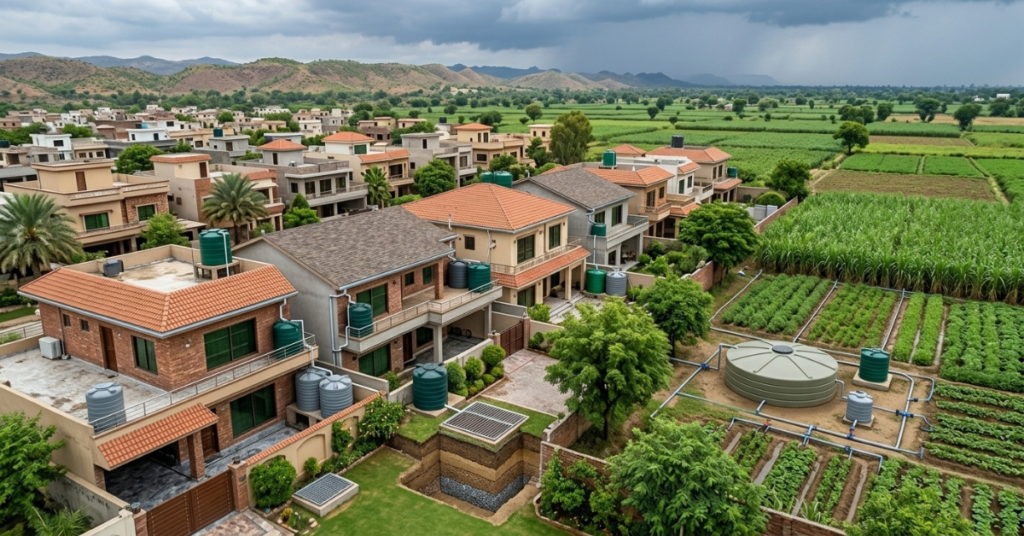
Rooftop rainwater harvesting forms the foundation of household-scale collection worldwide. The system connects to existing roof guttering. Water passes through a first-flush diverter and filter. It reaches a storage tank ranging from a few hundred to tens of thousands of litres. Learn how to choose the best storage solution in our rainwater storage tanks guide
Running costs after installation stay minimal. Filters and gutters need periodic cleaning. For drinking water, UV sterilisation, slow sand filtration, or ceramic filtration is recommended. For toilet flushing, garden irrigation, laundry, and livestock watering, filtered rooftop water is generally suitable without further treatment.
Recharge Pits and Percolation Trenches
A rainwater harvesting pit is a simple excavation, typically one to three metres deep and filled with gravel or broken stone. It receives roof or surface runoff and allows slow percolation into the soil. Recharge pits work particularly well in urban areas where impermeable surfaces have eliminated natural groundwater recharge pathways.
Percolation trenches follow the same principle but run linearly. They suit channelling runoff along building perimeters or across sloped surfaces. Both approaches restore the aquifer over time. They stabilise or raise the local water table and reduce pumping depth for wells in the surrounding area.
Check Dams and Farm Ponds
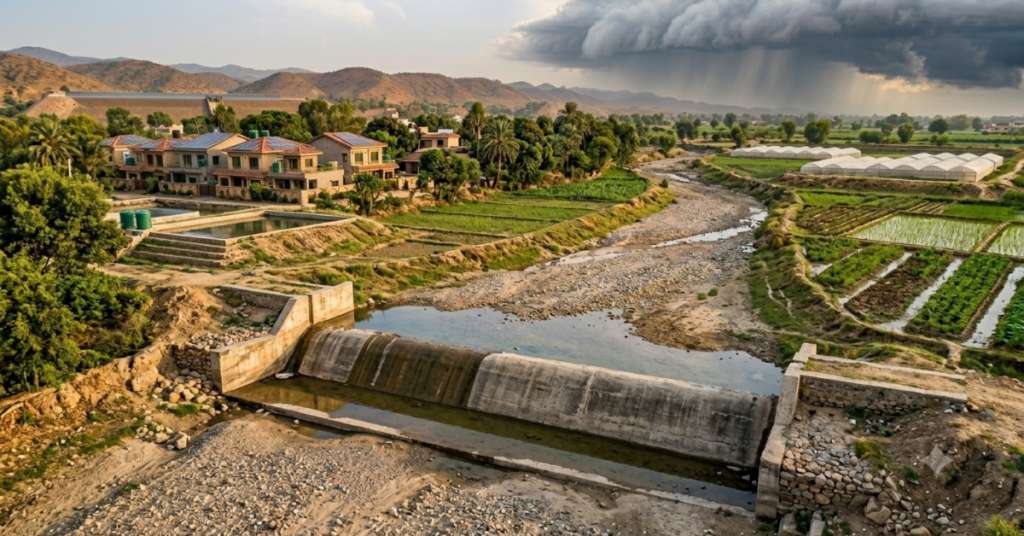
Check dams are the most widely used agricultural structure across South Asia. For a complete guide on how these methods are applied specifically to Pakistani farmland, see our rainwater harvesting for agriculture in Pakistan guide. A low barrier across a seasonal stream or drainage channel slows runoff, allows sediment to settle, and maximises percolation into the soil and aquifer. Check dams do not create large reservoirs. They hold water in place long enough for a significant fraction to infiltrate rather than run away.
Farm ponds provide surface storage for irrigation during dry periods between rain events. A correctly sized and lined farm pond bridges the irrigation gap across an entire cropping cycle. This enables double cropping in areas otherwise limited to a single rain-fed crop per year.
Underground Cisterns and Urban Systems
Underground cisterns store significant water volumes without occupying ground-level space. They cost more than surface tanks but last longer and avoid algae growth and heat-related water quality problems.
Large commercial and institutional buildings in water-stressed cities increasingly incorporate underground rainwater harvesting as a standard design element. Captured water goes to toilet flushing, cooling tower top-up, and landscape irrigation.
What Are the Real Benefits of Rainwater Harvesting?
Benefits operate at multiple levels simultaneously, from individual households saving on water bills to cities cutting flood risk to watersheds rebuilding groundwater reserves.
Household and Farm Level Benefits
• Lower dependence on municipal and groundwater supply, providing a buffer against interruptions and rising tariffs
• Reduced water bills once the system is installed, since harvested rainwater replaces purchased supply for irrigation, toilet flushing, and laundry
• Greater resilience for farmers during dry spells, enabling irrigation without depleting groundwater reserves
• Improved water quality for agriculture in areas where groundwater has become saline or contaminated
• Reduced dependence on unreliable piped supply in peri-urban and rural areas
Community and Urban Level Benefits
• Reduced urban flooding because rooftop collection intercepts runoff before it reaches overloaded stormwater drains
• Lower pressure on centralised water treatment and distribution infrastructure
• Improved groundwater recharge across urban areas, slowing the decline of water tables
• Fewer combined sewer overflow events in cities where stormwater and sewage share drainage networks
Environmental and Climate-Level Benefits
• Partial restoration of the natural water cycle in urbanised areas where impermeable surfaces block natural infiltration
• Reduced erosion from surface runoff in agricultural areas where check dams slow and spread water
• Aquifer recharge that maintains freshwater supply for agriculture and downstream water users over the long term
• Climate resilience: distributed storage at the household and community level buffers against increasing rainfall variability
The Nature Communications research cited above estimated that realising even a fraction of the technically feasible potential could provide reliable water access to hundreds of millions of people. The gap between current adoption and that potential is not a technical problem. It is a policy, investment, and awareness problem.
What Challenges Does Rainwater Harvesting Face?
Rainwater harvesting has not spread as fast as the evidence justifies. Understanding the real barriers matters for households planning a system and policymakers trying to accelerate adoption at scale. None of these challenges is insurmountable. Each one has a specific solution.
Upfront Installation Cost
One of the barriers to adoption is the cost of the systems. The cost of systems in the global south is affordable to the urban households in the middle-income band. The costs of rainwater harvesting systems are beyond the resources of smallholder farmers and informal settlement residents.
There are several solutions, such as subsidized programs, community-based finance programs for water systems, and community-based systems. The costs of the systems are not the main barriers to adoption. The main barrier is the lack of finance to extend the full costs of the systems over their useful life.
Maintenance Requirements
Rainwater harvesting systems, which go unmaintained, cease to function in a small number of seasons. First-flush diverters and filters become clogged, and tanks, gutters, and harvesting systems become obstructed and clogged. The maintenance of rainwater harvesting systems is simple.
The greatest barrier to adopting rainwater harvesting systems is not the lack of complexity. The greatest barrier to rainwater harvesting systems is neglect. Systems that are installed without providing the households with training on the maintenance of the systems often do not function as intended.
Rainfall Variability and Sizing Risk
In regions with highly variable annual rainfall, sizing a system correctly without reliable local data is genuinely difficult. A system sized on an average year runs dry in a below-average one. A system sized conservatively for drought years wastes capital in typical years.
Satellite-derived rainfall data at fine spatial resolution solves this. AI Geo Navigators’ decision support and applied GIS solutions integrate actual site-level precipitation records with catchment geometry and demand estimates. Designers get accurate sizing inputs instead of regional guesses.
Regulatory and Policy Gaps
Incurring the opportunity cost of installing a rainwater harvesting system during initial construction is mostly missed since most countries do not mandate the inclusion of these systems in construction. The addition of a rainwater harvesting system to an already built structure is costly, and construction in the built environment is disruptive.
Rapid adoption of rainwater harvesting systems is seen in countries where either incentives or mandatory inclusion of rainwater harvesting systems in new construction are seen to eliminate the cost of the system and to eliminate the knowledge of maintenance barrier for the system.
How Is Rainwater Harvesting Evolving with Technology?
Building systems to deal with stable climate conditions was easy using local and customary knowledge. That is no longer the case as climate change disrupts the historical stability of precipitation.
GIS and Satellite Rainfall Data
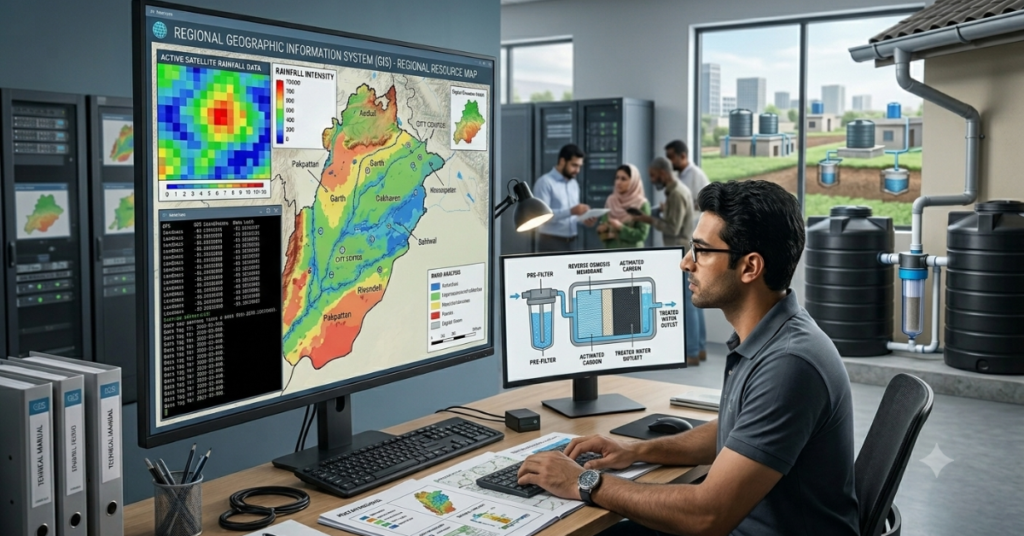
In the past, design relied on the labor-intensive collection of local rain-gauge records, which are often unavailable. Now, planners can access satellite rainfall data and can delineate precipitation zones and estimate rainfall at the district or parcel level with GIS, often before the installation of the first rainwater harvesting tank.
The distribution of rainfall across a region is highly variable and can even be disparate across short distances. For example, the side of a hill facing the prevailing weather can receive about 30 to 40 percent more rainfall annually compared to the bottom of a valley, which is only a few kilometers away. Based on regional averages, design can leave the system undersized for the hillside and oversized for the valley bottom. This is no longer an issue with GIS-based design.
AI Geo Navigators and Data-Driven Rainwater Planning
AI Geo Navigators applies satellite-derived data analysis to rainwater harvesting project planning through its remote sensing and image analytics services. Multi-year satellite imagery maps precipitation patterns, evapotranspiration rates, and surface runoff characteristics at the site level. System designers get real data rather than regional estimates.
The hazard and precipitation portal flags flood and drought risk for a given site alongside rainfall volume data. A recharge pit in a flood-risk zone gets overwhelmed during peak events. Knowing that risk before construction changes both the location and the design.
Smart Monitoring and Remote Sensing
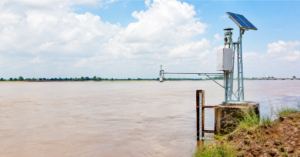
Low-cost IoT sensors now track tank water level in real time. They alert households or facility managers when storage runs low, or a filter shows signs of blockage. This addresses the most common maintenance failure: the system nobody checks until it has already stopped working.
Remote sensing also monitors the effectiveness of watershed-level interventions. Satellite-derived groundwater storage estimates allow programme managers to assess whether a portfolio of check dams and recharge projects is actually raising water table levels. Previously, only expensive field-based monitoring could do this. See how this connects to broader GIS-based environmental monitoring practice for more context.
Explore the Complete Rainwater Harvesting Series
This guide provides a comprehensive overview of rainwater harvesting. For more detailed information on specific aspects, explore these companion resources:
- How to Install a Rainwater Harvesting System: Learn how to plan, design, and install a system, from site assessment and component selection to final commissioning
- Rainwater Harvesting Water Tanks: Understand tank types, materials, sizing calculations, placement considerations, and long-term maintenance requirements.
- Harvesting Rainwater for Agriculture in Pakistan explores farm ponds, check dams, irrigation integration, groundwater recharge, and practical applications for both smallholder and commercial farming.
You may also find our regional guide on Rainwater Harvesting in Pakistan useful, which examines the country’s water crisis, policy landscape, rainfall patterns, and locally applicable harvesting solutions.
Together, these resources form a complete rainwater-harvesting knowledge hub, helping homeowners, businesses, and farmers make informed water-management decisions.
Conclusion
Rainwater harvesting is not a comprehensive method of addressing global water scarcity. Similarly, no single technology can solve this problem. It is, however, fast, economical, and scalable. Rainwater harvesting technology can be deployed at the household, farm, institutional, and municipal levels without the need for large-scale, government-directed infrastructure.
The collective global experience of the harvesting of rainwater for the last several hundred years has demonstrated that rainwater harvesting systems do, in fact, work. The true questions for any system that is designed to harvest rainwater are: does the system have a placement that is supported by hydrologic and geologic surveys, does the system collect real rainfall data, and will the system be maintained sufficiently to allow the system to function reliably?
Data-driven planning, GIS-based site assessment, and climate intelligence tools offer the most value in getting these three aspects correct. AI Geo Navigators can help you identify the potential and feasibility of rainfall recharge in your region. You can also check the installation, water tank, and agricultural guides to base your next steps on a strong technical foundation.
FAQs
What is rainwater harvesting in simple terms?
Rainwater harvesting means collecting rain before it runs off or evaporates, then storing it in a tank or directing it underground for later use. At its simplest, it needs only gutters, a filter, and a storage container. The same principle scales from a single household to an entire urban district or agricultural watershed.
Is rainwater harvesting illegal anywhere?
The vast majority of countries allow rainwater harvesting. Only a small number of jurisdictions, especially some western states in the United States, have some restrictions on the volume of water collected at the household level. Outside of the United States, and especially in Pakistan, India, most of Europe, and Africa, there are no restrictions at the harvesting level. When it comes to rainwater harvesting, most systems are considered an extension to the home, and should be checked with local authorities first.
How much water can a rainwater harvesting system actually save?
Savings depend on roof size, local rainfall, tank capacity, and intended use. A rooftop system on a standard house in a region receiving 600 millimetres of annual rainfall can collect tens of thousands of litres per year. Even a modest system meaningfully reduces municipal or groundwater draw for toilet flushing, garden irrigation, and laundry.
What is the difference between a rainwater harvesting pit and a storage tank?
The goal of a rainwater harvesting pit is a recharge structure. Unlike storage tanks, which contain captured water for surface use, the purpose of a harvesting pit is to direct the captured water underground to replenish the aquifer. Both are crucial for achieving water security, and especially successful systems incorporate both concepts: a storage tank combined with a recharge structure.
How does GIS improve rainwater harvesting project planning?
Using GIS, planners can now incorporate data on rainfall and permeability from satellite imagery, as well as water runoff simulations. Systems can now be designed and placed based on site-specific data, as opposed to relying on regional data, which has led to systems that are more reliable for planners in years when rainfall is less frequent and reduced the risk for placement in areas prone to flooding and low water recharge.