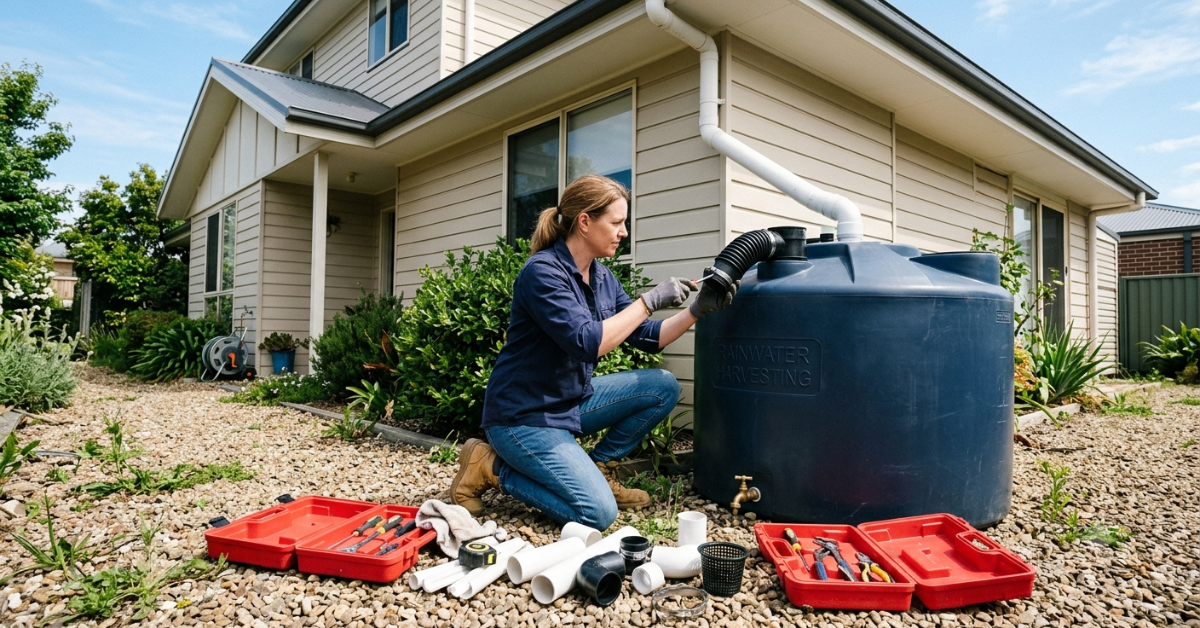
| To install a rainwater harvesting system means connecting a catchment surface, usually a roof, to a storage tank through gutters, a filter, and an overflow outlet. A correctly sized residential system can usually be installed in one to two days once the tank, piping, and permits are in place. |
It sounds technical to install a rainwater harvesting system at home, but it really comes down to five simple parts working together in the right order. Once you understand how rain gets from your roof into a storage tank, the rest of the installation is pretty much common sense.
This guide walks through every stage of the process, from the components you need to the exact formula for sizing your tank correctly, to the most common mistakes that cause systems to fail within a few years. Whether you are installing a basic rain barrel or a larger underground cistern, the same core principles apply.
If you’re still wondering why rainwater harvesting matters in the first place, our rainwater harvesting pillar guide discusses the bigger picture, including the water scarcity context this solution addresses worldwide. This article focuses specifically on getting your own system installed correctly, the first time.
Components Needed to Install a Rainwater Harvesting System
There are five main parts of a rainwater harvesting system. Excluding any of these parts will allow contaminants to enter the tank and will severely limit the lifespan of your system. The five main parts are as follows:
- Catchment (Rainwater lands here. Typically, this is the roof.)
- Gutters/Downspouts (Direct water to the tank.)
- Filters (debris blocking)
- Storage (cistern/tank)
- Overflow pipes (to drain away excess runoff)

The US Department of Energy recommends these five components as the standard design to install a rainwater harvesting system. This is in addition to the aid of a first-flush diverter and a pump.
How do you size a rainwater harvesting system correctly?
Before you install a rainwater harvesting system, sizing is the step most people get wrong. The Oklahoma State University Extension provides a formula that can be applied anywhere around the globe and is simple to use.
Harvested water (gallons) = roof area (square feet) x rainfall (inches) x 0.623 x system efficiency
System efficiency is typically around 0.9, because water is lost to splashing, leakage, and the first-flush diverter. So, for a 1,500 square foot roof in an area that gets 30 inches of rain a year, the system could realistically capture around 25,000 gallons annually.
| Around 30% of household water demand can often be replaced with harvested rainwater.A 1,000 sq ft roof can collect approximately 600 gallons from 1 inch of rainfall. |
Why is this number still not enough on its own?
This is only a potential supply and does not give the proper tank size. The proper tank size should be based on the actual usage and the size of the gap between rainfall events. This is the reason a 500-gallon tank and a 5,000-gallon tank are different based on local rainfall, not just the annual volume.
How do you install a rainwater harvesting system step by step?
- Measure your roof area and check the local average rainfall to size the system correctly.
- Pick a stable, easy-to-access site for the tank that is near the downpipe.
- Install the downpipe and connect it to the rain gutters. Ensure the gutters slope toward the downpipe.
- Fit a mesh screen or leaf guard in the rain gutter outlet.
- Set the rainwater storage tank on a stable, level site. A good option for a base is compacted gravel or concrete.
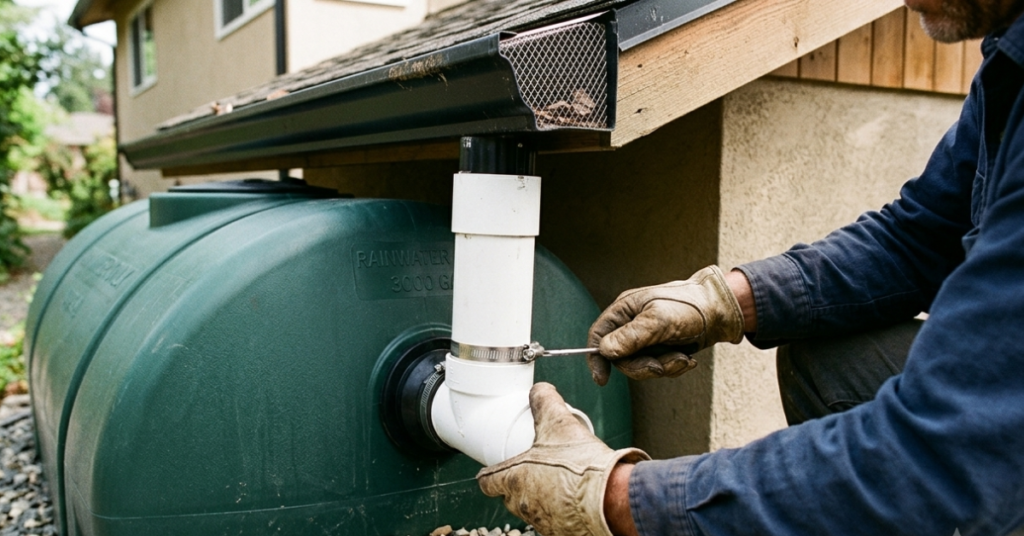
- Connect the downpipe to the tank via an inlet pipe.
- Install an overflow pipe near the top of the tank, directing away from the foundation of the building.
- Fit a tap, pump, or gravity outlet, based on the intended use of the water.
- The rainwater harvesting system is functional after the first rain; inspect for leaks and ensure all joints are sealed.
The average homeowner can install the system above in less than a day, while systems incorporating larger subsurface tanks can take 2 to 3 days to install due to excavation and backfill issues.
| Always install the overflow outlet before the first rainfall. A full tank without overflow can cause water to collect near the foundation and increase the risk of structural damage. |
Do you really need a first-flush diverter?
This is a hot debate among system installers and is often ignored altogether. The first function of a first-flush diverter is to send the dirtiest Initial rain to waste, which is a clear enhancement to the system.
However, the American Rainwater Catchment Systems Association advises cleaning diverters before every storm. The association also notes that diverters can create leak-prone joints and may not be necessary if a tightly fitted mesh screen protects the inlet. Many contractors do not use diverters for irrigation-only systems. For drinking water systems, it is worthwhile to consider the added system complexity.
Common Rainwater Harvesting Installation Mistakes
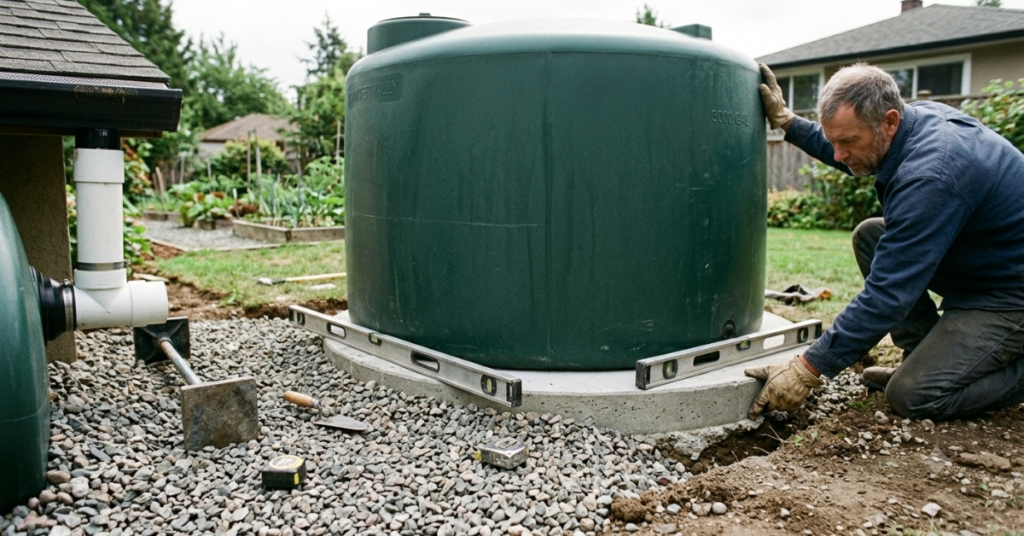
Even when you carefully install a rainwater harvesting system, a few recurring mistakes can shorten its lifespan. Common installation mistakes can affect the long-term performance of a rainwater harvesting system. While the system may work initially, these errors often cause malfunctions a few years after installation. Familiarizing yourself with these mistakes is the best way to avoid functional issues down the road.
- Undersize the Tank: The most common mistake is choosing a tank based on how much space is available as opposed to how much dry-period storage is needed. These systems run dry too often and cause users to lose faith in the technology.
- Tank Placed on Uneven or Soft Base: A 2,000-litre tank full of water weighs two tons. Placing a tank on an uneven or soft base causes cracks to settle into the tank fittings and create slow leaks that go unnoticed until the tank is low.
- No or Poorly Designed Overflow Outlet: Most homeowners are surprised by how quickly a tank can fill during heavy rainfall. Without an overflow outlet, water cannot drain safely when the tank reaches capacity. The downpipe may become blocked, or water may pool around the building. Over time, this excess moisture can damage the foundation instead of protecting it.
- No Mesh Screen: Leaving out the mesh screen at the inlet allows debris to enter the tank, where it settles and creates a breeding ground for bacteria. This compromises the water quality, and the water will only be fit for use as surface irrigation.
- Using National Averages for Rainfall: For areas with highly variable rain patterns, using a yearly national average rainfall will give a very poor estimate of the system size required. Monthly rainfall data for the area will give much better results.
How much does installation cost?
| Most homeowners spend the most on the storage tank. Simple rain barrel systems are the least expensive, while underground cisterns and potable-water systems cost considerably more because of excavation and treatment equipment. |
| System type | What it includes | Relative cost |
| Basic rain barrel | Single barrel, simple downpipe diverter | Low |
| Standard rooftop system | Gutters, mesh filter, mid-size tank | Moderate |
| Underground cistern | Excavation, large tank, pump | High |
| Potable-grade system | UV or filtration treatment added | Highest |
Costs to install a rainwater harvesting system vary mainly by tank size and whether excavation is involved. Even at the lowest tier, the system pays for itself over time through lower water bills, and many regions now offer incentives or rebates for installing one.
How do AI Geo Navigators help you size it right?
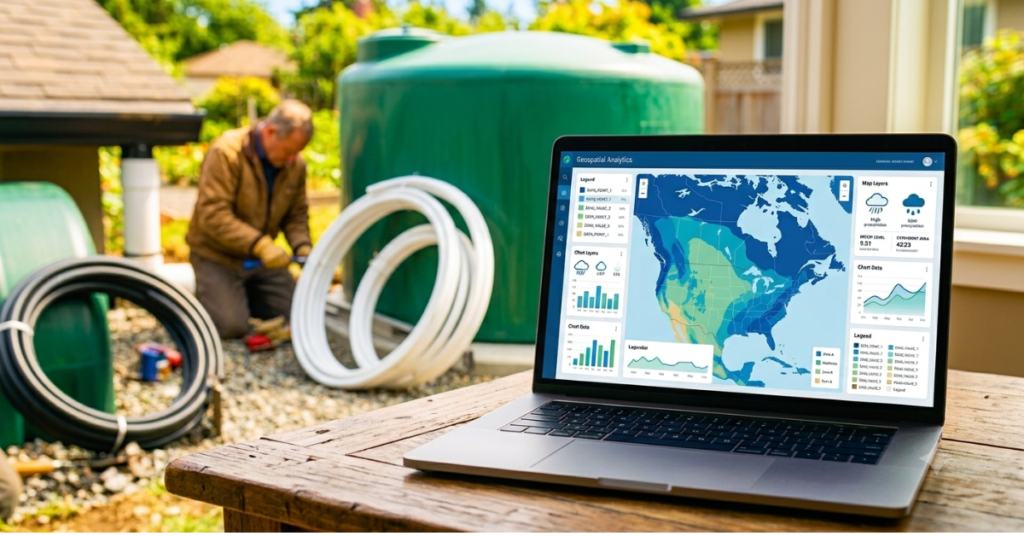
The biggest installation mistake is sizing a tank using a national rainfall average instead of real local data. AI Geo Navigators solves this through its AI-powered geospatial intelligence services, which map district-level rainfall patterns from satellite data instead of rough estimates. Its decision support and applied GIS solutions also factor in soil type and elevation, which matters if your installation includes a recharge pit alongside the storage tank.
For component-level guidance on choosing the right tank material and size, see our dedicated rainwater harvesting water tanks guide. For the full water scarcity picture this fits into, see our rainwater harvesting pillar article.
Key takeaways
- Five elements are needed for a complete system: catchment, gutters & downpipes, inlet filter, storage tank, and overflow outlet
- The longest dry interval in local monthly rainfall is used to size a tank, not the annual total
- Gutters must slope toward the downpipe at a gradient of at least 1 in 600 to avoid pooling and sediment in the gutter
- First-flush diverters lessen the contamination load for potable-grade and food irrigation systems, but they entail added maintenance
- The base of the tank must be level and be able to support the weight of water when the tank is at full capacity, which is approximately one tonne per 1,000 litres
- The five most common installation errors are all easily avoided: undersized tank, soft base, missing overflow, no inlet screen, and incorrect sizing data
- The most precise local rainfall and soil data is available in GIS tools, and they are preferred to national or regional averages for system sizing
Conclusion
To install a rainwater harvesting system successfully, the components must be arranged in the correct order and properly sized. The simplicity of the system is the reason the majority of underperforming systems fail; the decision of sizing the tank on gut or the available space instead of determining the size with the maximum dry spell of the local rainfall records.
A properly sized and correctly installed rainwater harvesting system can reduce water bills, improve water security, and provide a reliable source of water for years. Following the correct installation process and using accurate local rainfall data helps prevent the most common mistakes. For accurate site-level rainfall data to inform tank sizing, reach out to the AI Geo Navigators.
FAQs
How long does it take to install a rainwater harvesting system?
The installation of a basic rainwater harvesting system, which collects water from the roof, can be completed within a day. In contrast, systems that are larger in size and are constructed entirely underground with the need for excavation can take two to three days.
Do I need a permit to install a rainwater harvesting system?
The answer truly depends on your location, along with the size of the storage tank. In general, smaller rainwater harvesting systems built with rain barrels most often do not need a permit. To the contrary, larger discharge systems introduce the need to obtain a permit, so always check with your local authorities.
Can I install a rainwater harvesting system myself?
Yes, it is totally feasible to do it yourself. Basic rooftop systems can be constructed by a homeowner themselves. Above-ground systems that are larger in size and those that are built to be fully functional and safe to use, with the inclusion of pumps, treatment, and filtration systems, are recommended to be built by a professional.