| Environmental consulting services help with risk management and regulatory compliance. The environmental consulting services market was about $43 billion in 2024. By 2034, it could be about $92.85 billion, with growth at almost 8% (Precedence Research, July 2025). With the current state of climate change, costs related to environmental risk, and new regulations, the demand for these services is increasing. |
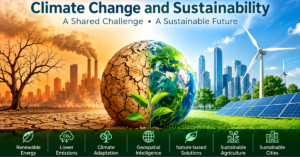
Organizations that develop, operate, extract, or invest in land and water resources face growing environmental risks. This challenge is from climate change. Regulations are becoming stricter. Investors want reliable ESG data, and the costs and consequences of poor environmental management have never been more obvious or difficult.
Environmental consulting services provide the expertise, tools, and data organizations need to manage these challenges. This article explores seven essential services, explaining what each one does, when it is needed, and what effective delivery looks like.
What are environmental consulting services, and why is the market growing so fast?
Environmental consulting services offer technical expertise and advice on the management and mitigation of environmental risks and impacts. Services span numerous fields such as environmental impact assessment, ESG advisory services, the investigation of contaminated land, ecological surveys, climate risk, geospatial monitoring, and regulatory compliance. Environmental Impact Assessment is one of the largest service categories, accounting for approximately 30.25% of the global environmental consulting market by service type, according to Mordor Intelligence (January 2026).
The sectors driving the strongest demand right now
The environmental consulting market was valued at $46.50 billion in 2025 and is estimated to reach $65.72 billion by 2031, growing at a rate of 5.94% over this period. In a separate analysis, Precedence Research estimated the market’s size to be $43.20 billion in 2024, with a projected value of $92.85 billion in 2034, representing a compound annual growth rate (CAGR) of nearly 8%. These estimates differ because the research firms use different market definitions and forecasting methodologies, but both point to continued growth in environmental consulting demand.
The energy and power sector makes up around 29% of end-use demand (Coherent Market Insights, 2025) and is complemented by demand from construction and infrastructure, water and wastewater management, mining and extractives, and manufacturing. In addition, from January 2025, AECOM began to provide a Water and Environment Advisory business line and to include water and climate resilience infrastructure and remediation services. Tetra Tech saw $4.2 billion in revenue by November 2024 – a year-on-year increase of 15% based on demand from the water and environment sectors (Mordor Intelligence). These developments show that environmental consulting is becoming a mainstream business capability rather than a niche service.
How tightening regulations are making consulting essential rather than optional
Environmental consulting services used to be an easy budget line to cut. That is changing, although regulatory requirements have shifted. In the EU, the Corporate Sustainability Reporting Directive (CSRD) was narrowed under the 2026 Omnibus I reforms. The revised scope mainly covers companies with more than 1,000 employees and annual turnover above roughly €450 million, while some reporting obligations have been delayed. Many companies previously expected to report are now outside the near-term scope.
However, environmental and sustainability due diligence remains important. EU Taxonomy requirements, investor and lender data requests, supply-chain expectations, and voluntary frameworks such as VSME continue to drive demand for reliable environmental data. Outside the EU, climate disclosure requirements continue to create demand among US companies, while Vision 2030 and Net Zero by 2050 strategies are supporting environmental consulting growth across the Middle East (Coherent Market Insights, 2025).
Regulatory harmonization makes compliance an essential business cost. With net-zero commitments, the increasing green finance and decarbonization funds create new opportunities for projects. Businesses previously addressing environmental issues in a reactive manner are now formally integrating environmental consulting into their business strategies.
Solution 1: Environmental Impact Assessment (EIA)
An Environmental Impact Assessment (EIA) is conducted to analyze the negative effects a project may have on the environment before the project is approved and implemented. EIA is one of the core services offered by environmental consulting firms. Requirements, thresholds, and procedures vary significantly by country, but EIA-style approval is a standard prerequisite for large-scale infrastructure, energy, mining, and construction projects across most jurisdictions worldwide, particularly where cross-border investment or financing is involved.
How EIA works and why GIS is transforming it
EIA involves a sequential approach of identifying and scoping key environmental issues, collection of baseline data, impact analysis and assessment, identification of adverse effects and their mitigation, and preparation of EIA reports for review. Due to their design, initial EIA processes were data-fragmented, tedious, and time-intensive. Consolidating baseline data from different formats (Excel, Word documents, PDFs, and GIS) typically required extensive time and effort (4-8 weeks) by specialists for each assessment (Sopact, 2026).
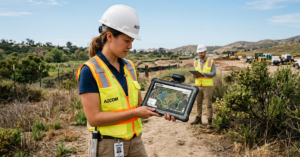
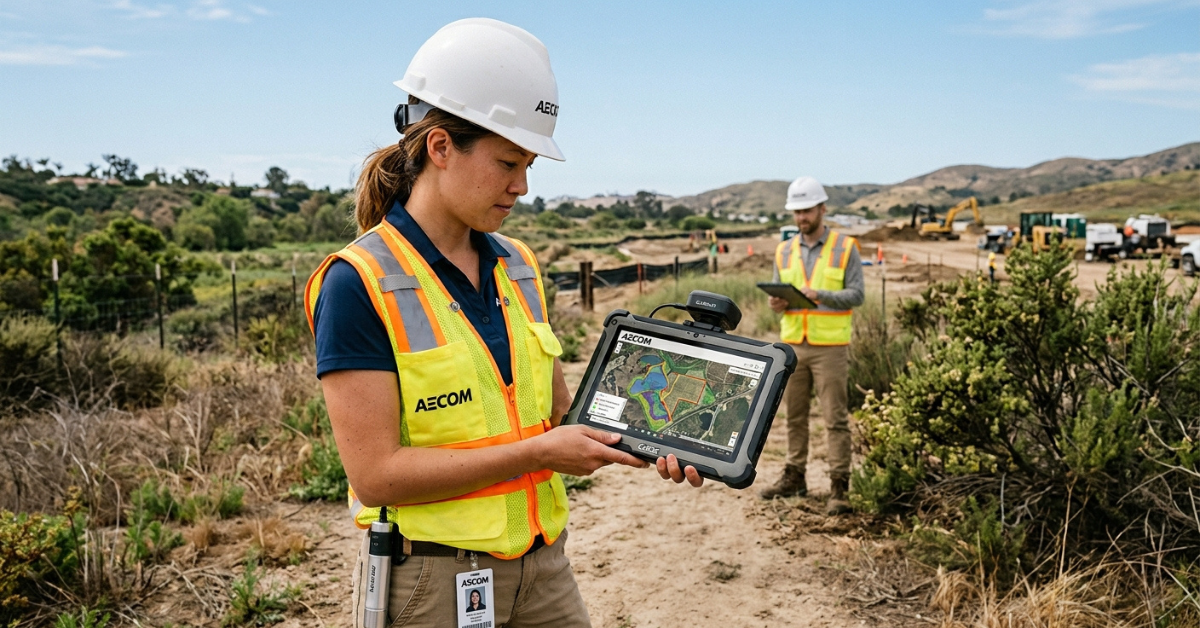
The most impactful changes to real-time data collection in the field can be attributed to GIS technology. GIS enables EIA teams to analyze river crossings, soil types, vegetation, groundwater, land elevation, and other spatial factors in a single environment. Consultants can also create 3D models to visualize potential project impacts and collect field data that can be shared with regulators and stakeholders in near real time. (Atlas.co, Stantec).
How GIS-based environmental monitoring and spatial analysis are transforming the accuracy and speed of environmental impact assessments explains precisely why the best environmental consulting firms now invest as heavily in geospatial capability as in traditional scientific expertise.
Solution 2: Environmental Due Diligence (EDD)
Environmental due diligence is one of the standout offerings in the environmental consulting sector and is offered to those purchasing, developing, or financing a property or a business. A Phase I Environmental Site Assessment is the process of identifying environmental issues on a property through record review, site visit, and a regulatory file review. A Phase II Assessment is performed to determine the degree and extent of contamination identified during the Phase I.
Nevertheless, novel environmental due diligence adds much more than just traditional assessments of contaminated land. More often than not, buyers and lenders require due diligence balancing physical climate risk exposure, flood likelihood, wildfire risk, shifting regulations, ESG liability, and the traditional contamination assessment. Climate and chemical risks represent the emerging layers of environmental liability, and the demand for due diligence is rapidly evolving in that direction.
How climate change is fundamentally reshaping the environmental risk landscape that due diligence must address provides the scientific context that explains why environmental due diligence methodologies are expanding so rapidly and why the most comprehensive consulting services are in highest demand.
Solution 3: ESG consulting and sustainability strategy

ESG consulting services help organizations measure, manage, and report their environmental, social, and governance performance against recognized frameworks including the GRI, SASB, TCFD, and the EU Taxonomy. Environmental consulting services in the ESG space cover greenhouse gas inventory development, carbon footprint assessment, net-zero pathway planning, biodiversity baseline assessment, and the production of sustainability reports that meet investor and regulatory requirements. ESG advisory is one of the fastest-growing segments of the environmental consulting market, even as some regulatory reporting mandates have narrowed
What ESG consulting actually delivers beyond reporting
ESG consulting is often misunderstood as a reporting exercise. In practice, the best ESG consulting delivers far more than a polished annual report. Effective ESG advisory begins with a materiality assessment that identifies which environmental issues genuinely create financial risk or opportunity for a specific organization, sector, and geography. It then builds the data collection systems, management processes, and governance frameworks that turn aspirational commitments into verifiable performance.
Remarkably, Organizations that treat ESG integration as substantive operational change, rather than a communications exercise, are often better positioned on measures such as energy costs, regulatory penalty avoidance, access to green finance, and community relations, according to industry analysts, though results vary by sector, starting point, and execution. The growth in green bonds and sustainability-linked loans has created powerful financial incentives for genuine ESG performance, because bond covenants now increasingly include environmental KPIs that trigger pricing penalties if targets are missed.
Furthermore, the fact that organizations that fail to account for climate change and environmental risk in their strategy face growing financial exposure makes it clear that ESG consulting is not a compliance cost. It is an increasingly essential tool for managing the environmental risks that are already affecting business performance across every sector.
Solution 4: Carbon Footprint Assessment and Net-Zero Planning
Carbon footprint assessment is one of the most requested services in all of environmental consulting. It quantifies the greenhouse gas emissions generated by an organization’s operations, supply chain, and products across Scope 1 (direct emissions), Scope 2 (purchased energy), and Scope 3 (value chain emissions). Scope 3 often accounts for the majority of an organization’s total footprint; commonly cited estimates range from roughly 70 to 90% depending on sector and business model, and it is also the hardest category to measure and reduce.
Net-zero planning builds on the carbon footprint baseline to develop a credible, science-based emissions reduction pathway to net-zero. The best net-zero plans are grounded in the Science Based Targets initiative (SBTi) framework, which requires emissions reduction targets to be consistent with limiting global warming to 1.5°C. As of January 2026, more than 10,000 companies have validated science-based targets through the SBTi, together representing over 40% of global market capitalization (SBTi, 2026), creating substantial demand for the technical consulting services needed to develop and implement these pathways.
Additionally, how clean energy investment and climate finance are creating new pathways for organizations to fund their net-zero transitions shows that the financial infrastructure supporting corporate decarbonization is growing rapidly, making net-zero planning increasingly viable even for organizations that previously lacked access to affordable green capital.
Does your organization need environmental impact assessment, ESG consulting, geospatial risk analysis, or climate advisory services? Explore the full range of environmental consulting and geospatial intelligence services at AI Geo Navigators. Expert spatial data supports stronger, faster, and more credible environmental decisions.
Solution 5: Environmental monitoring
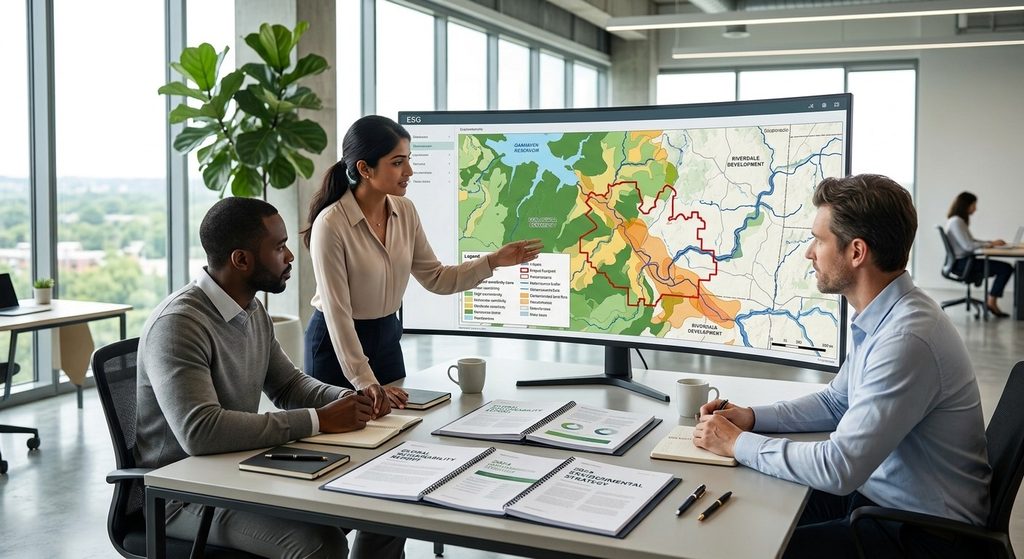
Environmental monitoring services provide the ongoing real-time or periodic measurement of environmental conditions, including air quality, water quality, soil contamination, noise levels, biodiversity indicators, and land cover change. Continuous environmental monitoring is increasingly essential for regulatory compliance, project performance reporting, and early detection of environmental impacts before they become regulatory violations. GIS and AI-powered geospatial intelligence have transformed environmental monitoring from periodic manual surveys into continuous, automated, spatially comprehensive analytical systems.
Real-time environmental monitoring services
Traditional environmental monitoring relied on field teams collecting samples at fixed monitoring points on a scheduled basis. This approach generates data that is too infrequent to detect episodic pollution events, too sparse to characterize conditions across entire project areas, and too slow to enable proactive management responses.
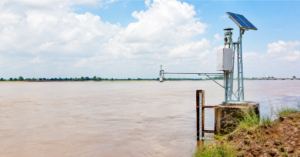
Modern environmental monitoring services deploy networks of real-time sensors including water quality probes, air quality monitors, noise meters, vibration sensors, and soil moisture devices that transmit data continuously to cloud-based management platforms. These systems alert environmental managers within minutes of a monitoring threshold being crossed, enabling immediate investigation and response rather than discovering problems weeks later in a batch data report.
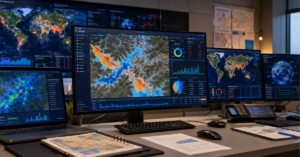
However, sensor networks work best when integrated with spatial analysis. A single elevated water quality reading has limited management value. The same reading placed in a GIS alongside upstream land use, rainfall records, and historical baseline data allows a consultant to identify the probable pollution pathway, assess the risk to downstream receptors, and recommend targeted mitigation within hours rather than days.
Remote sensing and satellite-based environmental monitoring that provides continuous land cover, water quality, and ecosystem health data at scale is one of the most powerful tools available to environmental consultants, extending monitoring coverage to entire watersheds, coastal zones, and project corridors at a fraction of the cost of ground-based monitoring networks alone.
Solution 6: GIS and Geospatial Intelligence
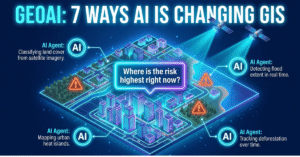
GIS and artificial intelligence are transforming environmental consulting services from a discipline dominated by field-based data collection and manual report writing into a data-driven, spatial intelligence operation. The consequences for consulting quality, speed, and cost-effectiveness are profound.
In environmental impact assessment, machine learning models trained on satellite imagery can now complete land cover classifications in hours that previously required weeks of manual digitizing. AI-powered baseline data collection platforms reduce EIA timelines by cutting weeks off the data reconciliation process that previously consumed 80% of assessment time (Sopact, 2026). In contaminated land assessment, AI models trained on historical site data and geochemical datasets are improving the accuracy of contaminant plume delineation, reducing the number of costly soil and groundwater investigation boreholes needed.
Furthermore, technology such as AI-enabled site characterization elevates consulting productivity, compressing delivery timelines while expanding the analytical scope that consultants can cost-effectively cover in a single engagement. Organizations that work with consulting partners who have strong GIS and AI capabilities tend to receive faster, more spatially precise, and more actionable environmental advice than those relying solely on traditional data collection methods.
AI-powered predictive modeling and spatial analytics for environmental consulting and risk assessment provide the technical infrastructure that allows consultants to move from describing environmental conditions to predicting how they will change under different development and climate scenarios.
Solution 7: Climate risk consulting and nature-based solutions
Climate risk consulting helps organizations identify, quantify, and manage the physical and transition risks that climate change poses to their assets, operations, supply chains, and investment portfolios. Physical climate risk includes increased flood frequency, heat stress, water scarcity, wildfire, and sea-level rise. Transition risk includes regulatory change, carbon pricing, and the revaluation of carbon-intensive assets. Nature-based solutions consulting designs and implements ecosystem restoration and green infrastructure programs that reduce these risks while delivering regulatory compliance benefits and biodiversity gains.
Physical climate risk assessment for infrastructure and investment
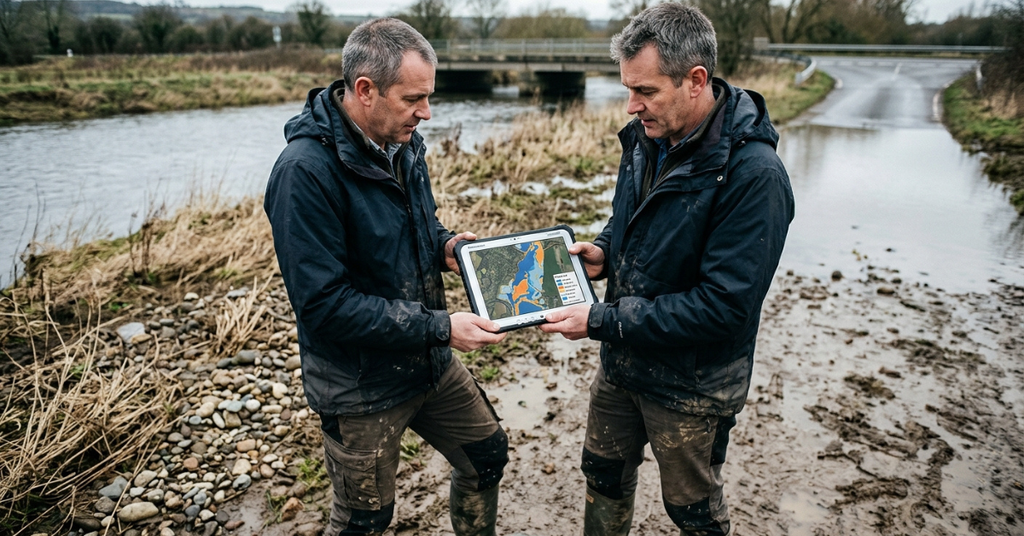
Physical climate risk assessment is now one of the most rapidly growing services within environmental consulting. Regulatory requirements, including the TCFD (Task Force on Climate-related Financial Disclosures), the EU Taxonomy’s Do No Significant Harm criteria, and a growing number of national infrastructure planning frameworks, require organizations to demonstrate that their assets and investments are resilient to future climate conditions.
A credible physical climate risk assessment integrates climate projections for the specific location and time horizon of each asset with spatial analysis of hazard exposure, sensitivity of the asset type, and adaptive capacity of the surrounding systems. This requires the same combination of satellite data, GIS analysis, and climate modeling that geospatial consulting firms are specifically equipped to provide.
How climate change is intensifying the physical risk exposure of infrastructure, communities, and ecosystems across Pakistan and the broader South Asia region provides a vivid, data-driven example of the kind of spatial climate risk assessment that modern environmental consulting must be capable of producing. The same methodology applies equally to infrastructure in coastal Europe, sub-Saharan Africa, and any other region where climate hazards are intensifying.
Nature-based solutions consulting for regulatory compliance and resilience
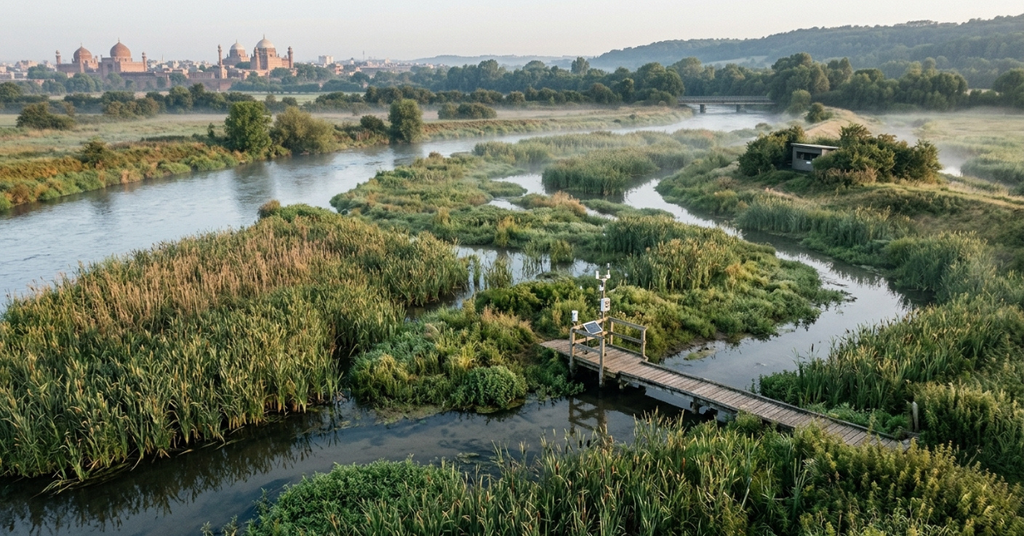
Nature-based solutions (NbS) consulting designs interventions that use ecosystems to reduce environmental risk, deliver regulatory compliance benefits, and restore biodiversity. Healthy riparian buffer zones filter agricultural runoff. Restored wetlands absorb flood peaks. Green roofs and urban forests reduce stormwater runoff and urban heat. Coastal mangroves protect communities from storm surge. All of these interventions can now be planned, sized, modeled, and monitored using GIS and remote sensing tools that were unavailable to practitioners even a decade ago.
Nature-based solutions are particularly valuable in the environmental consulting context because they often satisfy multiple regulatory obligations simultaneously. A wetland restoration designed to mitigate biodiversity impacts from a development project may also provide measurable carbon sequestration, water quality improvement, and flood attenuation benefits. These co-benefits can be quantified spatially, enabling consultants to demonstrate full ecosystem service delivery to regulators, investors, and funders.
Environmental sustainability services that design and deliver nature-based solutions for regulatory compliance and climate resilience provide the integrated environmental consulting capability that turns restoration ambitions into funded, implemented, monitored, and verifiable ecosystem projects.
How do you choose the right environmental consulting services for your needs?
Choosing the right environmental consulting services requires matching the consultant’s specific technical expertise, geospatial capability, regulatory experience, and sector knowledge to the precise nature of your environmental challenge. The most expensive mistake organizations make is hiring generalist consultants for specialist problems, or consultants with strong report-writing skills but weak data capabilities for projects that require real-time monitoring and spatial analysis.
Key questions to ask before hiring
Before engaging any environmental consulting service, ask these seven questions:
- Do they have in-house GIS and geospatial analytics capability, or do they outsource spatial data work?
- Can they demonstrate sector-specific regulatory experience in your jurisdiction?
- Do they use real-time or near-real-time monitoring technologies, or only periodic field surveys?
- How do they integrate climate risk into their environmental assessments?
- Can they provide examples of projects where their work prevented regulatory penalties or project delays?
- Do they offer nature-based solutions as well as engineering-based mitigation?
- What is their data management approach, and how will you access the data and models they produce during and after the engagement?
Furthermore, leading environmental consultants are moving rapidly toward AI-enabled service delivery. Tetra Tech was ranked first among the top 27 US Environmental and Sustainability consultancies in May 2025, specifically because of its integration of advanced technology with environmental science expertise (Insight Partners, 2025). The best consultants bring not just knowledge but the tools to apply it faster and more precisely than competitors.
What the best consultants bring that others miss
The most important differentiator between good and great environmental consulting services is the ability to integrate multiple data streams, regulatory frameworks, and environmental disciplines into a coherent, actionable assessment that directly supports the decisions a client needs to make.
Average consultants produce reports. The best consultants produce decisions. That means integrating GIS-based spatial analysis with field science and regulatory knowledge to answer the specific question: Can this project proceed here, under these conditions, with these mitigations, and receive regulatory approval within this timeline?
Additionally, why geospatial intelligence is becoming the foundation of credible, defensible environmental consulting in a climate-changed world explains precisely why the gap between GIS-capable and non-GIS-capable environmental consultants is widening every year, and why the choice of consulting partner increasingly determines project outcomes.
Comparison table: 7 environmental consulting services at a glance
| Service | Primary use case | Key deliverable | Who needs it most |
| Environmental impact assessment (EIA) | New project or development requiring regulatory approval | Environmental impact statement or report | Infrastructure developers, energy companies, mining firms |
| Environmental due diligence | Property or business acquisition | Phase I/II site assessment report, ESG risk memo | Investors, lenders, real estate buyers |
| ESG consulting and reporting | Regulatory disclosure, investor relations | ESG data systems, materiality assessment, sustainability report | Listed companies, green bond issuers, regulated entities |
| Carbon footprint assessment | Net-zero commitment, supply chain transparency | Scope 1, 2, 3 GHG inventory, science-based target pathway | Any organization with emissions reduction commitments |
| Environmental monitoring | Operational compliance, impact management | Real-time monitoring dashboards, regulatory compliance reports | Infrastructure operators, industrial facilities, project developers |
| GIS and geospatial intelligence | Spatial analysis, risk mapping, EIA data integration | Interactive hazard maps, spatial risk models, land cover analysis | All sectors requiring spatial environmental decision support |
| Climate risk and NbS consulting | TCFD disclosure, infrastructure resilience, biodiversity offset | Physical risk assessment, nature-based solutions design, and monitoring | Asset owners, insurers, development finance institutions |
Key takeaways
- The global environmental consulting services market is valued at approximately $43 to $47 billion in 2025 and is projected to reach $65 to $93 billion by 2031 to 2034, driven by tightening regulations, mandatory ESG disclosure, and growing climate risk exposure across every sector.
- Environmental impact assessment is the largest single service category, accounting for 30% of market share, because it is legally required before most major development projects can proceed in more than 190 countries.
- GIS and AI are transforming environmental consulting from a manual, paper-heavy process into a spatially precise, data-driven discipline that delivers faster, more accurate, and more defensible assessments.
- The best environmental consulting services integrate multiple disciplines: EIA, ESG advisory, real-time monitoring, climate risk assessment, and nature-based solutions in a single coherent offering rather than as separate standalone engagements.
- Organizations that choose consulting partners with strong geospatial and AI capabilities are often better positioned for faster regulatory approvals, fewer project delays, and lower total compliance costs than those relying only on traditional data-collection methods, though outcomes depend on execution and project context.
Conclusion
Environmental consulting services are no longer a back-office compliance function. They are a strategic business investment that protects projects from regulatory delays, shields organizations from environmental liability, enables access to green finance, and builds credibility with regulators, investors, and communities that modern organizations genuinely need.
The seven solutions covered in this article, from EIA and environmental due diligence to climate risk consulting and nature-based solutions, represent the full toolkit of modern environmental consulting. The most effective organizations do not use them in isolation. They integrate them into a coherent environmental management approach that runs from project conception through operation and eventual decommissioning.
If your organization needs environmental consulting services that combine scientific expertise with GIS and AI-powered spatial intelligence, explore the full range of capabilities at AI Geo Navigators. From satellite-based environmental monitoring to climate risk assessment and ESG spatial analytics, the platform delivers the geospatial intelligence that rigorous environmental consulting demands.
Environmental risk does not wait for the right moment to act on it. Contact the AI Geo Navigators team and discover how AI-powered environmental consulting services can protect your projects, meet your compliance obligations, and strengthen your sustainability credentials.
FAQs
Q: What do environmental consulting services include?
Environmental consulting services include environmental impact assessment, environmental due diligence and site assessment, ESG advisory and sustainability reporting, carbon footprint assessment and net-zero planning, environmental monitoring and compliance management, GIS-based environmental mapping and risk analysis, climate risk consulting, and nature-based solutions design and implementation. The specific services an organization needs depend on its sector, the nature of its environmental footprint, the regulatory frameworks it operates under, and its sustainability commitments.
Q: How much do environmental consulting services cost?
Environmental consulting service costs vary enormously by service type, project complexity, geography, and consultant capability. Costs vary enormously by service type, project complexity, geography, and consultant capability, so there is no reliable universal price range. Smaller, defined-scope services such as a Phase I site assessment for a single commercial property typically sit at the lower end of the cost spectrum, while a full Environmental Impact Assessment for a major infrastructure project or an ongoing ESG advisory and climate risk program for a large portfolio can represent a substantial multi-year investment. Because pricing depends heavily on project-specific factors, organizations should request tailored quotes from prospective consultants rather than relying on generic figures.
Q: Why is GIS important in environmental consulting?
GIS is important in environmental consulting because almost every environmental issue has a spatial dimension: where contamination has spread, which habitats a project will affect, which communities face the highest flood risk, and which land parcels have the strongest renewable energy potential. GIS allows environmental consultants to integrate multiple data layers, run spatial analysis, visualize complex environmental conditions, and produce the maps and models that regulators, planners, and decision-makers need. Consulting firms with strong GIS capabilities tend to deliver faster, more accurate, and more credible environmental assessments than those relying on non-spatial data management alone