| Quick Answer: AI GIS mapping services combine machine learning, remote sensing, and spatial analytics to turn raw geospatial data into decision-ready intelligence. Beyond showing what exists on a map, they can classify land cover, detect change, and support forecasts for floods, deforestation, and infrastructure planning. Depending on the workflow and data volume, they can automate tasks that traditionally took days or weeks of manual processing. |
Satellite imagery, sensor readings, and environmental records are now widely available, but turning them into usable insight remains the harder part. AI-enabled GIS addresses this by automating classification, pattern recognition, and modeling across large spatial datasets. Governments, enterprises, and development organizations use it for disaster management, urban planning, agriculture, ESG reporting, and climate adaptation.
At AI Geo Navigators, an Islamabad-based climate-intelligence and geospatial firm, we integrate machine and deep learning into GIS, remote sensing, and traditional data analytics. This guide explains what AI GIS mapping services are, the six core services, how they differ from traditional GIS workflows, what to look for in a provider, and where they are applied.
What Are AI GIS Mapping Services?
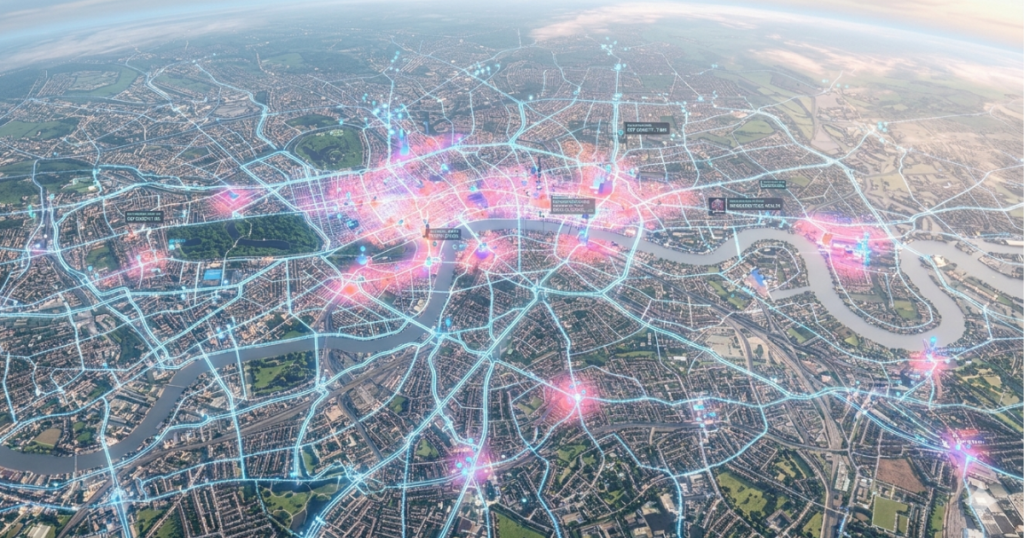
AI GIS mapping services combine geospatial data, remote sensing, machine learning, and spatial analytics into one workflow. They help organizations interpret spatial data at a scale and speed that manual methods struggle to match, and present results in formats non-technical users can act on. The field is also known as GeoAI; our GeoAI guide covers the terminology in more detail.
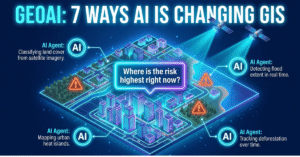
AI in GIS covers much more than prediction. Common capabilities include:
• Image classification and land-cover mapping
• Object detection and segmentation
• Change detection
• Anomaly and pattern recognition
• Predictive modeling
How AI Enhances Traditional GIS
Traditional GIS answers questions such as “what is here?” and “how are these features related?” AI-enhanced GIS extends this by helping answer “what is changing, where, and what may happen next?”
AI does not make GIS predictive on its own. Reliable results come from combining good geospatial data, remote sensing, appropriate models, domain expertise, and rigorous validation. For practical examples, see our article on Artificial Intelligence in GIS and Remote Sensing and our spatial data analysis service.
Why AI GIS Adoption Is Accelerating in 2026
According to Mordor Intelligence’s GIS market report, the global GIS market was valued at USD 14.56 billion in 2025 and is estimated at USD 16.58 billion in 2026. It is projected to reach USD 31.8 billion by 2031, a compound annual growth rate of 13.94%. The report ties this growth to cloud GIS, smart-city rollouts, mobile data collection, and AI analytics.
Other pressures are pushing adoption as well. Climate risk, urbanization, and infrastructure demand all raise the need for better spatial intelligence. Organizations that build data, models, and in-house expertise early also gain experience that improves how they use these tools over time.
The 6 Core AI GIS Mapping Services
1. Geospatial Data Production and Processing
Every AI GIS workflow starts with high-quality spatial data collected from satellites, drones, sensors, and field surveys. Model performance depends not only on data availability but also on its quality, resolution, completeness, labeling, representativeness, and preprocessing.
AI-assisted data production can automate land-cover classification, track changes in vegetation indices, identify infrastructure features, and prepare decision-ready datasets for planning, risk assessment, and environmental monitoring. Learn more about our Geospatial Data Production services.
2. Remote Sensing and Satellite Image Analytics
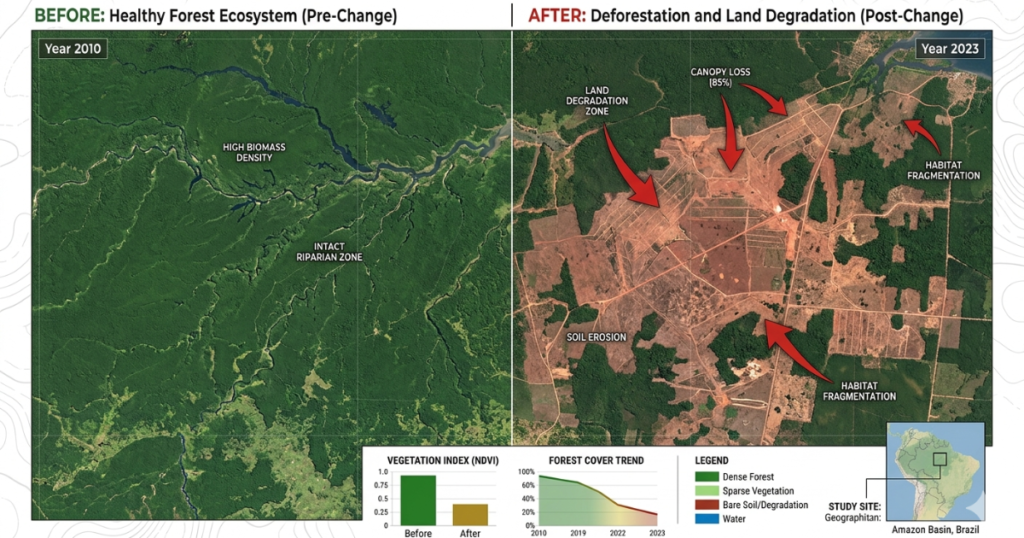
Raw satellite imagery needs processing before it becomes useful. AI models trained on multispectral and hyperspectral imagery can support crop monitoring, flood extent mapping, detection of unauthorized land-use change, and deforestation monitoring across large areas.
AI-based remote sensing can detect spectral or spatial indicators of crop stress before some symptoms become clearly visible in the field. Our guide to 10 remote sensing techniques explains the main methods, and our remote sensing and image analytics work is described on the GIS services page.
3. Predictive Modeling and AI Development
Predictive geospatial models combine spatial data with machine learning to estimate likely outcomes, such as flood extent, urban expansion, and climate vulnerability. For infrastructure, they can also help flag assets at risk, though this usually requires additional inputs such as sensor data, maintenance records, and engineering data alongside GIS.
Organizations using predictive GIS can move from reacting to events toward anticipating them. See our Predictive Modeling and AI Development service for the capabilities we offer.
4. Decision Support and Applied GIS Solutions
Maps and datasets only matter when they inform decisions. Decision support systems built on AI GIS combine spatial analysis, scenario modeling, and data feeds into dashboards that planners, engineers, and policymakers can use without deep technical expertise. Our web-based tools, including the MHVRA hazard platform described below, are listed on our products page. For network-heavy projects, see our infrastructure and utilities mapping service.
5. ESG Reporting and Geospatial Intelligence
For environmental indicators with a spatial component, geospatial evidence can strengthen ESG reporting and verification. Satellite monitoring supports tracking of deforestation, land-use change, and carbon stock estimation.
Our ESG work integrates geospatial intelligence into sustainability reporting so organizations can back their claims with spatial evidence rather than self-reported estimates alone. Read our ESG compliance guide, explore our carbon credit services, or try the ESG carbon emission calculator on our products page.
6. Climate Intelligence and Spatial Risk Mapping
Climate-related hazards such as flooding, drought, extreme heat, and land degradation are already affecting infrastructure, agriculture, water systems, and communities in many regions. Managing them starts with knowing where vulnerabilities are concentrated and how they may change.
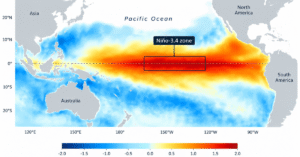
AI-powered climate risk mapping combines satellite observations, climate models, and machine learning to produce spatial risk assessments. Our work supports climate adaptation planning and early warning system development; see our guides on environmental consulting services and El Niño impacts and preparedness.
Traditional GIS vs AI-Enhanced GIS
Modern conventional GIS already includes scripting, geoprocessing, spatial statistics, and web GIS. AI adds capabilities on top of these workflows rather than replacing them.
| Feature | Traditional GIS Workflows | AI-Enhanced GIS Workflows |
| Purpose | Visualization, querying, spatial analysis, and mapping | Adds automated pattern recognition, classification, and prediction |
| Data processing | Analyst-driven, with scripting and automation where available | Machine-learning-assisted analysis of large datasets |
| Speed | Depends on data size and manual effort | Can substantially reduce processing time in suitable workflows |
| Data sources | Vector, raster, and survey datasets | Satellite, drone, sensor, and real-time data streams |
| Output | Maps, spatial analyses, and reports | Dashboards, change maps, risk models, and forecasts |
| Expertise | GIS analysts | GIS specialists plus data science and domain experts |
What to Look for in an AI GIS Mapping Service
Quality varies widely between providers. Evaluate these areas:
- Data integration: Does the service combine satellite imagery, drone surveys, ground sensors, and historical records, or rely on one or two inputs?
- Model validation: Are models tested on independent data, with accuracy assessment metrics reported?
- Uncertainty: Does the provider communicate limitations and uncertainty honestly?
- Domain expertise: Do experienced GIS and sector specialists guide the workflow and interpret results?
- Scalability and interoperability: Can outputs integrate with your existing systems and standards?
- Documentation: Are methods, data sources, and assumptions clearly documented?
- AI does not replace geospatial expertise; it amplifies it. That is the principle behind our AI and machine learning services: technology in service of human judgment.
AI GIS Applications Across Key Sectors
Disaster Management
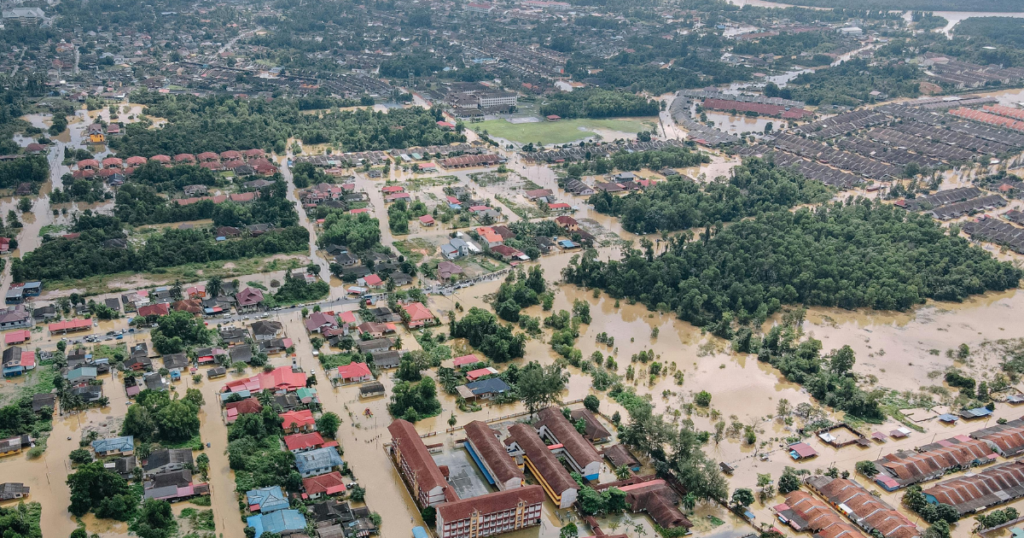
AI-assisted flood forecasting is one of the best-documented applications. A 2024 study in Nature by Nearing and colleagues showed that an AI model could predict extreme river floods in ungauged watersheds at up to a five-day lead time with reliability similar to or better than same-day predictions from the Global Flood Awareness System. The model supports a seven-day forecast horizon. Performance still depends on the region and data available. After a disaster, satellite imagery analysis can speed up damage assessment and help relief coordinators prioritize resources. For the Pakistan context, read our guides on flood forecasting in Pakistan, flood risk monitoring and early warning, and AI in disaster management.
Urban Planning
Land-use and land-cover change detection helps planners monitor informal settlement growth, identify infrastructure pressure points, and design climate-resilient development before construction begins.
Agriculture
Vegetation index analysis and satellite monitoring help agencies identify patterns associated with crop stress, disease risk, and water shortages across growing regions, supporting earlier field verification and intervention.
Environmental Monitoring
Continuous satellite monitoring of forests, wetlands, and coastal zones supports enforcement of protection rules, tracking of habitat change, and monitoring of indicators associated with biodiversity loss. See our work on coastal zone management in Pakistan for a regional example.
Case Studies: Pakistan Floods and MHVRA Muzaffarabad
Case study 1: Monitoring the 2025 Monsoon Floods in Pakistan
Our team mapped flooding in the Sialkot and Narowal districts of Punjab after the August 2025 monsoon, using remote sensing and GIS. The study applied the NDWI water index to separate water bodies from non-water surfaces and used CHIRPS daily rainfall data to relate rainfall distribution to flood occurrence. The analysis estimated that about 1,045 km² of land was affected. Read the full study: Monitoring the 2025 Monsoon Floods in Pakistan.
Case study 2: MHVRA Muzaffarabad
MHVRA-Muzaffarabad is an interactive, GIS-based risk assessment platform that maps hazards and vulnerability to support disaster preparedness and planning. Users can toggle multiple layers (stream lines, fault lines, geology, flood hazard, land use and land cover for 2023, elevation, and precipitation) to assess vulnerability in specific areas. Explore it on our products page, and see more projects on our case study page.
Emerging Trends in AI GIS
These trends are moving from pilot projects toward wider use:
- Digital twins: Live virtual replicas of physical systems, used for simulation in smart cities and infrastructure management.
- Edge computing: Processing geospatial data closer to the source, enabling faster analysis where connectivity is limited.
- SDG tracking: Using spatial intelligence to monitor progress and accountability on the Sustainable Development Goals.
Organizations that build spatial intelligence capacity now will be better placed to adopt these as they mature. Explore our AI-powered geospatial products to see what is available today.
Conclusion
AI GIS mapping services expand what GIS can do: automating large-scale analysis, detecting change, and supporting risk modeling and decision-making. Their value depends on data quality, proper validation, and experienced human oversight. The strongest use cases today include disaster risk, land-cover monitoring, agriculture, ESG evidence, and climate adaptation. Choose a provider on transparency, methodology, and domain expertise, not on claims alone. To discuss a project, visit our GIS services page.
FAQs
What makes AI GIS mapping services different from traditional GIS?
Traditional GIS focuses on visualizing, querying, and analyzing spatial data. AI GIS adds predictive modeling and automated pattern recognition to these workflows, helping analyze larger datasets and deliver results in formats decision-makers can use.
Which industries benefit most from AI GIS mapping services?
Disaster management agencies, urban planners, environmental monitoring organizations, agricultural agencies, infrastructure developers, ESG reporting teams, and international development organizations all benefit. Utilities, forestry, transportation, and water resource management are also common users.
How does AI improve the accuracy of GIS mapping?
AI models can improve the consistency and efficiency of GIS analysis when trained on suitable data and properly validated. They can detect patterns that manual review may miss and support quality control. New data may allow retraining or recalibration, but accuracy does not improve automatically.
Can AI GIS services support ESG and sustainability reporting?
Yes. Satellite-based monitoring provides spatial evidence for land-use commitments, carbon stock assessments, and deforestation tracking. This evidence can complement conventional ESG reporting and verification.
How quickly can AI GIS mapping services deliver results?
In suitable workflows, automation can reduce processing time substantially. Actual delivery time depends on data availability, model complexity, and project scope. Near-real-time outputs are possible for some applications, such as flood mapping, when satellite data is available promptly.
What data sources do AI GIS mapping services use?
Common sources include satellite imagery from platforms such as Sentinel (e.g., Sentinel-1 and Sentinel-2) and Landsat (e.g., Landsat 8/9), drone-captured aerial data, ground-based sensors, GPS survey data, and historical spatial databases.
How do AI GIS mapping services support disaster preparedness?
By combining terrain models, weather data, historical flood records, and machine learning, AI GIS provides vulnerability maps and risk outputs that help emergency agencies plan and position resources. Issuing public alerts is the responsibility of official warning systems and agencies, which AI GIS outputs can inform.