| Quick Answer: Climate change in 2026 is accelerating because of fossil fuel use, deforestation, industrial growth, agriculture, unplanned urbanization, transportation emissions, and weak climate governance. The result is more intense heatwaves, floods, droughts, and rising sea levels. Data-driven climate planning, renewable energy adoption, and stronger policy enforcement remain the most effective ways to slow the damage. |
Climate change in 2026 is no longer a distant environmental concern; it is a defining force reshaping economies, food systems, cities, and human security worldwide. Rising temperatures, shifting rainfall patterns, and more frequent extreme weather events are already transforming how societies operate. What makes the situation more urgent is that the pace of change continues to outstrip many earlier projections.
Today’s climate crisis is driven by a mix of human activity, weak environmental governance, and delayed action. At the same time, public awareness is growing, and governments, businesses, and development organizations are under increasing pressure to deliver evidence-based solutions. Understanding the causes of climate change, its real-world effects, and what can be done right now is essential for reducing future harm and building long-term resilience.
What Is Climate Change?
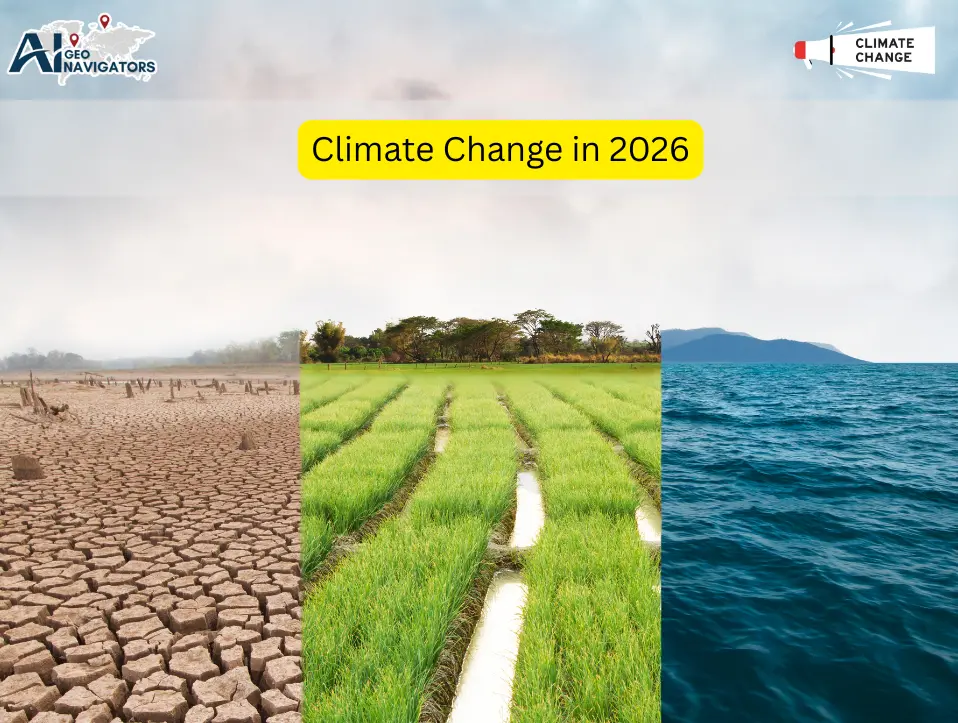
Climate change refers to long-term shifts in temperature, precipitation, wind patterns, and other elements of the Earth’s climate system. Unlike short-term weather variation, it is a long-term phenomenon driven largely by human activities that release greenhouse gases into the atmosphere.
By 2026, global warming has already pushed average surface temperatures well above pre-industrial levels; scientists have long placed the increase above 1.1°C, with continued warming each year, according to the IPCC’s Sixth Assessment Report. This shift affects natural systems such as glaciers, oceans, forests, and freshwater resources, as well as human systems including agriculture, energy production, infrastructure, and public health.
The climate crisis in 2026 is not just about higher temperatures. It shows up as more frequent floods and droughts, intensifying heatwaves, rising sea levels, and mounting pressure on vulnerable populations. These impacts are uneven, often hitting low-income communities and climate-sensitive regions hardest.
What Are the Main Causes of Climate Change in 2026?
Climate change is driven by several interconnected causes. Here are the factors doing the most damage in 2026.
1- Why Are Fossil Fuels Still the Biggest Driver of Climate Change?
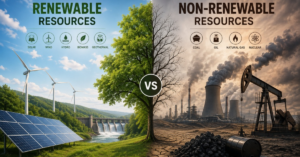
Fossil fuel dependence remains the single largest contributor to climate change in 2026. Electricity generation, transportation, and industrial processes still rely heavily on coal, oil, and natural gas.
Burning fossil fuels releases large volumes of carbon dioxide, which traps heat and intensifies the greenhouse effect. Despite real progress in renewable energy, most countries continue to lean on fossil fuels due to economic pressures, political constraints, and existing infrastructure. As energy demand keeps climbing in cities and industrial hubs, fossil fuel emissions remain the primary obstacle to meaningful climate progress,unless the shift to clean energy accelerate the shift to renewable energy.
2- How Does Deforestation Accelerate Climate Change?
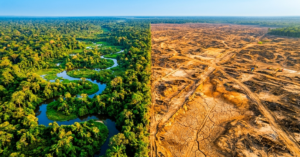
Deforestation, particularly across tropical and developing regions, is another major driver. Forests absorb atmospheric carbon dioxide, and clearing them for agriculture, infrastructure, or urban expansion releases that stored carbon while destroying long-term storage capacity.
Beyond emissions, deforestation disrupts rainfall patterns and weakens ecosystems, contributing to biodiversity loss and soil erosion. Poor land management further reduces a landscape’s ability to adapt to shifting climate conditions, leaving communities more exposed to floods, landslides, and droughts.
3- Why Do Industrial Emissions Keep Rising?
Industrial activity continues to fuel global warming in 2026. Heavy industries such as cement production, chemical manufacturing, and steel processing emit substantial greenhouse gases.
Rising global demand for building materials and manufactured goods is pushing industrial emissions higher still, a problem worsened by outdated technology and inconsistent environmental regulation. Cleaner production methods exist, but adoption remains uneven — meaning industrial emissions will keep worsening the climate crisis without stronger enforcement and greater investment in low-carbon operations.
4- How Do Agriculture and Food Systems Fuel Climate Change?
Agriculture is both a victim of climate change and a contributor to it. Livestock production, fertilizer use, and rice cultivation generate significant methane and nitrous oxide emissions, both potent greenhouse gases.
Population growth and shifting consumption patterns are pushing food demand higher in 2026, straining land, water, and energy resources. Uncontrolled agricultural expansion is closely tied to deforestation and water scarcity, compounding climate impacts. Meanwhile, climate-sensitive agriculture faces growing threats from heat stress and unpredictable rainfall, creating a difficult cycle without wider adoption of climate-smart farming practices.
5- Why Does Urban Expansion Make Climate Change Worse?
Cities are expanding rapidly in 2026, especially across developing countries. Urban areas concentrate energy use, transportation emissions, and construction activity, all of which drive climate change.
Unplanned sprawl increases reliance on personal vehicles, fossil-fuelled energy, and inefficient buildings, pushing emissions higher while exposing residents to heatwaves, flooding, and air pollution. When urban infrastructure isn’t designed for climate resilience, cities lock themselves into high-emission systems for decades. Sustainable urban planning is essential to reducing climate risk going forward.
6- How Do Transportation and Mobility Add to the Crisis?
Transportation remains a major emissions source in 2026. Road transport, aviation, and shipping still rely heavily on fossil fuels, producing substantial carbon output.
While electric vehicles and public transit networks are growing, access to them remains unequal, and the shift to low-emission mobility is slowed by weak infrastructure and high costs in many regions. As global trade and travel continue to expand, transportation will remain a core driver of climate change without systemic, large-scale change.
7- Why Is Weak Climate Governance a Hidden Cause of Climate Change?
Delayed decision-making is one of the less visible but most damaging factors behind climate change. Many countries have climate policies on paper, but implementation often falls short of the promise.
Inconsistent climate reporting, weak enforcement, and limited access to reliable data make it hard to track real progress. The gap between stated climate targets and actual outcomes remains a serious problem in 2026 — and even the best-designed climate strategy cannot deliver results without strong governance behind it. That gap raises long-term costs and makes solutions less effective.
Climate Change Impacts in 2026
The effects of climate change in 2026 are increasingly visible and costly. Rising temperatures are fueling more frequent and severe heatwaves, straining health systems and power grids. Floods and storms are damaging infrastructure and displacing communities, while water scarcity is affecting agriculture, industry, and daily life, along with increasingly erratic weather patterns like El Niño.
These impacts don’t happen in isolation; they intersect with economic inequality, food insecurity, and political instability. As a result, climate change in 2026 is understood not just as an environmental crisis, but as a development crisis that touches nearly every sector.
How Can We Reduce Climate Change in 2026?
Reducing climate change in 2026 requires coordinated action across governments, businesses, and individuals. Governments need to strengthen climate policy, invest in renewable energy, and enforce environmental regulations consistently. Businesses must adopt low-carbon technologies and commit to transparent climate reporting.
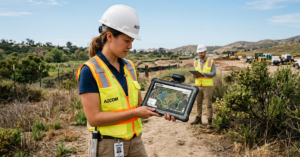
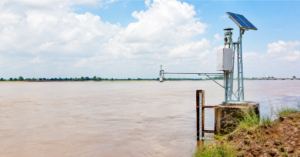
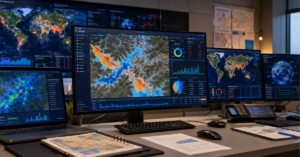
Data-driven planning plays a central role here. Climate intelligence, risk mapping, and monitoring systems help decision-makers identify exactly where interventions are needed most, making solutions realistic, measurable, and locally relevant rather than one-size-fits-all.
Individuals also have a role to play, reducing energy consumption, choosing sustainable products, and supporting climate-responsible policy. No single action solves the crisis alone, but combined efforts can meaningfully slow global warming and reduce future risk.
Who Is Helping Solve the Climate Crisis in 2026?
AI Geo Navigators is a climate intelligence and geospatial solutions company focused on helping organizations understand and respond to climate risk. By combining geospatial data, artificial intelligence, and environmental modeling, the company supports governments, development partners, and organizations working to manage the climate crisis with greater precision and transparency.
The mission is straightforward: turn credible data and powerful geospatial tools into climate-sensitive planning that decision-makers can actually use. AI Geo Navigators brings expertise in climate risk assessment, disaster monitoring, environmental analysis, and geospatial intelligence and disaster monitoring strategies, mapping risks, tracking environmental change, and delivering insights that strengthen planning and resilience for the climate crisis of 2026 and beyond.
Conclusion
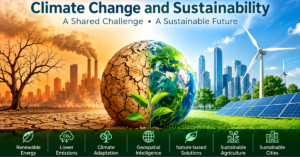
Climate change in 2026 sits at the intersection of environmental, economic, and social risk. Its causes, from fossil fuels and deforestation to weak governance, are well understood, and so are many of the solutions. What’s missing in most places isn’t awareness; it’s the speed and consistency of action.
Closing that gap will take coordinated policy, credible data, and sustained investment in resilience, from national governments down to individual choices. The tools to slow climate change already exist. The task now is using them faster and more consistently than ever before.
FAQs
What is the biggest cause of climate change in 2026?
Fossil fuel use for energy and transportation remains the single largest driver of climate change in 2026, followed closely by deforestation, industrial emissions, and agriculture.
How is climate change affecting South Asia and Pakistan specifically?
South Asia, including Pakistan, continues to face intensifying heatwaves, erratic monsoon rainfall, glacial melt, and higher flood risk, making the region one of the most climate-vulnerable in the world. World Bank’s South Asia climate brief.
Can climate change still be reduced in 2026?
Yes. While some warming is already locked in, stronger policy enforcement, faster renewable energy adoption, and data-driven climate planning can still significantly slow future damage and reduce risk.
What role does AI and geospatial technology play in fighting climate change?
AI and geospatial intelligence help governments and organizations map climate risks, monitor environmental change in near real time, and prioritize where interventions and funding will have the greatest impact.
What can individuals do about climate change in 2026?
Individuals can reduce personal energy use, choose sustainable products and transport options, and support policies and businesses committed to credible climate action.