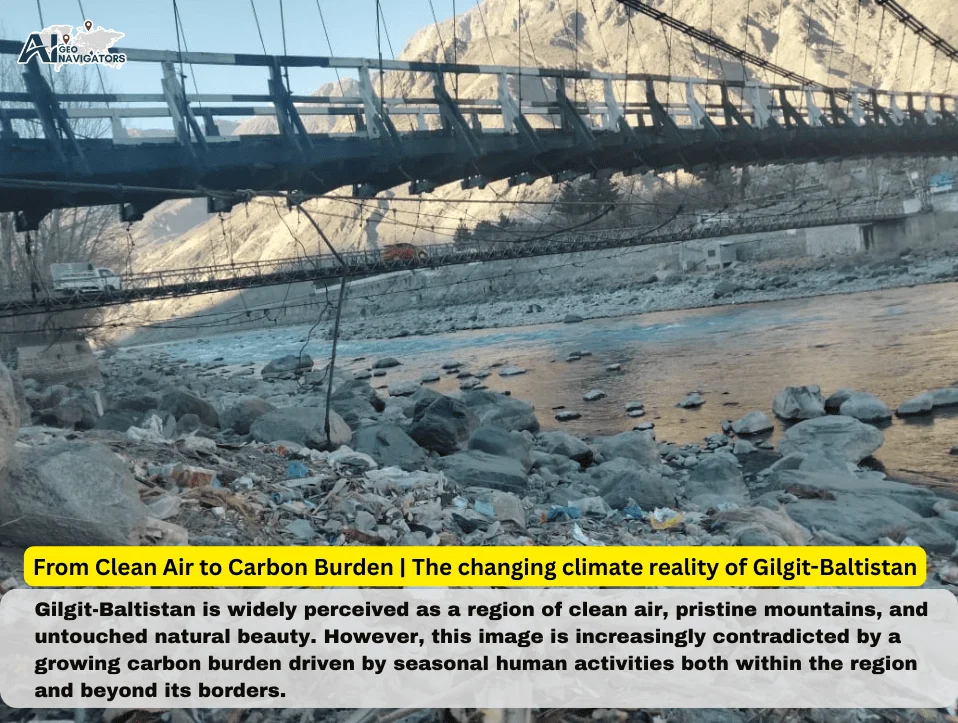
Gilgit-Baltistan is widely perceived as a region of clean air, pristine mountains, and untouched natural beauty. However, this image is increasingly contradicted by a growing carbon burden driven by seasonal human activities both within the region and beyond its borders. During harsh winters, communities heavily depend on fossil fuels, firewood, and coal for heating and cooking, leading to significant carbon and black carbon emissions. At the same time, poor waste management practices result in the burning of solid and plastic waste, further degrading air quality.
In contrast, summers bring a different but equally serious challenge. The rapid growth of tourism has led to a sharp increase in traffic congestion, fuel consumption, and emissions from diesel vehicles, particularly in popular destinations such as Hunza, Skardu, and Gilgit.
Unregulated tourism, rising vehicle numbers, and expanding urban infrastructure collectively contribute to increasing carbon emissions throughout the year. In addition to local sources, Gilgit Baltistan is also affected by trans-boundary carbon and black carbon emissions, particularly from neighboring regions across China-Pakistan border. Industrial activity, energy production, and transport emissions from western China can travel long distances through atmospheric circulation and settle over high-altitude areas.
These airborne pollutants, especially black carbon are known to deposit on snow and glaciers, reducing surface reflectivity and accelerating melting intensifying climate impacts in Gilgit Baltistan despite its relatively low local emissions. Together local human activities and cross-border atmospheric pollution are transforming Gilgit Baltistan from a naturally resilient mountain system into a climate vulnerable region. This blog examines these key contributors to carbon emissions and their climate impacts and the urgent need for sustainable solutions.
Understanding carbon emissions in Gilgit-Baltistan:
Carbon emissions in Gilgit-Baltistan carbon emissions refer to the release of carbon dioxide (CO2) especially black carbon and other greenhouse gases from human activities such as transportation, biomass burning, and waste burning. Although Gilgit-Baltistan overall contribution to global emissions is very low compared with industrialized regions, local emission sources are growing and affecting both climate and air quality. Even small increases in emissions have significant impacts in high-altitude regions like Gilgit-Baltistan, accelerating glacier retreat, altering precipitation patterns, and affecting local ecosystems.
Winter Emission drivers:
In many high-altitude villages, households depend on solid fuels such as wood, dung, and coal for heating and cooking during long winters. Studies show that over 90% of rural households in remote Gilgit-Baltistan villages rely on solid fuels, leading to high levels of indoor air pollution and carbon emissions.
The open burning of mixed waste and plastics especially in winter when waste accumulates releases CO2 and other pollutants, contributing to seasonal air quality deterioration. Gilgit Baltistan mountainous region in northern Pakistan. The region is known for its stunning natural beauty, including glaciers, rivers and high-altitude lakes, but this beauty is being threatened by increasing amount of plastic waste. There is no space left which is untouched by plastic pollution.
Summer Emission drivers:
Tourism is a major seasonal source of emissions, in 2022, more than 2 million tourist visited Gilgit-Baltistan. Increased tourism correlates with rise in vehicles, especially diesel-powered jeeps and buses, which emit CO2 and black carbon in narrow mountain valleys. Daily traffic loads are rising as well, with projections suggesting that more than 7000 vehicles could pass through the region daily once CPEC routes are fully operational significantly increasing carbon and particulate emissions.
Air quality Evidence:
Real-time air quality data from monitoring networks often show elevated particulate levels in Skardu, one of the busier urban centers in Gilgit-Baltistan, indicating recurring pollution episodes that imply elevated emissions of GHG associated pollutants during certain seasons.
Most affected and High carbon Emitting regions in Gilgit-Baltistan:
Although Gilgit-Baltistan does not yet have a comprehensive district-level greenhouse gas inventory, available air quality data, tourism statistics, fuel-use patterns, and development trends indicate that certain regions contribute more significantly to carbon emissions and are more exposed to their impacts.
Skardu District:
Skardu district has emerged as one of the most carbon-stressed areas in Gilgit-Baltistan. Rapid urban expansion, increased population density, winter reliance on coal and firewood for heating, and a surge in tourism related traffic have resulted in noticeable air quality deterioration especially during peak tourist seasons and winter months.
Hunza District:
Hunza district faces intense seasonal pressure due to tourism. During summer the influx of visitors leads to a sharp rise in vehicle emissions in narrow valleys where pollutants tend to accumulate. Increased energy used by hotels and guesthouses further adds to carbon burden.
Gilgit District:
Gilgit district as the administrative and commercial hub, experiences year-round traffic congestion, construction activities, and energy demand. Diesel powered transport, generators during power shortages, and waste burning practices contribute substantially to local emissions.
Hourly data collection for air quality parameters (PM2.5, NO, NO2, SO2, O3 and CO) were measured using air-pointer (record um, Austria) from 1 Jan 2018 to 31 Mar 2018 in winter and 1 Jun 2018 to 31 Aug 2018 in summer. Findings depict PM2.5 health limits were crossed in the winter season, while NO, NO2 and SO2 remained below their health limits. O3 and CO showed a rising trend in summer months, crossing the 8-h health limits during the season.
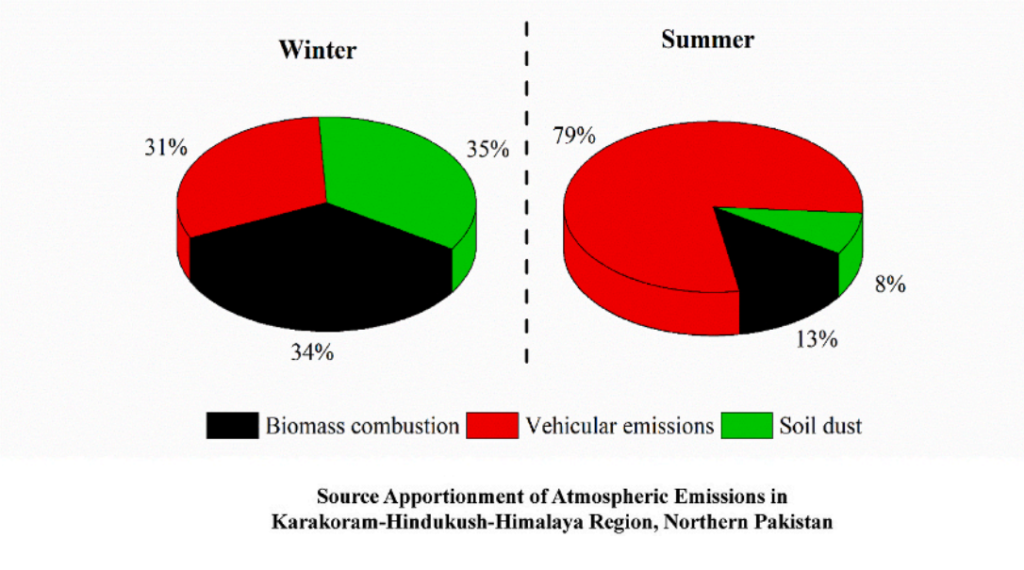
Figure 1. Seasonal source apportionment of Atmospheric Emissions in Karakorum-Hindukush-Himalaya Region, Northern Pakistan ( source: Adapted from a regional atmospheric emissions study in Northern Pakistan)
Main sources of carbon Emission in Gilgit-Baltistan:
Transport and tourism:
- Rapid increase in vehicles due to tourism growth, in 2022, Gilgit-Baltistan received more than 2 million tourists far exceeding the region’s population. Most visitors travel by road in fuel-powered jeeps and buses, significantly increasing carbon emissions along major routes.
- Old diesel engines and vehicles contribute significantly to CO2 emissions, many vehicles operating in Gilgit-Baltistan are old models with poor fuel efficiency. Diesel-powered transport releases high levels of CO2 and black carbon, which are known contributors to regional warming and air pollution.
- Tourism activities indirectly increase carbon footprints, beyond transportation tourism increase energy use for lodging, cooking, and services, adding to the region’s carbon burden, especially where electricity supply is limited and generators are used.
- Increased cross-border freight and transit traffic along regional corridors further intensifies transport-related emissions.
Biomass burning and winter Energy use:
- Heavy reliance on firewood, coal, and kerosene, in rural and urban parts of Gilgit-Baltistan especially during long winters, over 90% of households depend on solid fuels (wood, dung, crop residue) for heating and cooking. This leads to significant CO2, methane, and particulate emissions.
- Black carbon from biomass burning accelerates glacier melt, studies in the broader Hindukush-Karakorum region confirm that black carbon aerosols deposited on snow and ice increase absorption of solar radiation, accelerating glacier melt over time.
- Deforestation due to fuel-wood collection, sporadic but growing evidence indicates that fuel-wood collection contributes to local forest degradation, reducing carbon sinks and increasing net emissions.
Urbanization and infrastructure Development:
- Road construction and development rely on diesel machinery, large infrastructure projects such as road expansions (linked to tourism and regional connectivity) use diesel-powered heavy equipment, releasing CO2 and other GHGs during construction phases.
- Housing and commercial construction add emissions, cement production and construction equipment are notable CO2 sources, contributing to increased emissions in urbanizing centers like Gilgit and Skardu.
- Land-use changes reduce natural carbon sinks, conversion of grasslands and forest to build environments reduces the regions capacity to absorb CO2, intensifying the carbon imbalance.
- Infrastructure linked to international connectivity corridors also increase indirect emissions through material transport and energy intensive construction activities.
Waste Burning:
- Open burning of plastics and mixed waste releases CO2 and toxic gases, due to inadequate waste management systems, many communities resort to burning household and plastic waste, which emits CO2 and other greenhouse gases as well as harmful pollutants.
- Waste burning contributes to local pollution and greenhouse gas buildup, studies from comparable high-mountain communities show that open waste burning can raise local particulate and CO2 levels especially during calm winter conditions when pollutants linger.
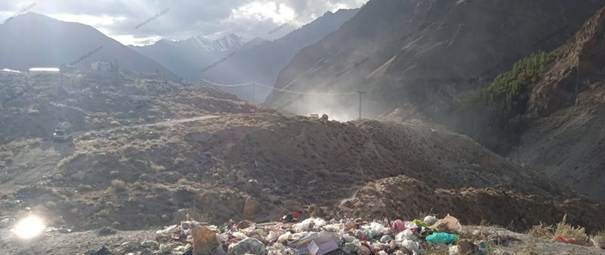
Figure 2 Open waste burning in Ganish Hunza
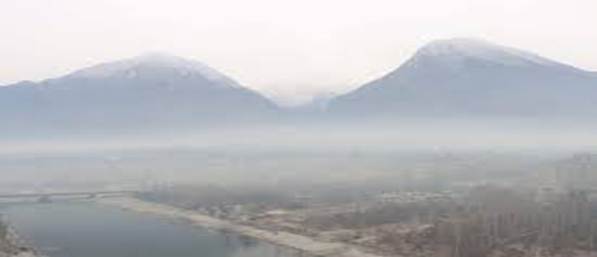
Figure 3 Smog Covers Gilgit City
Impacts of rising Carbon Emissions in Gilgit-Baltistan:
Accelerated glacier melting and glacial hazards:
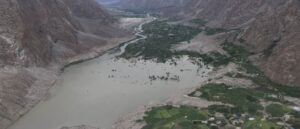
The rapid warming of Gilgit-Baltistan is leading to faster glacial retreat and the formation of glacial lakes, which can suddenly break and cause disasters known as Glacial lake outburst floods (GLOFs). A provincial climate report notes that 3044 glacial lakes have formed in Gilgit Baltistan and Khyber Pakhtunkhwa, and 33 of these are considered as hazardous.
GLOFs release millions of cubic meters of water and debris, posing a direct threat to lives, infrastructure, and agriculture in downstream communities. In recent years, increasing GLOF events have damaged homes, roads, and farmland across northern Pakistan.
Seasonal water scarcity and water system disruption:
Glacier act as natural reservoirs, releasing melt-water throughout the year. However, as glaciers shrink faster than they can rebuild, there is an initial surge in river flows followed by long-term decline in fresh water availability. This trend threatens water supplies for irrigation, hydro-power, and drinking water in Gilgit Baltistan.
Research shows that melt-driven shifts in water availability are already stressing farming system and may contribute to crop failures and livelihood disruptions in many areas.
Health issues:
Increased carbon emissions and black carbon deposition in mountain regions exacerbate air pollution, which turn poses health risks such as respiratory problems and cardiovascular illnesses. While specific Gilgit Baltistan health surveys are limited, regional studies link combustion related pollutants with higher disease risk in high altitude communities.
Rising temperatures and water stress can also contribute to spread of water-bone and vector-bone diseases like cholera, typhoid as precipitation patterns shift and sanitation challenges grow.
Loss of Biodiversity in Fragile Mountain Ecosystem:
Climate-driven changes, including glacier retreat, altered river flows, and increased extreme events impact mountain ecosystems that are home to endemic species. Warming trends disrupt habitat conditions for wildlife such as snow leopards, Himalayan ibex, and other alpine fauna. While local biodiversity monitoring is ongoing, broader research in the region shows that ecosystems heavily dependent on snow and ice are among the most vulnerable to climate and emissions changes.
Vegetation patterns are also shifting, affecting pastureland s relied upon by rural communities and livestock.
Why Gilgit-Baltistan is vulnerable:
High altitude warming occurs faster than the global average:
Gilgit-Baltistan mountainous terrain makes it especially sensitive to climate change. Observations indicate that average temperatures in the region have increased significantly over recent decades, contributing to accelerated glacier melt, and extreme weather events. Scientific reporting notes that parts of Gilgit Baltistan have experienced warming trends nearly double the national average, with rising summer temperatures pushing glaciers into rapid retreat and increasing flood risks. Extreme heat events have already been recorded such as temperatures above 48.5 degree Celsius in Chilas and Bunji in July 2025, which are unprecedented for high altitude mountain valleys and directly accelerate ice melt.
Dependence on Glacier-Fed water systems:
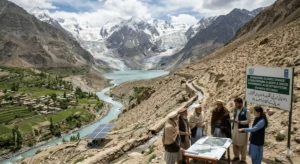
Gilgit-Baltistan hosts over 7000 glaciers which supply a major portion of Pakistan’s freshwater through the Indus river system. Rising carbon emissions intensify warming leading to faster glacier retreat and unstable melt-water flows. Initially increased melting causes floods and glacial lake formation, however in the long term, continued emissions threaten seasonal water availability for agriculture, hydro-power generation and drinking water. Because Gilgit Baltistan’s water security is directly tied to glacier health, carbon-driven warming places the region at exceptional risk.
Limited capacity to Adapt to Emission-driven impacts:
Despite being on front-line of climate impacts, Gilgit-Baltistan has limited infrastructure, technology and financial capacity to adapt to carbon-induced environmental changes. Weak air quality monitoring, insufficient clean energy access, fragile road network and limited disaster preparedness increase exposure to risks such as floods, landslides and GLOFs. Carbon emissions related hazards including air pollution, extreme heat, and glacier instability, therefore cause greater damage in Gilgit Baltistan than in more developed regions, where adaptation systems are stronger.
Compounded Local Effects despite Low Emissions:
Although Gilgit Baltistan’s overall carbon emissions are relatively low at the global scale, local emission sources (diesel transport, biomass burning, tourism pressure, and waste burning) have out-sized impacts due to narrow valleys that trap pollutants, long winters increasing fuel consumption, sensitive mountain ecosystems, close human environment dependence. This makes Gilgit Baltistan a region where carbon emissions translate rapidly into environmental, social and economic stress.
In Gilgit Baltistan rising carbon emissions do not remain abstract atmospheric figures, they directly translate into melting glaciers, water insecurity, health risks, and ecological loss. The regions high-altitude geography and limited adaptive capacity make it one of the most climate vulnerable areas in Pakistan, underscoring the urgent need for emission reduction and sustainable development strategies
Mitigation and solutions: Addressing carbon emissions in Gilgit Baltistan
To reduce the growing carbon footprint in Gilgit Baltistan and build climate resilience, actions must be taken at policy, community, and individual levels. These should target the key emissions sources identified earlier and encourage sustainable development while preserving the region’s fragile environment.
Policy Level:
- Promote renewable energy Across the region: Gilgit Baltistan is now prioritizing renewable energy to reduce dependence on fossil fuels for electricity and heat. In 2025, the federal government approved a 100 MW solar power project in Gilgit Baltistan, which expected to provide clean, low-cost electricity reduced load-shedding and significantly lower carbon emissions from diesel and generator use.
- Expand Micro-hydro power and distributed energy projects: community and small-scale hydro-power plants have already been successful in multiple valleys, generating clean power for remote homes and schools reducing reliance on fossil fuels.
- Implement sustainable tourism regulations: The Gilgit Baltistan draft environment policy calls for regulations that ensure tourism development does not harm the local ecology. This include promoting Eco-tourism, enforcing environmental standards for tourist facilities.
- Strengthen environmental and emission policies: The latest climate change strategy and Action plan highlights transport emissions and firewood burning as priority areas for mitigation, emphasizing the need to reduce greenhouse gas sources and incorporate climate considerations into infrastructure, transport, and energy planning.
Community Level:
- Adopt energy efficient technologies: promoting energy efficient stoves and heating systems can significantly cut biomass burning emissions in winter. This reduces black carbon and CO2 while improving indoor air quality for households.
- Forest protection and Afforestation: Large-scale tree planting and forest restoration help absorb CO2, support biodiversity, and reduce soil erosion. Projects like the EU-supported “Energy Plus” imitative plan to plant millions of trees, helping to carbon sinks and protect watershed.
- Improve waste management: Community-level waste management systems such as segregation, collection, and recycling programs can reduce open burning of plastics and mixed waste, directly cutting carbon and toxic emissions. Local awareness and campaigns, proper bins, and cleanup drives are crucial first steps.
Individual level:
- Reduce personal Fuel-wood and fossil fuel use: Individuals can minimize their carbon footprint by using clean energy options where available (e.g., solar panels, micro-hydroelectricity) and reducing reliance on firewood and kerosene for heating and cooking.
- Practice responsible and Low-impact tourism: Tourist can lower their carbon footprint by choosing eco-friendly accommodations, minimizing vehicle use, avoiding single-use plastics, and respect local guidelines on waste and resource use.
- Raise local awareness and education: Awareness raising campaigns in schools, community centers, and through media can help people understand how everyday activities from cooking fuels to driving habits influence carbon emissions and environmental health.
Conclusion:
Gilgit Baltistan stands at the front-line of climate change, where even relatively small increase in carbon emissions produce disproportionately large impacts. Although the region’s direct contribution to global greenhouse gas emissions remains minimal, a combination of local emission sources, such as winter biomass burning, tourism-driven transport, waste burning, and infrastructure development together with trans-boundary pollution from neighboring regions is intensifying environmental stress in this fragile high-altitude landscape. The accumulation of carbon dioxide and black carbon in mountain valleys accelerates glacier retreat, alters precipitation patterns, degrades air quality, and threatens water security for communities that depend almost entirely on glacier-fed rivers. Seasonal emissions peak during winter heating and summer tourism further amplifies these risks, while limited adaptive capacity and infrastructure increase the vulnerability of both ecosystem and livelihoods.
Addressing carbon emissions in Gilgit Baltistan therefore requires more than localized solutions. Integrated mitigation strategies, combining clean energy transitions, sustainable tourism management, improved waste system, forest protection, and regional cooperation to address trans-boundary pollution are essential. At the same time communities with cleaner technologies and raising climate awareness significantly reduced household level emissions.
Protecting Gilgit Baltistan is not only a regional priority but a global responsibility. preserving its glaciers, ecosystems, and water resources means safeguarding climate stability far beyond borders. Acting now to reduce the carbon burden can ensure that this unique mountain region continues to sustain both nature and people for generations to come.