Introduction
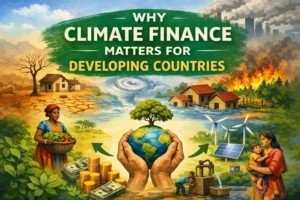
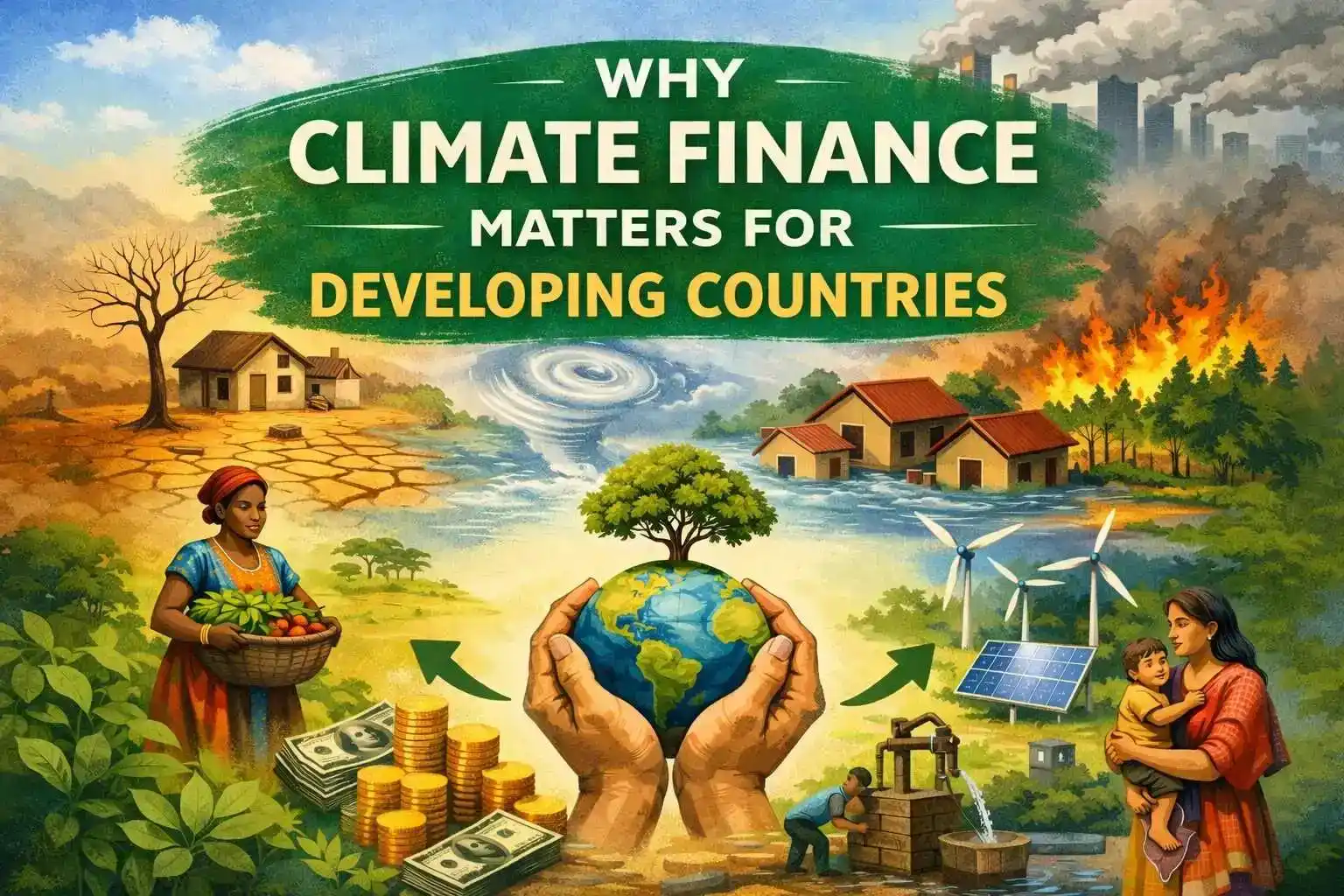
Climate Finance plays a critical role in enabling developing nations to address multifaceted challenges posed by climate change, encompassing both mitigating greenhouse gas emissions and adapting to unavoidable climate impacts. Despite contributing minimally to global emissions, developing countries often bear the brunt of climate change, experiencing severe consequences such as floods, drought, glacier melt, and sea-level rise. These impacts exacerbate existing vulnerabilities, leading to increased poverty and economic instability. The international community recognizes the imperative of financial support to these vulnerable nations, underscored by global frameworks like the Paris Agreement.
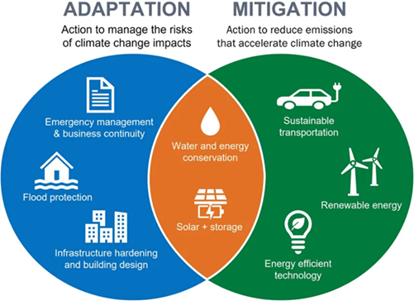
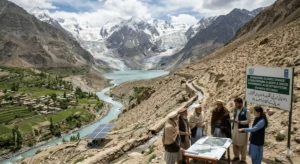
Source: Climate change mitigation and adaptation framework.
Climate finance means providing money for activities that either reduce greenhouse gas emissions (Mitigation) or help people and ecosystems or help people and ecosystems adjust to climate change (adaptation). Mitigation includes investing in renewable energy, energy efficiency, and sustainable transport to lower emissions. For example, climate finance helps countries move toward low-carbon development, though results can vary. Adaptation focuses on building resilience through projects such as flood protection, climate-resilient farming, and improved water management. The Green Climate Fund and Global Environment Facility are major international organizations that direct these funds to developing countries. The GCF created under the United Nations Framework Convention on Climate Change aims to provide significant resources for mitigation and adaptation with the goal of balancing both.
Climate Change and Developing Countries
Developing countries face significant challenges due to their vulnerability and limited resources. For instance, Bangladesh is highly vulnerable to climate change, and its fragile ecosystems are threatened. Without enough money or technology, it is difficult for these countries to take strong action on climate change. Disasters often hit the most vulnerable people hardest, making poverty and economic problems worse. Research shows that climate finance can help reduce energy vulnerability in these countries and protect their economies. The idea of climate justice, especially distributive justice, highlights that financial help should go to those who need it most.
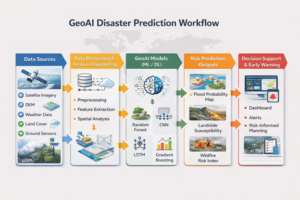
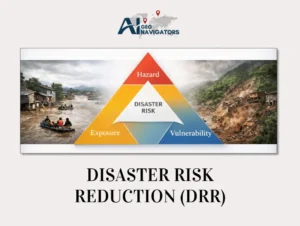
Climate finance supports many activities important to sustainable development. For adaptation, funds are used to build infrastructure and to implement natural solutions to protect communities. This includes flood protection, climate-smart farming to keep food supplies safe, and better water management to provide clean water as weather patterns change. For mitigation, funds help accelerate the adoption of renewable energy, such as solar and wind, and support energy efficiency across sectors. Climate finance also helps develop sustainable transport to reduce fossil fuel use. Another key area is disaster risk reduction, where funds help set up early warning systems and build infrastructure that can withstand extreme weather.
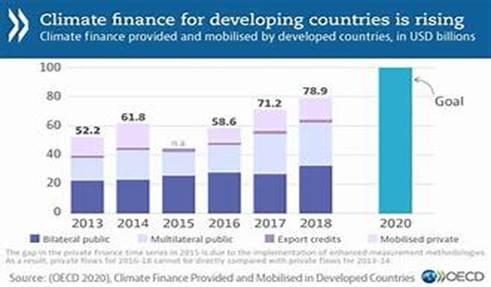
Source: (OECD 2020) Climate Finance Provided and Mobilized in Developed Countries
Despite the evident need, a significant climate finance gap persists. Developed countries pledged to provide $100 billion annually in climate finance to developing countries by 2020, a commitment that has largely gone unfulfilled. The failure to meet this target is attributed to various factors, including inconsistent rules, ambiguous accountability issues, and the political and economic motivations of donor countries. Developing countries also often face complex, stringent access procedures to international funds, further impeding the flow of necessary resources. Institutions like the Green Climate Fund, while significant, have faced scrutiny regarding their effectiveness in prioritizing the most vulnerable countries and streamlining access. For instance, a considerable portion of climate finance from Multilateral Development Banks (MDBs) is allocated to mitigation projects in relatively wealthy countries, often correlated with greenhouse gas emissions rather than vulnerability to climate risks, suggesting a potential imbalance in allocation practices. The US withdrawal from the Paris Agreement also raised concerns about its implications for climate finance, particularly for regions like Africa.
To move forward, several changes are needed in climate finance. First, developed countries must increase their financial commitments to meet and exceed $100 billion annual target for 2022. Second, making it easier to access international funds and strengthening institutions in developing countries will help them use climate finance more effectively. Programs like the Green Climate Fund’s focus on “country ownership” aim to give developing countries greater power, but challenges persist. Third, greater transparency and accountability in climate finance are needed to build trust and ensure funds go where they are most needed. Finally, encouraging private-sector investment, possibly through new financing mechanisms, can help close the funding gap and mobilize additional resources for climate action.
The Role of International Frameworks and Institutions
International frameworks and institutions are key in shaping how climate finance works. The Paris Agreement, adopted in 2015, was a major step in global climate cooperation. It set up a system where countries submit their own climate action plans, called Nationally Determined Contributions (NDCs). Financial support from developed countries depends on developing nations meeting their commitments. The Agreement also stresses that financial flows should support low greenhouse gas emissions and climate-resilient development.
Major Climate Finance Institutions
The Green Climate Fund (GCF) is the main UNFCCC body that directs large sums of money to mitigation and adaptation projects in developing countries. The GCF aims to give developing countries more control over their climate projects. However, it has been criticized for its complex approval processes, which make it hard for local and national groups in developing countries to secure funds quickly and efficiently. Even though pledges to the fund have exceeded its initial capital, there are still concerns about whether it is sufficient to meet global needs.
Other important organizations include the Global Environment Facility (GEF), the Adaptation Fund (AF), and several Multilateral Development Banks (MDBs). The GEF provides funding for many environmental agreements, including the UNFCCC, and supports a wide range of climate projects. The Adaptation Fund is known for allowing national institutions to access funding directly, which helps strengthen country ownership. MDBs like the World Bank and regional development banks are major sources of climate finance, offering loans and grants for large infrastructure and policy programs. These organizations also help standardize climate finance reporting and include climate issues in broader development plans.
Emerging Global Initiatives
The creation of the Loss and Damage Fund at COP28 showed the international community’s commitment to climate finance by recognizing the lasting impacts of climate change on vulnerable countries. This fund aims to cover the financial needs arising from climate-related losses and damage, but there are still challenges ensuring resources reach the most affected.
The Path Forward: Enhancing Climate Finance Effectiveness
Increasing Financial Commitments
To tackle the climate crisis effectively, climate finance systems need to be reviewed and strengthened. Moving forward will require increasing financial commitments, improving access and allocation, enhancing transparency and accountability, and encouraging greater private-sector investment.
First, developed countries need to meet and increase their financial commitments to developing nations as soon as possible. The missed $100 billion pledge is a reminder of the lack of trust in international climate cooperation. Going beyond this target and setting more ambitious, clear, and predictable financial goals is important to demonstrate real commitment to global climate action and climate justice. There is also a growing call for more countries, including emerging economies, to contribute to climate finance, expanding the group of donors beyond the usual ones. Making it easier to access international climate funds is essential.
Improving Access to Climate Funds
Right now, complicated rules, complex applications, and long approval times put too much pressure on developing countries, especially those with limited resources. Important steps include improving direct access, strengthening the skills of national and local institutions to manage climate projects, and providing technical support. The focus should be on giving recipient countries the power to design and implement solutions that fit their own needs and circumstances.
More transparency and accountability are needed to build trust and ensure climate finance is used effectively. There should be clear, consistent rules for tracking, reporting, and verifying climate finance flows to address any confusion or inconsistency. Independent oversight can help make sure funds go to those most in need, based on vulnerability and impact, not politics or economics. Reports should clearly show how money is spent, what results are achieved, and how much projects help the most vulnerable communities. Encouraging private-sector investment is crucial to closing the large funding gap. Public finance is important, but it cannot cover all the investments needed for a global shift to low-carbon and climate-resilient development. Governments and international financial institutions should create conditions that attract private capital, using tools such as de-risking, blended finance, and green incentives. Reducing investment risks in developing countries, especially for adaptation projects and vulnerable sectors, is key to unlocking more private finance. New financial tools and partnerships, such as aid-for-trade programs, can also help bring in more resources for the least developed countries.
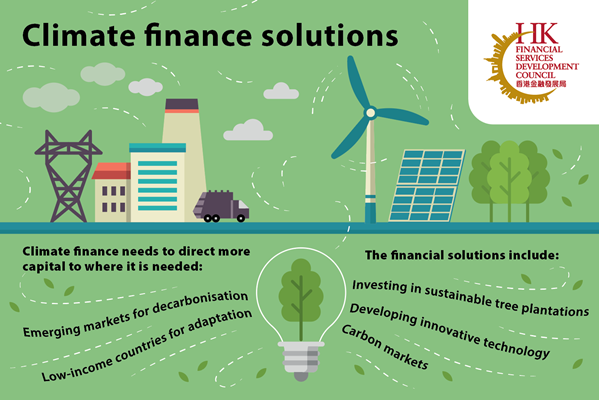
Source: Promising Climate Solution by Financial Services Development Council
In the end, climate finance is more than just money. It is key to creating a fair and sustainable future for everyone. By addressing current problems and adopting a fairer, more efficient, and transparent approach, the international community can ensure that climate finance drives real change in developing countries. This support will help them become more resilient, lower emissions, and reach their sustainable development goals.
Challenges and Gaps in Climate Finance
Although the importance of climate finance is increasingly acknowledged, it continues to encounter substantial challenges and gaps that limit its effectiveness, especially for developing countries. A key issue is the failure of developed countries to fulfill their commitment to providing $100 billion annually in climate finance to developing countries by 2020. This unfulfilled pledge erodes trust and confidence in international climate cooperation. The underlying causes of this shortfall are complex and include inconsistent reporting standards, unclear accountability mechanisms, and the political and economic interests of donor countries.
Developing countries also face big barriers when trying to access climate funds. These include complex application processes, insufficient capacity to develop high-quality projects, and a lack of technical know-how to navigate the complex world of international climate finance. This problem is even worse for Least Developed Countries (LDCs) and Small Island Developing States (SIDS), which have limited people and money. Countries affected by conflict also get much less climate adaptation aid, even though they are very vulnerable to climate change.
Research shows that most multilateral climate finance goes to a few wealthier developing countries and often supports mitigation projects more than adaptation, even in places that are very vulnerable to climate impacts in 2024. This is an issue because mitigation supports long-term climate goals, but adaptation addresses the immediate effects of climate change that are already hurting vulnerable people. Also, since international investors see poorer, more vulnerable countries as risky, it is harder for these countries to get the mitigation finance they need.
There is also debate about how effective climate finance is once it is given out. While it can help develop renewable energy and improve governance in recipient countries, some studies say it can also increase economic risks, especially with mitigation finance. This shows the need to carefully design and implement climate finance projects that support sustainable development without creating new problems.
The Main Sources of Climate Finance in Developing Countries
Developing countries receive climate finance from various sources, including public funds, private investments, and new forms of financing. All of these are meant to support efforts to reduce emissions and adapt to climate change. These financial flows are crucial because, although developing countries account for only a small share of global emissions, they are highly vulnerable to climate impacts such as floods, droughts, melting glaciers, and rising sea levels.
Public funds make up a large part of climate finance and mostly come from developed countries. These funds are distributed through several main channels:
- Multilateral Climate Funds: Major institutions in this category include the Green Climate Fund (GCF), the Global Environment Facility (GEF), and the Adaptation Fund.
- Green Climate Fund (GCF): Established under the United Nations Framework Convention on Climate Change (UNFCCC), the GCF is the primary financial mechanism to support developing countries with both mitigation and adaptation projects, aiming to balance the two. The GCF supports a shift toward low-emission and climate-resilient development. However, it has been criticized for not always prioritizing the most vulnerable countries and for having complicated approval processes that can make it hard for local and national groups to access funds.
- Global Environment Facility (GEF): The GEF funds a wide range of environmental projects, including those focused on climate change, and acts as a financial tool for several international environmental agreements.
- Adaptation Fund (AF): Created under the Kyoto Protocol, the AF is important for funding adaptation projects, especially in vulnerable countries. It stands out because it allows national institutions to secure funding directly, thereby strengthening country ownership.
Multilateral Development Banks (MDBs): Institutions including the World Bank, Asian Development Bank (ADB), and African Development Bank are significant sources of climate finance, directing investments into climate-related projects and frequently leveraging private capital. However, MDBs tend to allocate most of their climate finance to mitigation projects in relatively wealthy developing countries, often prioritizing greenhouse gas emissions rather than vulnerability to climate risks. This trend suggests a potential imbalance in allocation practices.
- Bilateral Agreements and National Development Banks: Developed countries also provide climate finance directly to developing nations through agreements between two countries and through their own development banks.
Private investments are becoming more important for expanding climate action, but these funds usually go to safer, more developed economies. Getting more private capital is key to filling the large funding gap needed for a global shift to low-carbon, climate-resilient development. Governments and international financial institutions are using tools like de-risking, blended finance, and green incentives to attract private investment.
Conclusion
Climate finance is now a key tool for fighting the global climate crisis. This is especially important for developing countries, which are most affected by climate change even though they contribute the least to greenhouse gas emissions. By funding both mitigation and adaptation, climate finance helps these countries move toward low-carbon development and become more resilient to disasters like floods, droughts, and rising sea levels.
Even though climate finance is important, it still faces many challenges. Funding is often insufficient, accessing funds can be complicated, and there is an uneven split between funds for mitigation and adaptation. The delay in meeting the $100 billion annual pledge has also eroded trust between developed and developing countries, underscoring the need for greater accountability in international climate efforts. While there has been some progress, much more funding is needed to address climate change effectively.
Looking ahead, strengthening climate finance systems will require greater financial commitments from developed countries, easier access for vulnerable nations to funds, and greater transparency in tracking and reporting funds. Getting more private-sector involvement and using new financial tools can also help bring in the big investments needed for climate action. International organizations like the Green Climate Fund, the Global Environment Facility, and the Multilateral Development Banks will continue to play a key role in enabling these financial flows.
In the end, climate finance is more than just money; it is a key part of global climate justice. Ensuring that developing countries receive sufficient, fair, and accessible funding is crucial so they can protect vulnerable people, achieve sustainable development goals, and help fight climate change. Without real improvements in climate finance, the world’s efforts to tackle climate change will not succeed.