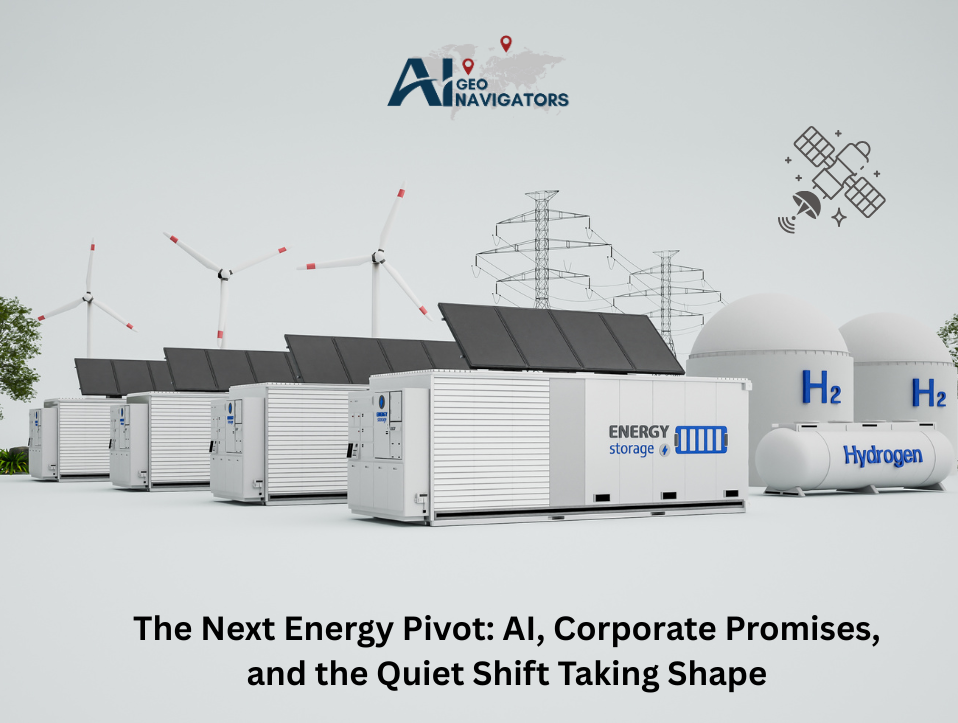
I’ve been traveling to data centers across a few continents lately, and honestly, the gap between how we talk about “the cloud” and what it actually looks like on the ground never fails to hit me. These places aren’t the silent, air-conditioned server rooms you imagine. They’re closer to heavy industry constant hum, massive cooling plants running 24/7, and a power draw that makes utility engineers lose sleep.
Some regions are already responding: new transmission corridors going up, substations being upgraded, politicians actually cutting ribbons on battery projects. Others are still in the “let’s hope nothing breaks this summer” stage.
This has put Big Tech (and a lot of other corporates) in an awkward spot. Ten years ago everyone announced beautiful 2030/2040/2050 net-zero targets when growth was still kind of linear and renewables were scaling nicely.
Nobody modeled a world where a single company’s annual electricity consumption jumps by double-digit terawatt-hours because of GPUs. Some are adapting fast signing 20-year PPAs, co-locating with nuclear or geo, building their own gas peakers “just in case.” Others… well, let’s just say the gap between the slide deck and reality is getting harder to gloss over.
Which explains why the sustainability megaphone has gone strangely quiet. Remember the era of weekly press releases about “100% renewable by next Tuesday”? Yeah, that’s mostly over. People now call it “green hushing.” I don’t think it’s always cynical—sometimes it’s self-preservation in a world where every target gets weaponized the moment you miss by 2%. Sometimes silence just means the engineers can finally get some actual work done instead of writing another 80-page report nobody reads.
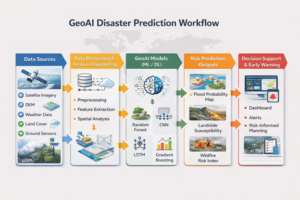
That’s where firms like ours come in. We’re not here to produce another glossy ESG brochure. We’re the boring (but apparently crucial) job of turning satellite images, weather records, supply-chain logs, and electricity bills into maps and numbers that people can actually act on.
A few quick stories from the last couple of years:
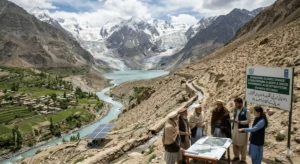
- One district in South Asia was still using flood maps from the 1980s. We layered 20 years of satellite data plus ground elevation updates and handed them new inundation zones. They redrew evacuation routes literally the next week.
- An agribusiness client thought their water problem was “not enough rain.” Turns out half the issue was irrigation timing completely out of sync with soil moisture cycles. Simple multi-year NDVI + soil probe analysis fixed it, no new dams required.
- A multinational kept getting hammered by Scope 3 auditors because their logistics emissions looked insane. We built them a live geospatial dashboard; turned out 8% of total emissions came from one forgotten warehouse in Southeast Asia running diesel generators because the grid there is… let’s say unreliable. They fixed it in a quarter.
We also spend a frustratingly large amount of time training people, because universities still aren’t producing enough graduates who can run a proper GIS analysis AND talk to a CFO without scaring them. So we run bootcamps GIS, carbon accounting, remote-sensing basics, even AML for trade finance (don’t ask). It doesn’t make headlines, but ten years from now those kids will be the ones keeping the lights on.
Investors have noticed the shift too. The ones I talk to aren’t asking about the pretty ESG score anymore. They want to know: “What happens to your margins if power prices double in Virginia? How exposed are you if the EU actually enforces CBAM? Can you still grow 30% a year without blowing up the grid?” Markets have a brutal way of rewarding resilience over good storytelling.
What keeps me optimistic is the younger crowd coming up. They don’t care if you call it ESG, climate strategy, or just “not going bankrupt in 2035.” They just want systems that don’t fall over when the temperature hits 48°C or the gas pipeline gets sanctioned. They ask better questions than most boards I’ve seen.
If that generation keeps pushing, we might actually move from loud promises to the quiet, boring, relentless execution that this transition has always needed.
And honestly? That’s the shift I’m betting on.