Not long ago, environmental and social issues were considered as “soft” factors that helped with brand reputation but not with making investment decisions. Today, things have changed.
Climate change, global rules, social inequality, cyberattacks, labor problems, and governance issues have forced companies into a new era: “The era of ESG Transparency.”
Investors, regulators, and customers now expect companies to show how they handle environmental, social, and governance risks, not just talk about them.
As a result, ESG metrics have become one of the most important tools for evaluating a company’s long-term performance, risk exposure, and ability to survive.
But the challenge is clear: ESG has hundreds of indicators. Not every metric is important. Not everyone is reliable. And not everyone gives investors useful information.
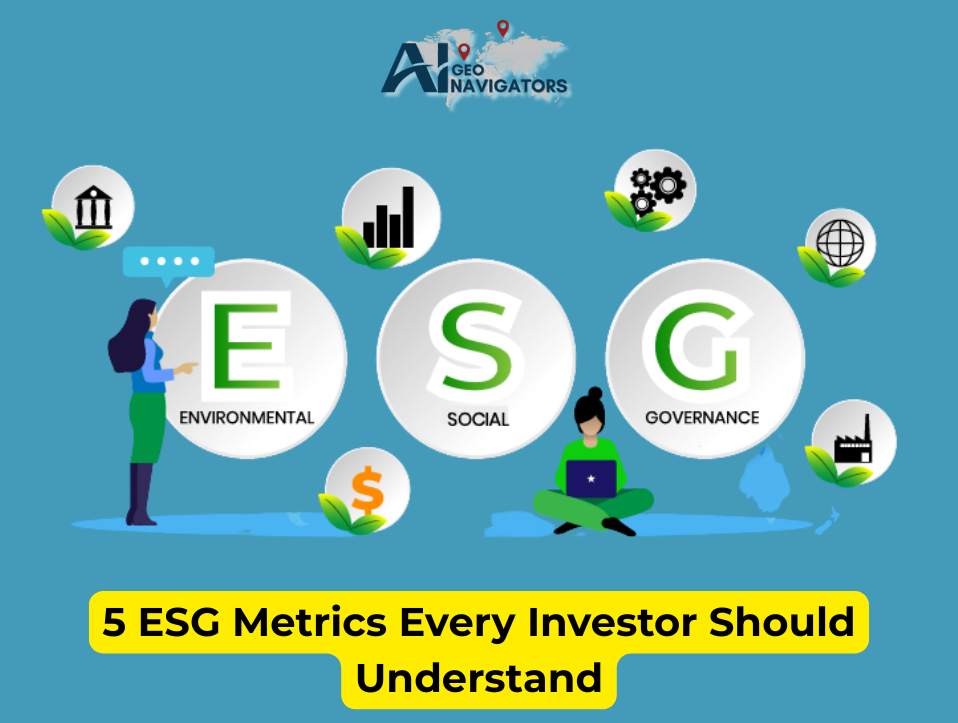
This guide breaks everything down into 5 essential ESG metrics that every investor should understand to evaluate companies clearly and confidently.
These are the metrics that directly affect risk, financial stability, and future growth.
Table of Contents
ToggleWhat Are ESG Metrics?
ESG metrics are measurable indicators used to evaluate how well a company handles its environmental, social, and governance responsibilities.
They show:
- How sustainably a company runs its business
- How responsibly it treats people and communities
- How ethically and transparently it is governed
- How ready it is for climate and regulatory risks
Unlike traditional financial ratios, ESG metrics look forward. They highlight future risks and stability, not just past performance.
Why ESG Metrics Matter to Investors
Investors around the world now consider ESG indicators because:
- ESG metrics affect financial performance
- Companies with strong ESG performance tend to:
- Reduce operational risks
- Avoid regulatory penalties
- Attract long-term investors
- Have higher valuations
ESG failures can cause big losses, such as:
- Environmental disasters → fines, lawsuits
- Labor violations → strikes, shutdowns
- Governance scandals → stock price drops
New regulations require companies to disclose ESG data, including:
- EU Corporate Sustainability Reporting Directive (CSRD)
- TCFD / ISSB Standards
- SEC Climate Disclosure Rules
- UK FCA ESG Regulations
Customers prefer brands that are transparent and ethical, which means ESG performance affects brand loyalty and market share.
5 ESG Metrics Every Investor Must Understand
1. Carbon Emissions (Scope 1, Scope 2, Scope 3)
Carbon emissions are the foundation of environmental performance. They show how much a company contributes to climate change and how well it is prepared for future carbon regulations.
- Scope 1: Direct emissions (company buildings, machinery)
- Scope 2: Electricity or energy purchased
- Scope 3: All other emissions (supply chain, transportation, product lifecycle)
Why This Metric Matters:
- Carbon taxes are increasing worldwide
- Countries are aiming for net-zero by 2050
- High emissions mean higher operational costs
- Major banks avoid funding companies with high carbon footprints
What Good Performance Looks Like:
- Clear Carbon Reduction Goals
- Measurable results each year
- Science-based targets aligned with global standards
- Transparent Scope 3 reporting
2. Energy Mix & Resource Efficiency
This metric evaluates how efficiently and sustainably a company uses energy and resources.
- What investors look at:
- Percentage of renewable vs. non-renewable energy used
- Water usage
- Waste generated and recycled
- Energy efficiency improvements
- Material usage and circularity
Why This Metric Matters:
- Energy is one of the biggest operational costs
- Companies relying on fossil fuels face higher risks in the future
- Water scarcity is increasing globally
- Efficient resource management lowers costs and environmental impact
3. Employee Welfare, Diversity & Labor Practices
A company is only as strong as its people. Investors are increasingly looking at how companies treat their employees because labor issues can create major financial and reputational risks.
Key metrics include:
- Employee turnover rate
- Gender diversity in leadership
- Pay equity
- Health and safety incidents
- Training and skill development
- Inclusion and anti-discrimination policies
- Employee satisfaction
Why This Metric Matters:
- High turnover increases costs
- Poor safety records lead to lawsuits
- A diverse workforce promotes innovation
- Employees prefer companies with ethical labor practices
Strong performance signals:
- Low turnover
- Diversity in executive leadership
- Transparent DEI (Diversity, Equity & Inclusion) reporting
- Documented safety programs
- Measurable employee development initiatives
4. Corporate Governance & Ethical Conduct
Governance problems destroy companies faster than environmental or social issues. This metric reflects how a company is run, how transparent it is, and how responsible its leadership is.
What investors examine:
- Board independence
- CEO-to-worker pay ratio
- Anti-corruption controls
- Transparency in financial reporting
- Whistleblower protection
- Executive accountability
- Data privacy and cybersecurity
Why This Metric Matters:
- Weak governance leads to:
- Fraud
- Corruption
- Insider trading
- Poor decision-making
- Scandals that hurt stock prices
Strong governance builds trust, lowers risk, and improves long-term performance.
5. Risk Management & Climate Resilience
Risk management is becoming one of the most important ESG metrics because investors want to know how prepared a company is for future risks, especially climate-related risks.
Key indicators include:
- Climate risk assessments (TCFD / ISSB)
- Scenario analysis
- Supply chain resilience
- Disaster preparedness
- Insurance and financial buffers
- Data protection measures
Why This Metric Matters:
- Climate disasters cause:
- Supply chain disruptions
- Infrastructure damage
- Lost revenue
- Limited market access
Companies that assess climate risks early are more stable and attract more investors.
FAQs
Q1. What are ESG metrics?
ESG metrics are measurable indicators used to assess environmental, social, and governance performance.
Q2. Why are ESG metrics important to investors?
They reveal risks, long-term value, regulatory exposure, and sustainability performance.
Q3. Which ESG metric is most important?
Carbon emissions (Scopes 1, 2, 3) are the most universally relevant.
Q4. Are ESG metrics reliable?
Yes, when they are verifiable, transparent, and aligned with global standards like ISSB, TCFD, and CSRD.
Q5. Do ESG metrics affect stock prices?
Yes, ESG failures or scandals can quickly reduce share value.
Q6. Are ESG metrics legally required?
Yes, increasingly so, especially in Europe, the UK, the US, Canada, and Asia-Pacific.
Q7. What is the difference between ESG metrics and sustainability metrics?
ESG metrics focus on investor-relevant risks; sustainability metrics focus on environmental or social impact.